Copernicia alba
Morong
Caranday wax palm
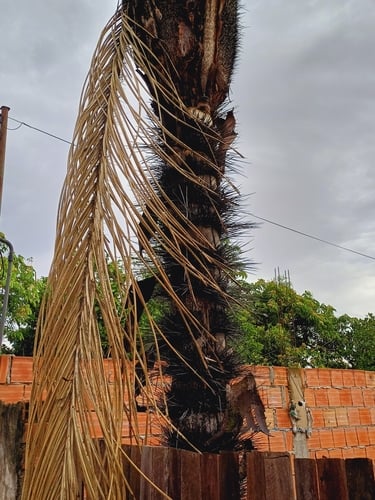
iNaturalist· cc-by-nc
(c) palmlover, some rights reserved (CC BY-NC), uploaded by palmlover
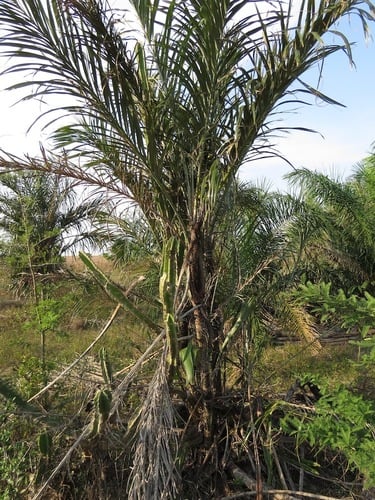
iNaturalist· cc-by
(c) Jens-Christian Svenning, some rights reserved (CC BY), uploaded by Jens-Christian Svenning
iNaturalist· cc-by-nc
(c) Martin Arregui, some rights reserved (CC BY-NC), uploaded by Martin Arregui
Summary
Source: WikipediaCopernicia alba is a South American species of palm tree, which is found in the Humid Chaco ecoregion in Bolivia, Paraguay, Colombia, Brazil (in the states of Mato Grosso and Mato Grosso do Sul) and Argentina (especially the province of Formosa, and less abundantly towards drier areas). They often, but not always, form dense single-species woodlands. Its common names in Spanish show the various colours (and technical qualities) that the trunk takes according to its environment: palma blanca, palma negra, palma colorada ("white", "black", and "red" palm, respectively). In Guaraní, it is called caranday, "water palm". Its English trade name is wax palm or caranday wax palm (it belongs to the same genus as the Carnauba wax palm).
Description
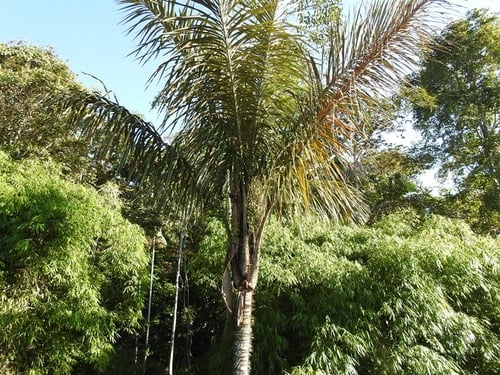
A palm. It grows 25 m tall. The trunk is cylinder shaped and occasionally divides in two. The bark is grey and smooth. The leaves are at the tip of the trunk. They are 40-70 cm long. The flowering stalks are about 2 m long. The flowers are green and arranged in a spiral pattern. The fruit is a dark berry. It contains a light brown seed. This is oval and 12 mm long.
Edible Uses
The fruit of Copernicia alba can be eaten fresh, pressed for juice, or used to make alcoholic drinks. The tips of young plants are also edible.
Traditional Uses
The ripe fruit are eaten fresh. They are also used for juice. They are also used for alcoholic drinks. Caution: Alcohol is a cause of cancer. The tips of young plants are eaten.
Medicinal Uses
None known.
Known Hazards
Plant has spines or sharp edges; use extreme caution when handling
Distribution
It is a tropical plant. It grows on seasonally flooded savannah. In Argentina it grows below 300 m above sea level. In Townsville palmetum.
Where It Grows
Argentina*, Asia, Australia, Bolivia, Brazil*, Colombia, Indonesia, Paraguay, SE Asia, South America,
Cultivation
Plants succeed in moist tropical climates where temperatures never fall below 10c, the average annual rainfall is 1,500mm or more and the driest month has 25mm or more rain. They can also succeed in drier areas with an annual rainfall as low as 250mm and one month or more where rainfall is below 25mm. Plants can tolerate occasional light frosts with temperatures down to -2c. Plants grow well in full sun, even when small. Prefers a position in light shade.
Propagation
Sow seed after pre-soaking for 24 hours in warm water, in containers in a lightly shaded position. Germination can take 2–3 months. Fresh seed germinates readily.
Other Uses
A high-quality wax obtained from the leaves is used to make various premium polishes. The leaves are suitable for thatching and for weaving into mats, baskets, and hats. The white wood is resistant and durable, and is used for telegraph poles, fencing, and building.
Nutrition
| Part | Moisture | kJ | kcal | Protein | Vit A | Vit C | Iron | Zinc |
|---|---|---|---|---|---|---|---|---|
| Fruit | 54.1 | — | 233 | 3.4 | — | — | — | — |
Synonyms
Also Known As
Caranda, Jwitsiuk, Karanda'i, Karanda'y, Mufa, Palem karanda
References (7)
- Arenas, P. and Scarpa, G. F., 2006, Edible wild plants of the Chorote Indians, Gran Chaco, Argentina. Botanical Journal of the Linnean Society. Vol. 153 (1): pp 73-85
- Bortolotto, I. M., et al, 2015, Knowledge and use of wild edible plants in rural communities along Paraguay River, Pantanal, Brazil. Journal or Ethnobiology and Ethnomedicine. 11:46
- Bortolotto, I. M., et al, 2018, Lista preliminar das plantas alimenticias nativas de Mato Grosso do Sul, Brasil. Iheringia, Serie Botanica, Porto Alegre, 73 (supl.):101-116
- Montani, M. C. & Scarpa, G. F., 2016, Recursos vegetales y prácticas alimentarias entre indígenas tapiete del noreste de la provincia de Salta, Argentina. Darwiniana, nueva serie vol.4 no.1 San Isidro jul. 2016
- Polini, G., et al, Useful and edible plants of Paraguay Region of Chaco. p 22
Show all 7 references Hide references
- Scarpa, G. F., 2009, Wild food plants used by the indigenous peoples of South American Gran Chaco: A general synopsis and intercultural comparison. Journal of Applied Botany and Food Quality 83:90-101
- Sukarya, D. G., (Ed.) 2013, 3,500 Plant Species of the Botanic Gardens of Indonesia. LIPI p 772