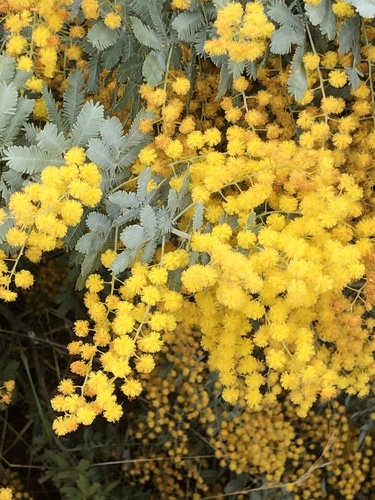
Trifolium alpinum
L.
iNaturalist· cc-by-nc
(c) Andrea Peterlongo, some rights reserved (CC BY-NC), uploaded by Andrea Peterlongo
iNaturalist· cc0
no rights reserved
Summary
Source: WikipediaTrifolium alpinum is a species of flowering plant in the legume family known by the common name alpine clover. It is native to the Alps. This plant is a perennial herb with a large taproot which can be 1 metre long and 1 centimetre wide. The short stems bear ternate leaves divided into three leaflets each up to 5 cm long. The flowers, which appear from June to August, are fragrant, 18–25 millimetres long, and arranged in globose heads of up to twelve individual blossoms. The corolla is typically pink to light red, tinged with purple. The root has a distinct sweet flavour, similar to liquorice. In alpine regions this plant provides an important forage for livestock. It is also good for stabilizing sites of erosion at high elevations.
Description
A herb from Mediterranean climate regions. The root and flowers are both edible parts, with the roots sold at festivals in Spain.
This description is brief — help expand it
Edible Uses
The root can be eaten raw. The flowers are eaten raw as a snack.
Traditional Uses
The root can be eaten raw. The flowers are eaten raw as a snack.
This uses section is brief — help expand it
Medicinal Uses
The flowers of T. alpinum emit a strong fragrance, described as pleasant and spicy, that is also the main source of the distinctive aromas of the European alpine meadows during summer. This aroma is the result of a complex blend of volatile organic compounds (VOCs). Research on alpine pastures dominated by the species has shown that its volatile profile is unusually rich for a member of the family Fabaceae, which is generally considered poor in such compounds. The plant's tissues also contain a variety of non-volatile phenolic compounds, including flavonoids, isoflavonoids, and clovamides. Trifolium alpinum is valued as a nutrient-rich and digestible forage crop for livestock, including cattle, sheep, chamois, and marmots. Due to its very deep taproot and nitrogen-fixing capabilities, it is also used in ecological restoration projects to stabilize soil on eroded high-altitude slopes. In ethnobotany, the plant is known for its sweet, liquorice-flavoured root, which was traditionally consumed as a confection in some alpine regions. In German folk medicine (Volksmedizin), a decoction of the root has been used to treat chest complaints.
Distribution
It is a Mediterranean climate plant.
Where It Grows
Andorra, Europe, Spain, Switzerland,
Other Information
In Spain the roots are sold at festivals.
Also Known As
Regaliz
References (6)
- Abbet, C., et al, 2014, Ethnobotanical survey on wild alpine food plants in Lower and Central Valais (Switzerland). Journal of Ethnopharmacology 151 (2014) 624–634
- Pardo-de-Santayana et al, 2006, Diversity and selection of wild food plants. Proceedings of the IVth International Congress of Ethnobotany (ICEB) 2005) p 53
- Pardo-de-Santayana, M., et al, 2005, The gathering and consumption of wild edible plants in the Campoo (Cantabria, Spain). International Journal of Food Sciences and Nutrition. 56(7): 529-542
- Pardo-de-Santayana, M., et al, 2007, Traditional knowledge of wild edible plants used in the northwest of the Iberian Peninsula (Spain and Portugal): a comparative study. Journal of Ethnobiology and Ethnomedicine 2007, 3:27
- Rigat, M et al, 2009, Ethnobotany of Food Plants in the High River Ter Valley (Pyrenees, catalonia, Iberian Peninsula): Non-Crop Food Vascular Plants and Crop Food Plants with medicinal Properties. Ecology of Food and Nutrition, 48:303-327
Show all 6 references Hide references
- Tardio, J., et al, Ethnobotanical review of wild edible plants in Spain. Botanical J. Linnean Soc. 152 (2006), 27-71