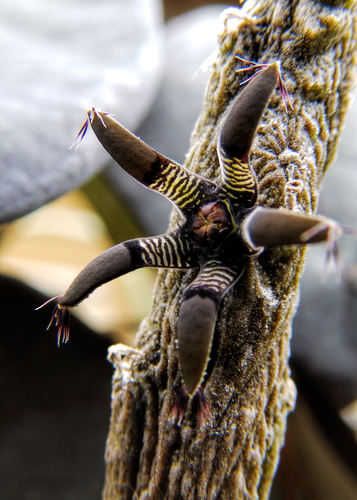
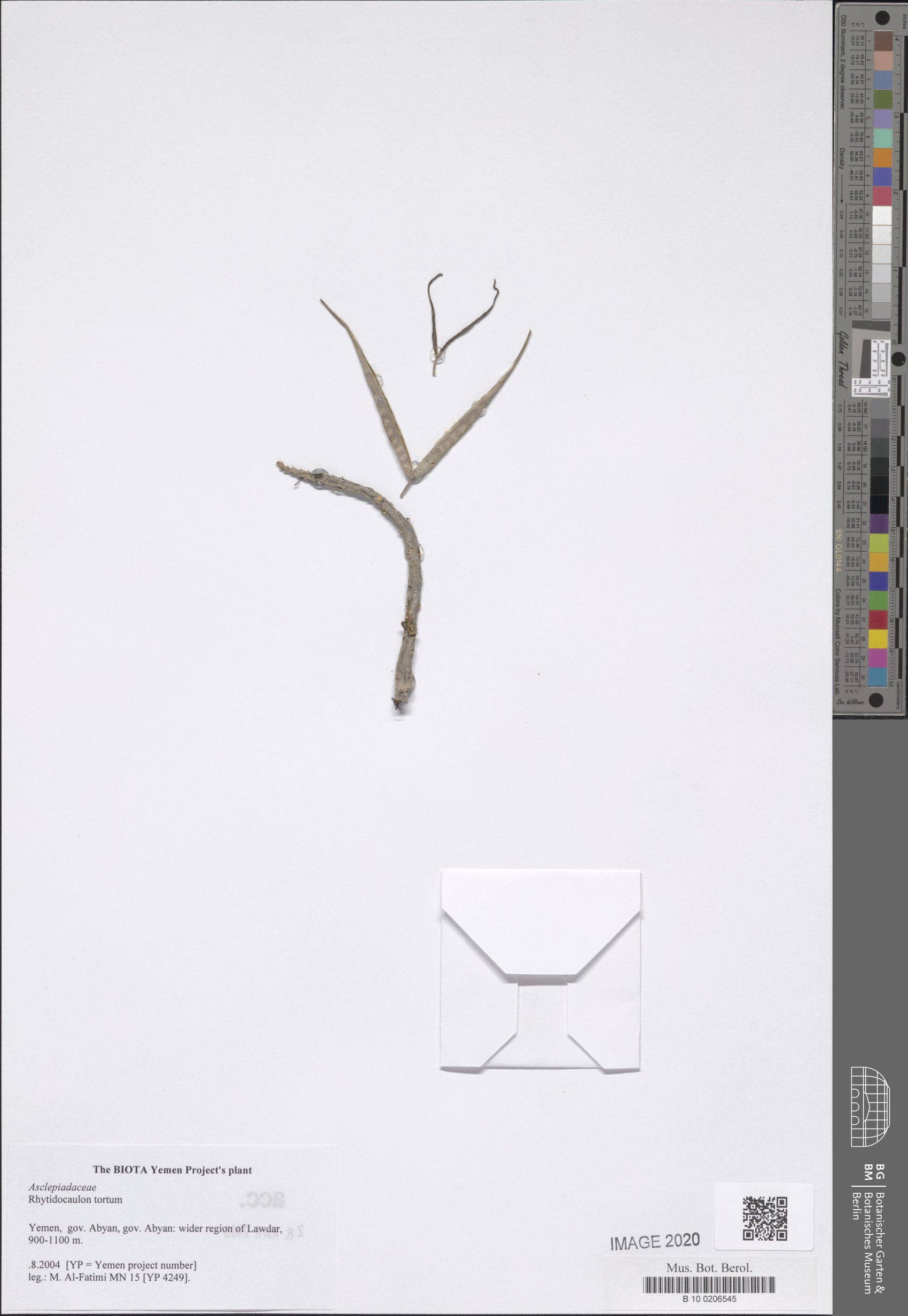
Apteranthes tuberculata
(N.E.Br.) Meve & Liede;
Chongan
iNaturalist· cc-by-nc
(c) Moosa, some rights reserved (CC BY-NC), uploaded by Moosa
Summary
Source: WikipediaApteranthes tuberculata is a succulent subshrub flowering plant that belongs to the genus Apteranthes in the subfamily Asclepiadoideae of the family Apocynaceae. Its basionym is Caralluma tuberculata. This species is native to Afghanistan, India, Iran, Pakistan, Palestine, Saudi Arabia and the West Himalaya and is found in desert and dry shrubland. Common names in Pakistan include chungee, chunga and pawuni.
Description
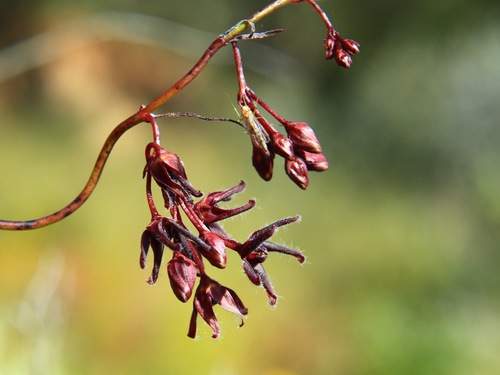
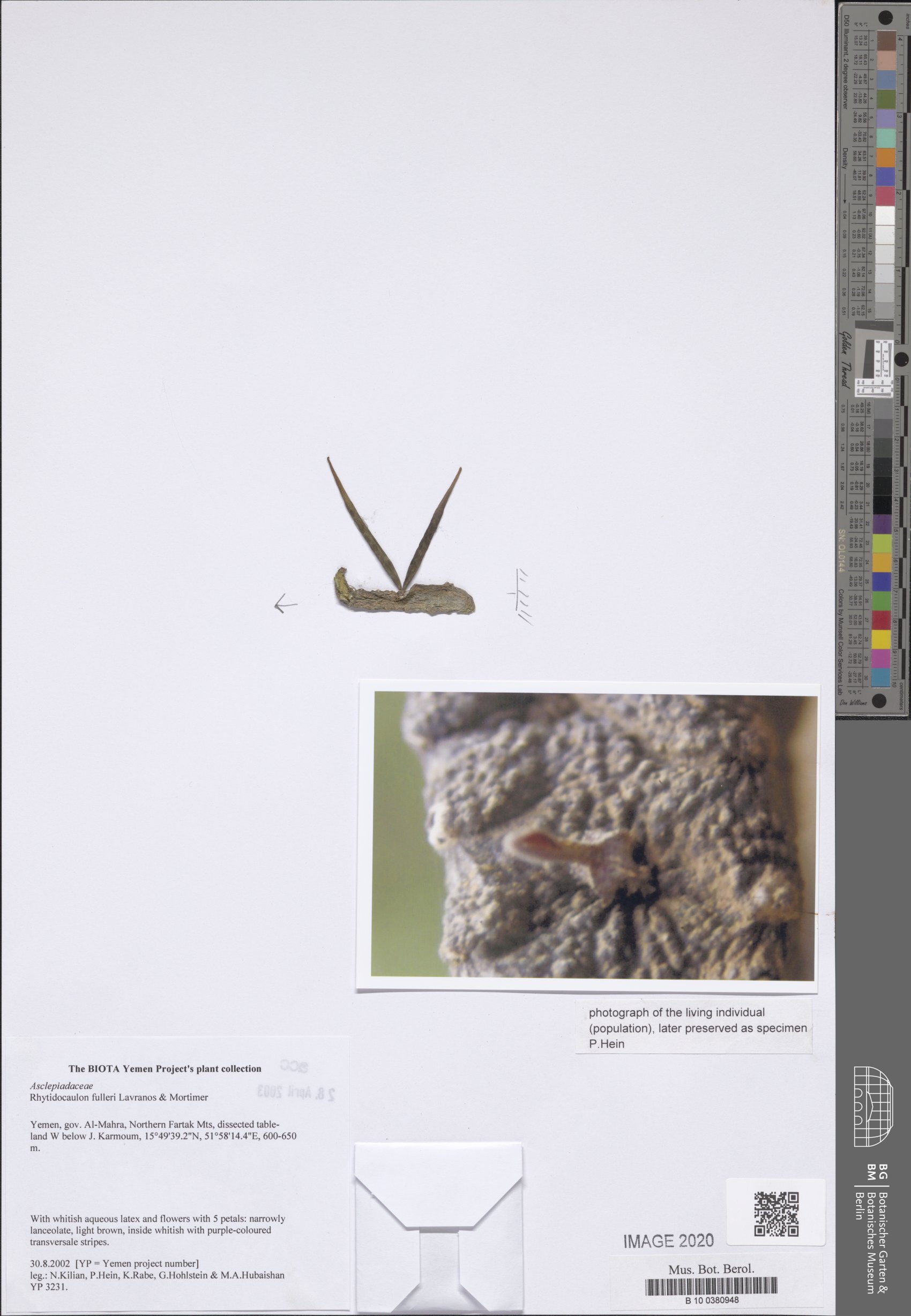
A herb with a succulent stem. It is angular. It grows 15 cm tall. The branches are 8-13 mm wide. The flowers are in groups at the end. They are dark purple and deeply divided. The fruit are dry with many seeds. They are 8-10 cm long. They taper towards the tip.
Edible Uses
The young stems are eaten fresh or raw, with a bitter flavor. The stems are also rubbed with salt and added to cooked dishes.
Traditional Uses
It is eaten raw or cooked as a vegetable. The stems are rubbed with salt and then added to dishes. The young stem is eaten fresh. It is bitter.
This uses section is brief — help expand it
Medicinal Uses
In 1851, the Scottish army doctor and botanist Andrew Fleming reported that this plant was "A favourite food of the natives, both raw & boiled" in the Salt Range. In 1892, the English soldier and botanist Henry Collett remarked "This is sold in the bazaars of Peshawar—and eaten fried in ghee—the juice of the plant [which is very bitter... ...] having first been expressed." In 1988, a paper reporting on new chemicals found in the species reported that it is "... a succulent perennial herb occurring wild and also cultivated throughout Pakistan... ...This plant is eaten raw or cooked as a vegetable and is also reputed to be a cure for diabetes and rheumatism."
Distribution
It is a temperate plant. It grows above 1,000 m above sea level in Baluchistan in Pakistan.
Where It Grows
Asia, Middle East, Pakistan, Yemen,
Other Information
It is sold in local markets.
Notes
There are about 56-100 Caralluma species. These are sometimes put in the Asclepiadaceae.
Synonyms
Also Known As
Aputag, Boteri, Khusmaa, Marmut, Pamakay, Pamanai, Pamanghi, Pamani, Pamankay, Pawanai
References (10)
- Ahmad, I., et al, 2011, Ethnobotanical Study of Tehsil Kabal, Swat District, KPK, Pakistan. Hindawi Publishing Corporation Journal of Botany Volume 2011, Article ID 368572, 9 pages
- Ahmad, K. & Pieroni, A., 2016, Folk knowledge of wild food plants among the tribal communities of Thakht-e-Sulaiman Hills, North-West Pakistan. Journal of Ethnobiology and Ethnomedicine, 12:17
- Ahmad, K., et al, 2018, Ethnobotanical investigation of wild vegetables used among local communities in northwest Pakistan. Acta Soc Bot Pol. 2019;88(1):3616.
- Al-Fatimi, M. A., Wild Edible Plants Traditionally Collected and Used in Southern Yemen. Research Square. University of Aden. (As Apteranthes tuberculata)
- Ethnobotanical Study of Tehsil Kabal, Swat District, KPK, Pakistan, Table 1
Show all 10 references Hide references
- Flora of Pakistan.
- Khalid, N., et al, 2023, Wild food plants gathered by four cultural groups in North Waziristan, Pakistan. Genet Resour Crop Evol. 70:1243–1276
- Khan, A. H., et al, 2023, Traditional foraging for ecological transition? Wild food ethnobotany among three ethnic groups in the highlands of the eastern Hindukush, North Pakistan. Journal of Ethnobiology and Ethnomedicine 19:9
- Tareen, N. M., et al, 2016, Ethnomedicinal Utilization of Wild Edible Vegetables in District Harnai of Balochistan Province - Pakistan. Pakistan Journal of Botany 48(3): 1159-1171
- Wiersema, J. H. & Leon, B., 2013, World Economic Plants. A Standard Reference CRC Press. 2nd Ed. p 142