Pleioblastus maculatus
(McClure) C. D. Chu & C. S. Chao
Ban ku zhu
gbif· cc0
President and Fellows of Harvard College
Summary
An evergreen bamboo reaching 4 meters tall, hardy to UK zone 7. It maintains foliage year-round and grows as a hermaphrodite species pollinated by wind. This bamboo thrives in light sandy, medium loamy, or heavy clay soils with mildly acid to basic pH. It tolerates semi-shade in light woodland conditions and prefers consistently moist soil.
Description
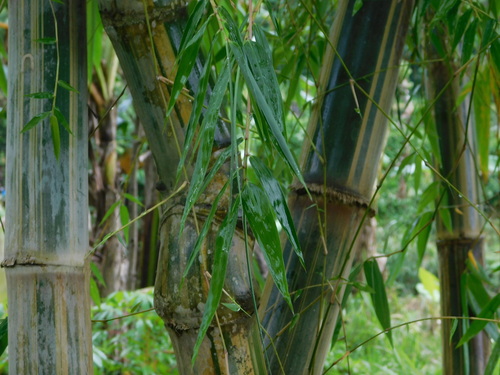
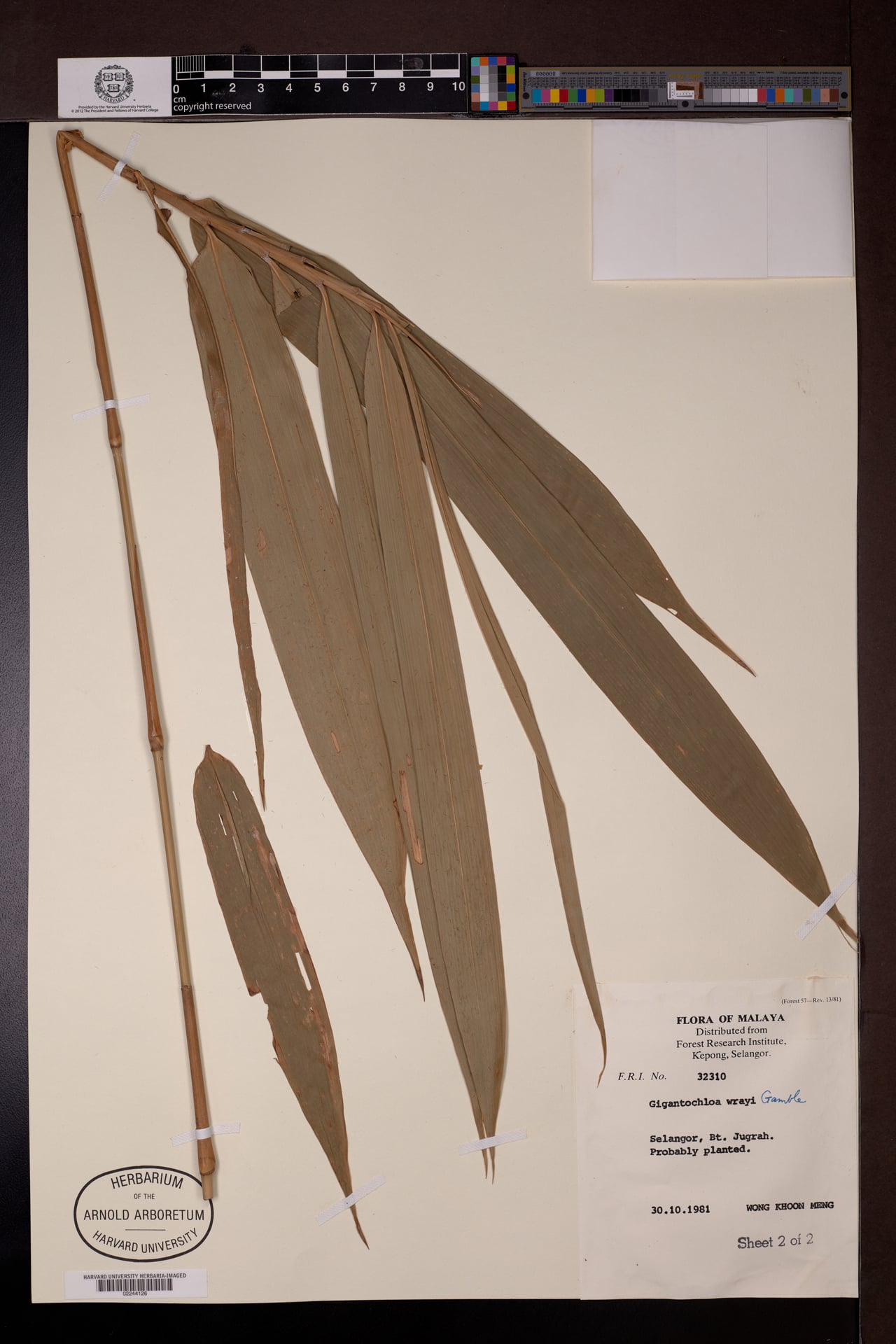
A bamboo. It grows 3-8 m high. The culms are 2-4 cm across. There are 3 to 5 leaves on the last branch. The leaf blade is 9-19 cm long by 1-3 cm wide.
Edible Uses
The young shoots are edible but have a very bitter flavor. They must be cooked in at least one change of water before eating to make them palatable.
Traditional Uses
The shoots are edible after treatment.
This uses section is brief — help expand it
Medicinal Uses
None known
Distribution
A temperate plant. It grows in dense forests. In Sichuan and Yunnan.
Where It Grows
Asia, China,
Propagation
Surface sow seed as soon as it is ripe in a greenhouse at around 20°C; stored seed should be sown immediately upon receipt. Keep the compost consistently moist. Germination is usually fairly quick given good seed quality, though it may take 3–6 months. Prick seedlings into individual pots when large enough and grow on in light shade in a greenhouse or cold frame until ready to plant out, which may take several years. Seed is rarely available as the plants flower only at intervals of many years. Division in spring as new growth begins — take divisions with at least three canes, disturbing the main plant's roots as little as possible. Grow on in light shade in a greenhouse in a high-fertility sandy medium, misting foliage regularly until established. Plant out once a good root system has developed, which can take a year or more. Basal cane cuttings can also be used.
Other Uses
The canes are used for scaffolding in China, and in rural areas the culms serve as fencing, canopy, awning material, or for sheds and sacking. Splints made from the stems are fragile and not well suited to weaving.
Synonyms
References (2)
- Altschul, S.V.R., 1973, Drugs and Foods from Little-known Plants. Notes in Harvard University Herbaria. Harvard Univ. Press. Massachusetts. no. 47 (As Sinobambusa maculata)
- Flora of China. Vol. 22 p 122 and Flora of China. www.eFloras.org