Rubus urticifolius
Poir.
iNaturalist· cc-by-nc
(c) cristian marin, some rights reserved (CC BY-NC), uploaded by cristian marin
iNaturalist· cc-by-nc-sa
(c) Mateo Hernandez Schmidt, some rights reserved (CC BY-NC-SA), uploaded by Mateo Hernandez Schmidt
iNaturalist· cc-by-nc
(c) David Espinel, some rights reserved (CC BY-NC), uploaded by David Espinel
Description
A small scrambling shrub or woody vine. It grows 4 m long. The flowers are pale pink. The fruit are black when ripe.
This description is brief — help expand it
Edible Uses
The fruit are eaten raw.
Traditional Uses
The fruit are eaten raw.
This uses section is brief — help expand it
Distribution
A tropical plant. In Argentina it grows below 500 m below sea level.
Where It Grows
Andes, Argentina, Bolivia, Brazil*, Central America, Colombia, Costa Rica, Ecuador, El Salvador, Guatemala, Honduras, Mexico, Nicaragua, Panama, Paraguay, Peru, South America*,
Cultivation
Species in this genus are generally easily grown in a good well-drained loamy soil in sun or semi-shade.
Propagation
Seed - germinates best if given a period of cold stratification prior to sowing in containers. Stored seed requires one month stratification at about 3°c and is best sown as early as possible in the growing season. Prick out the seedlings when they are large enough to handle and grow on until large enough to plant out. Cuttings of half-ripe wood in a frame. Tip layering towards the end of the growing season Division just before the plant comes into new growth or as it enters dormancy.
Other Information
It is sometimes cultivated.
Notes
There are about 250 Rubus species.
Dangerous Lookalikes
This plant can be confused with the following toxic species. Always verify identification carefully before consuming any wild plant.
Red Baneberry
Actaea rubra
Walter Siegmund (talk)
Rubus urticifolius
Rubus urticifolius
(c) cristian marin, some rights reserved (CC BY-NC), uploaded by cristian marin
Red Baneberry: Short herbaceous plant (no thorns), berries on thick red stems, each berry has a single seed, compound sharply-toothed leaves.
Rubus urticifolius: Thorny woody canes (brambles), aggregate berry made of many drupelets, berries pull easily from receptacle.
Synonyms
Also Known As
Amora-de-espinho, Amora-do-mato, Mora, Mora silvestre
References (18)
- Alimenticias - FloraSBS
- Altschul, S.V.R., 1973, Drugs and Foods from Little-known Plants. Notes in Harvard University Herbaria. Harvard Univ. Press. Massachusetts. no. 1418
- Brack, P., et al, 2020, Frutas nativas do Rio Grande do Sul, Brasil: riqueza e potencial alimentício. Native fruits of Rio Grande do Sul, Brazil: richness and potential as food. Rodriguésia 71: e03102018
- Encycl. 6:246. 1804 "urticaefolius" - treated by some as synonymous with Rubus trichomallus, but not Bailey
- INFOODSUpdatedFGU-list.xls
Show all 18 references Hide references
- Kew Plants of the World Online
- Kinupp, V. F., 2007, Plantas alimenticias nao-convencionais da regiao metropolitana de Porto Alegre, RS, Brazil p 96
- Kinupp, V. F. & Bergman, I., 2008, Protein and minerals of native species, potential vegetables and fruits. Cienc.Tecnol. Aliment. Vol. 28 No. 4 Campinas Oct/Dec.
- Kvist, L. S., et al, 2006, Bosques montanos bajos occidentals en Ecuador y sus plantas utiles. Botanica Economica ge los Andes Centrales. 205-223
- Kermath, B. M., et al, 2014, Food Plants in the Americas: A survey of the domesticated, cultivated and wild plants used for Human food in North, Central and South America and the Caribbean. On line draft. p 766
- Lopez-Diago, D. & Garcia, N., 2021, Wild edible fruits of Colombia. Biota ColomBiana 22 (2) p 49
- Mansfield's Encyclopedia of Agricultural and Horticultural Crops p 426
- NYBG Herbarium "edible"
- Roa, J. A. G. & Boada, D. S. G., 2018, Fundación para el Fortalecimiento de la Fruticultura y Plantas Alimenticias no Convencionales en Colombia.
- Segura, S., et al, 2018, The edible fruit species in Mexico. Genet Resour Crop Evol (2018) 65:1767–1793
- Torre, de la, L., et al, 2008, Enciclopedia de las Plantas Útiles del Ecuador. Herbario QCA. Pontificia Universidad Católica del Ecuador. p 539
- Van den Eynden, V., et al, 2003, Wild Foods from South Ecuador. Economic Botany 57(4): 576-603
- www.colecionandofrutas.org
More from Rosaceae
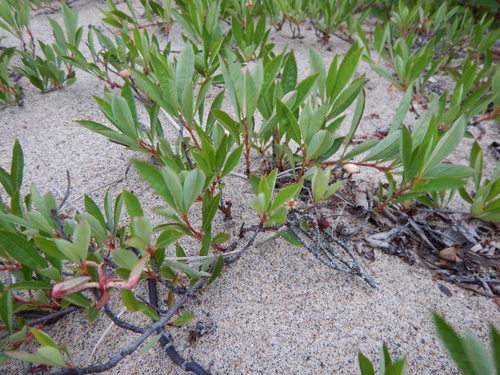
Prunus pumila subsp. susquehanae
Dwarf American cherry, Appalachian cherry
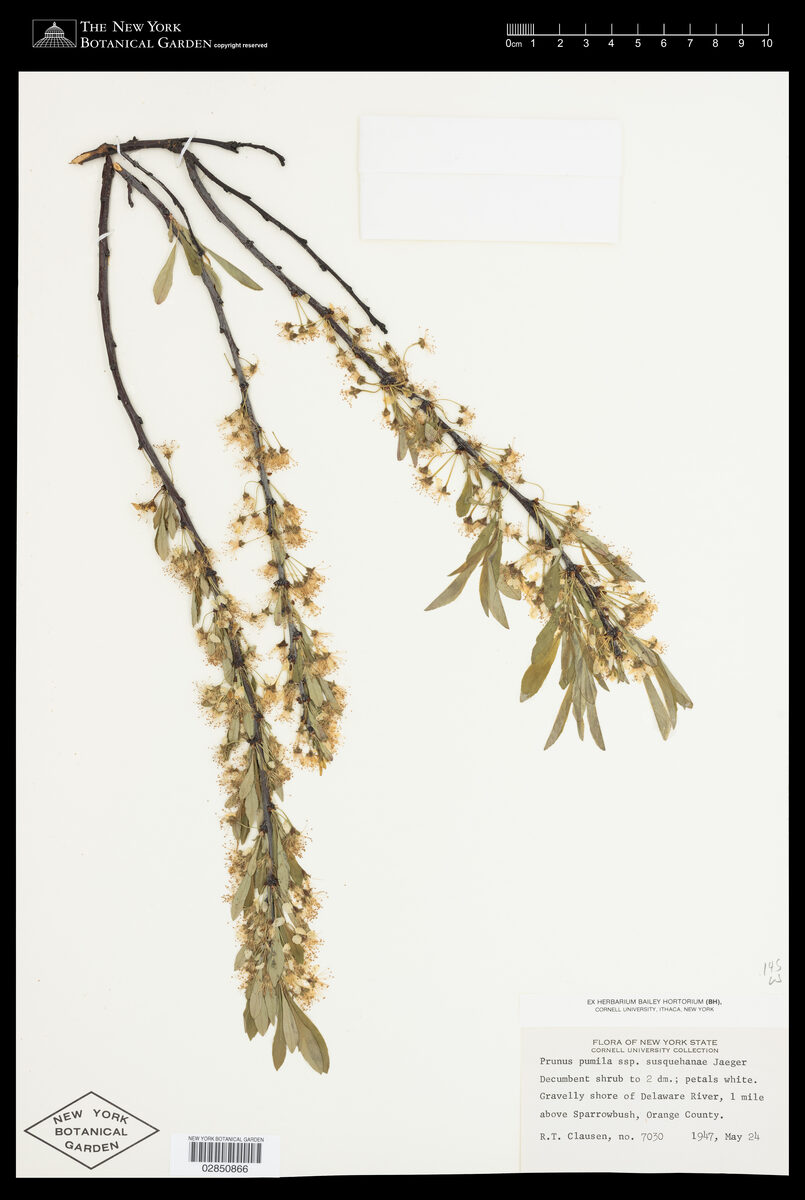
Prunus pumila susquehanae - (Willd.)Jaeger.
Dwarf American Cherry
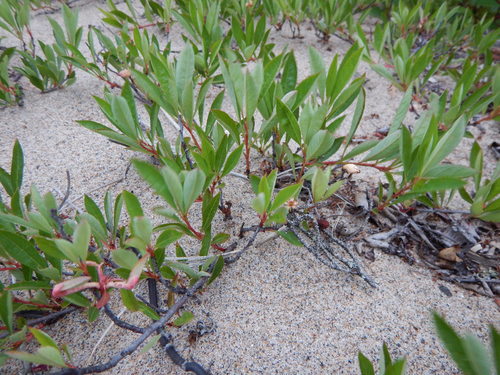
Prunus pumila var. depressa
Sand cherry, Eastern sandcherry
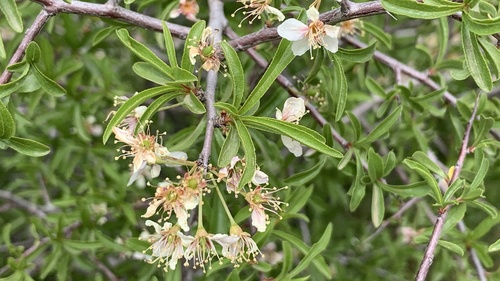
Prunus ramburii
Sloe of Sierra Nevada, Black hawthorn
Prunus rhamnoides
Prunus rivularis
Creek plum