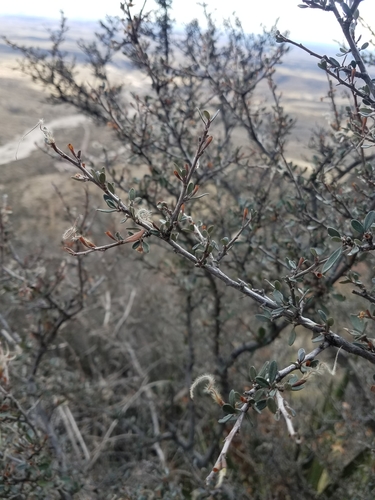
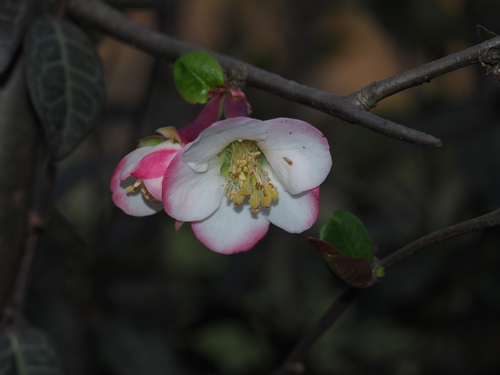
Prunus petunnikowii
(Litv.) Rehder
Petunnikov almond, Turkestan almond
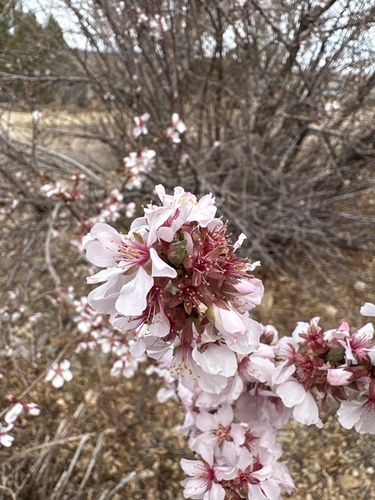
iNaturalist· cc-by-nc
(с) Наталья Бешко, некоторые права защищены (CC BY-NC), загрузил Наталья Бешко
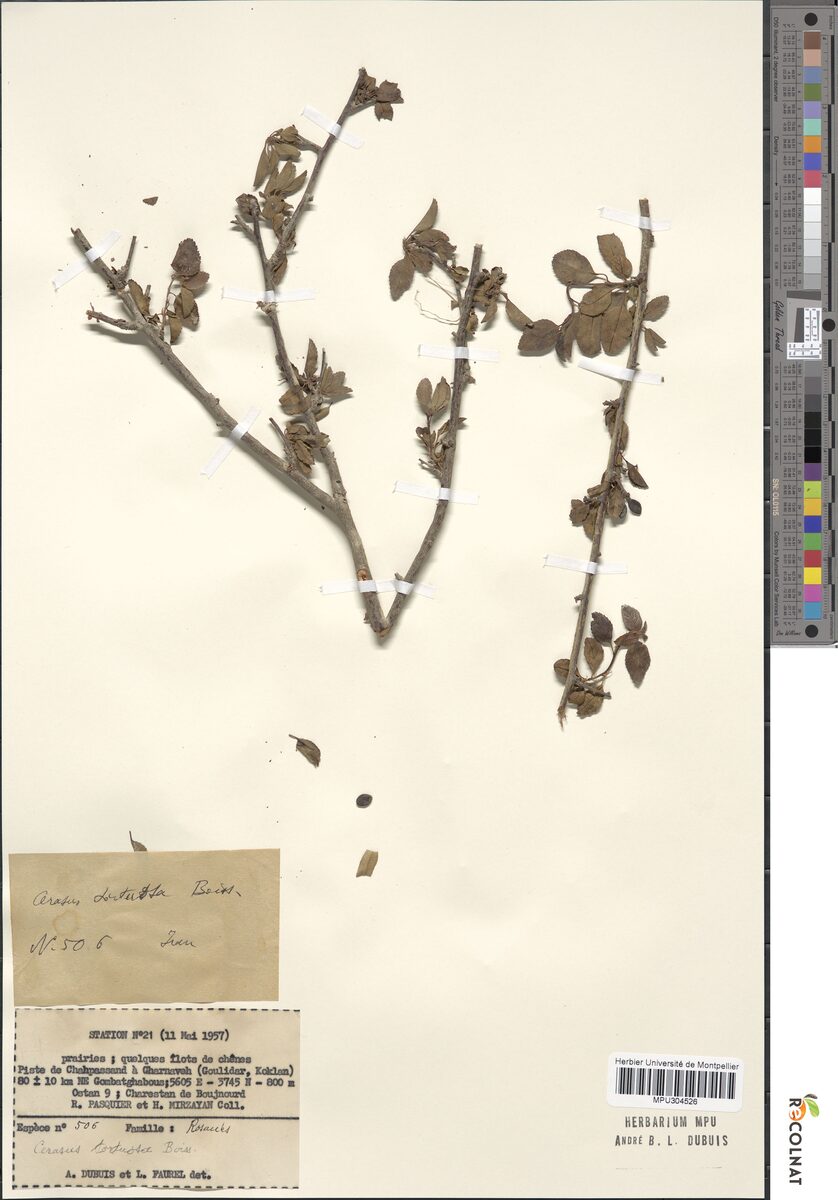
iNaturalist· cc-by-nc
(с) Наталья Бешко, некоторые права защищены (CC BY-NC), загрузил Наталья Бешко
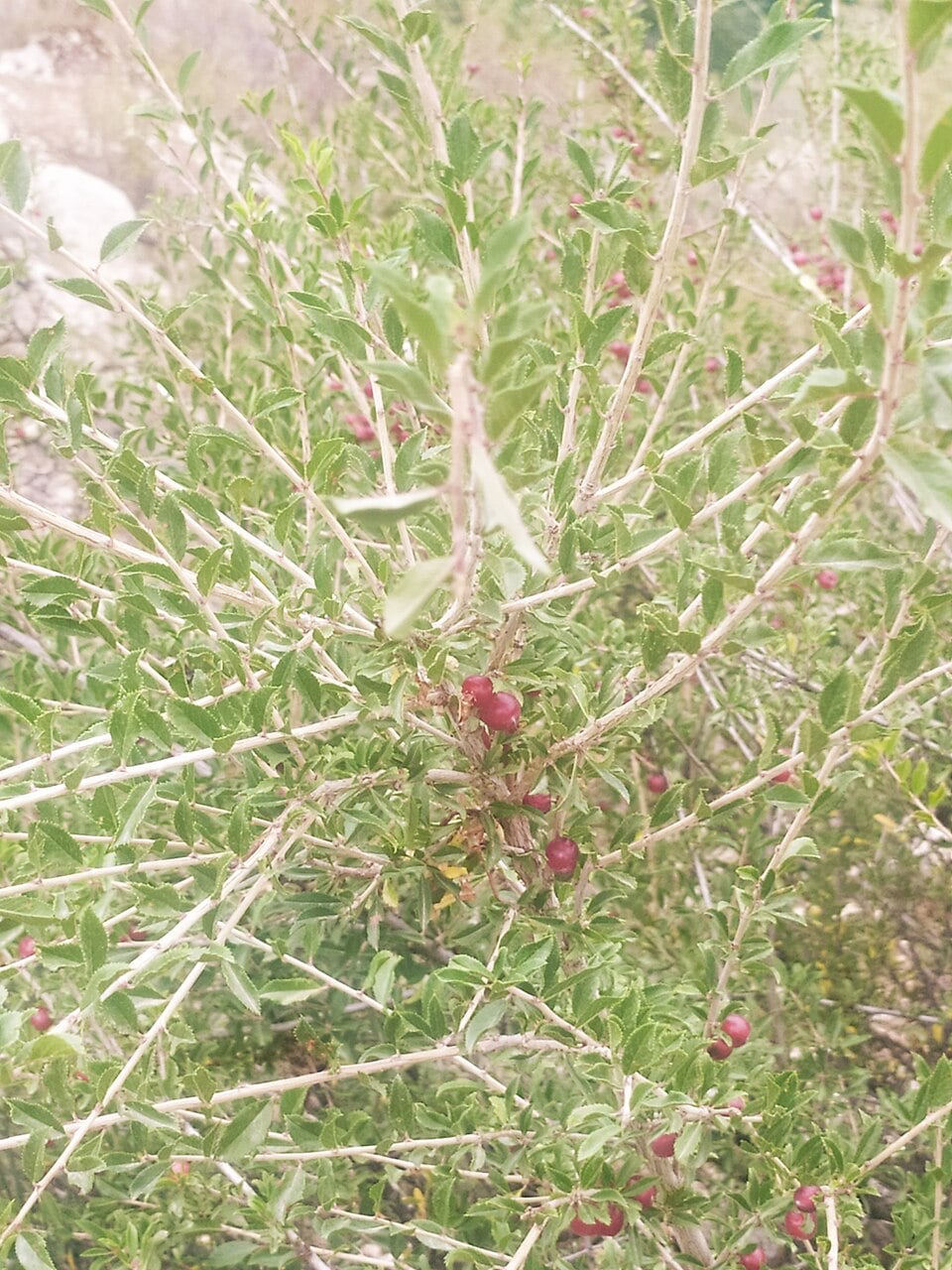
iNaturalist· cc-by-nc
(с) Aleksandr Ebel, некоторые права защищены (CC BY-NC), загрузил Aleksandr Ebel
Description
A shrub. It usually grows in colonies. It is strongly branching and grows 1 m high. It does not have thorns. The bark is brownish-grey. The leaves do not have hairs and they are 2-3 cm long by 3-5 mm wide. There are teeth along the edge. The flowers are pink and open the same time as the leaves. The nut is 1.2-2.5 cm long by 1.2-1.6 cm wide. The fruit is hairy and has a red covering. The kernel is very bitter but contains an edible oil.
Edible Uses
Oil extracted from the nut kernel is edible.
Known Hazards
The nut kernel is very bitter.
Distribution
It is a temperate plant. In Kazakhstan it grows on shallow stony soils between 1,400-2,000 m altitude. It is winter hardy and drought resistant.
Where It Grows
Asia, Central Asia, Kazakhstan, Kyrgystan, Tajikistan, Uzbekistan,
Production
A nut weighs 0.7 g. Nuts contain 58% edible oil.
Other Information
It is cultivated.
Synonyms
References (3)
- Dzhangaliev, A. D., et al, 2003, The Wild Fruit and Nut Plants of Kazakhstan, Horticultural Reviews, Vol. 29. pp 305-371
- INFOODSUpdatedFGU-list.xls
- Zeven, A. C. & de West, J. M. J., 1982, Dictionary of cultivated plants and their regions of diversity. Wageningen. p 84