Rubus cockburnianus
Hemsl.
Hua zhong xuan gou zi
iNaturalist· cc-by
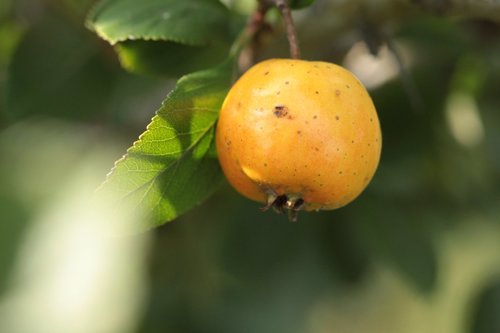
(c) Susan Marley, some rights reserved (CC BY), uploaded by Susan Marley
iNaturalist· cc-by-nc
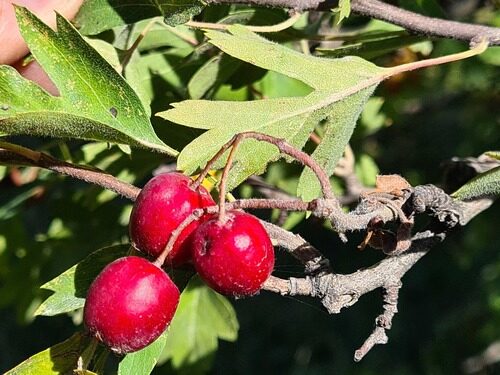
(c) Dave Holland, some rights reserved (CC BY-NC)
Summary
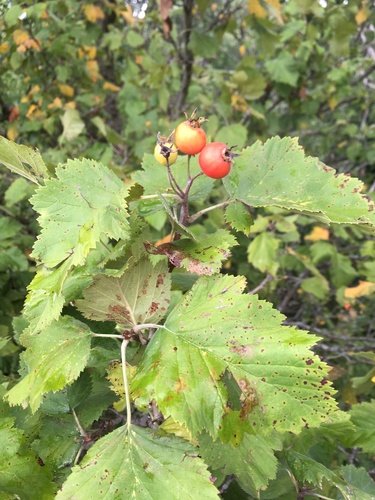
Source: WikipediaRubus cockburnianus, the white-stemmed bramble, is a species of flowering plant in the family Rosaceae. It is endemic to China. It was named by the botanist William Hemsley to honour the Cockburn family. This bramble is a shrub growing up to 3 meters tall. The smaller branches are brown or reddish, hairless, waxy, and armed sparsely with prickles. The leaves are divided into several serrated leaflets which are hairless or slightly hairy on the upper surfaces and woolly-haired underneath. Inflorescences occur in the axils and at the ends of branches. The pink flowers are about one centimeter wide and have many stamens in their centers. The purple-black aggregate fruit is under a centimeter long. The native habitat of the plant includes forests, thickets, and riverbanks. In cultivation it is valued for its vivid white winter branches. It can be used as a security barrier, quickly becoming an impenetrable thicket. Cultivars for garden use include 'Goldenvale'. It has yellow foliage, white branchlets, purple flowers, and black fruits. It has gained the Royal Horticultural Society's Award of Garden Merit.
Description
An arching deciduous shrub. It grows 2.2-2.7 m high and 1.8-2.5 m wide. The stems are purplish and prickly. They are covered with a white bloom. The leaves are dark green and have 9 egg shaped leaflets. They are furry white underneath. The flowers are purple. The fruit are purplish-black. They are less than 1 cm across and slightly hairy.
Edible Uses
The purplish-black fruit, up to 10mm in diameter, can be eaten raw or cooked, though it is small and of poor quality.
Medicinal Uses
None known.
Distribution
It is frost hardy. It grows on sunny slopes and in dense forests in mountain valleys in S China between 900 and 4,000 m altitude. It suits hardiness zones 6-10. In Sichuan and Yunnan.
Where It Grows
Asia, Australia, China,
Cultivation
Easily grown in a good well-drained loamy soil in sun or semi-shade. Hardy to at least -15°c. This species is a raspberry with biennial stems, it produces a number of new stems each year from the perennial rootstock, these stems fruit in their second year and then die. Plants in this genus are notably susceptible to honey fungus.
Propagation
Seed requires stratification and is best sown in early autumn in a cold frame. Stored seed needs one month of stratification at around 3°C and should be sown as early in the year as possible. Prick out seedlings when large enough to handle and grow on in a cold frame, then plant out into permanent positions in late spring of the following year. Cuttings of half-ripe wood can be taken in July or August in a frame. Tip layering in July; plant out in autumn. Division can be done in early spring or just before leaf-fall in autumn.
Other Uses
A purple to dull blue dye is obtained from the fruit.
Notes
There are about 250 Rubus species.
Dangerous Lookalikes
This plant can be confused with the following toxic species. Always verify identification carefully before consuming any wild plant.
Red Baneberry
Actaea rubra
Walter Siegmund (talk)
Hua zhong xuan gou zi
Rubus cockburnianus
(c) Susan Marley, some rights reserved (CC BY), uploaded by Susan Marley
Red Baneberry: Short herbaceous plant (no thorns), berries on thick red stems, each berry has a single seed, compound sharply-toothed leaves.
Hua zhong xuan gou zi: Thorny woody canes (brambles), aggregate berry made of many drupelets, berries pull easily from receptacle.
Synonyms
References (6)
- Cundall, P., (ed.), 2004, Gardening Australia: flora: the gardener's bible. ABC Books. p 1284
- Flora of China @ efloras.org Volume 9
- J. Linn. Soc., Bot. 29:305. 1892
- Joyce, D., 1998, The Garden Plant Selector. Ryland, Peters and Small. p 158
- Lu Lingdi, Boufford, D.E., Rubus. Flora of China.
Show all 6 references Hide references
- Plants for a Future database, The Field, Penpol, Lostwithiel, Cornwall, PL22 0NG, UK. http://www.scs.leeds.ac.uk/pfaf/