Vepris nobilis
(Delile) Mziray
Small-fruited teclea, Giant cherry-orange
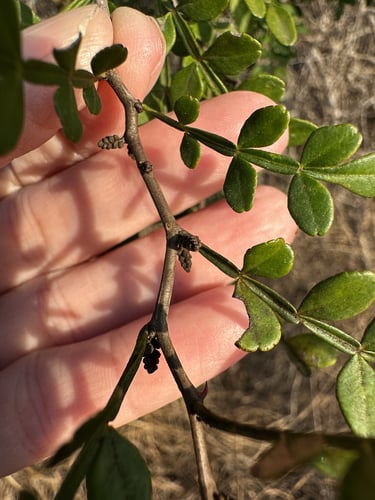
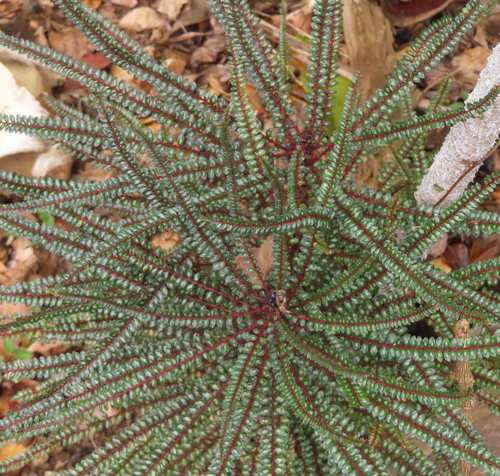
iNaturalist· cc-by-nc
(c) bethzim, some rights reserved (CC BY-NC)
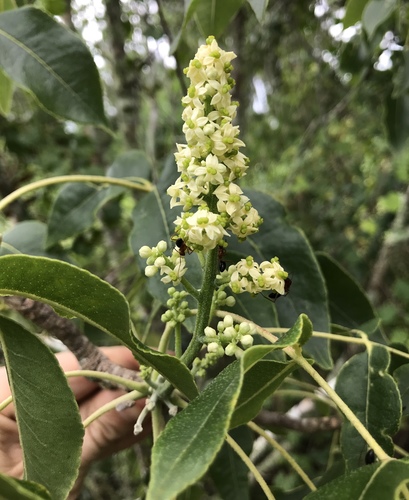
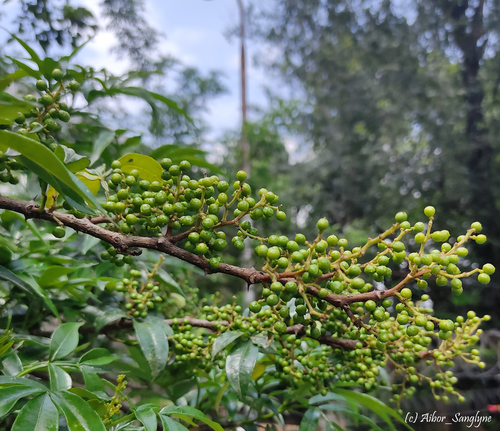
iNaturalist· cc-by-nc
(c) Geoffrey Mwachala, some rights reserved (CC BY-NC)
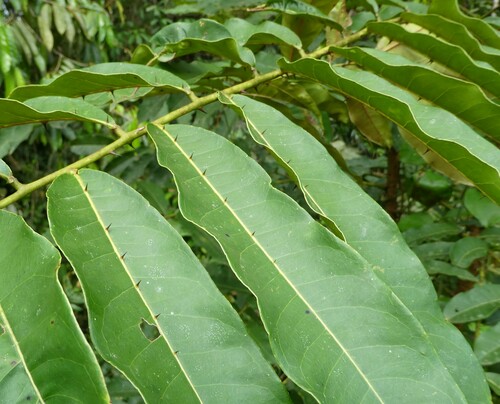
iNaturalist· cc-by-nc
(c) Odile Weber, some rights reserved (CC BY-NC)
Summary
Source: WikipediaVepris nobilis (syn. Teclea nobilis) is a species of flowering plant in the family Rutaceae, native to the Arabian Peninsula and eastern Africa. A tree, chimpanzees (Pan troglodytes) use its leaves to repel the mosquito Anopheles gambiae.
Description
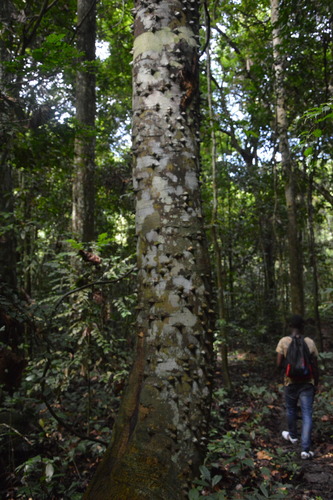
A shrub or a medium sized tree. It grows 20 m tall. The trunk does not have branches for 7.5 m. The trunk is often crooked and can be 60 cm across. The leaves are alternate and have 3 leaflets. The leaflets are oval and 5-15 cm long by 2-4 cm wide. They are narrowly oval. They taper to the tip. The flowers are in groups 15 cm long in the axils of leaves or at the ends of branches. The flowers are whitish-yellow. Male and female flowers are separate. The fruit is oval and fleshy. It is 6-8 mm long by 5-6 mm wide and is smooth. It is orange-red and has one seed inside. The seed is oval.
Edible Uses
The ripe fruit are eaten raw.
Traditional Uses
The ripe fruit are eaten raw.
This uses section is brief — help expand it
Medicinal Uses
The roots are used in the treatment of pneumonia and venereal diseases. The leaves are used in a vapour bath to treat fever. Leaf and root decoctions are drunk to treat pneumonia, rheumatism and itching. The roots are used as an anthelmintic and for treatment of pneumonia. The pounded root bark is applied to syphilitic ulcers. The stem bark is expectorant. The bark and leaves are used as an analgesic. The triterpenoid lupeol has been isolated as the main active compound in the plant. Several quinoline alkaloids have also been isolated from the leaves, as well as axane and oppositane sesquiterpenes. Trials have shown that leaf extracts have anti-inflammatory, analgesic and antipyretic activities, without toxic effects..
Distribution
It is a tropical plant. It grows on the edges of evergreen forest and along rivers. It grows in evergreen forest between 900-2,700 m altitude in East Africa. It is at lower altitudes in southern Africa.
Where It Grows
Africa, Burundi, Central Africa, Central African Republic, CAR, East Africa, Eritrea, Ethiopia, Kenya, Malawi, Middle East, Mozambique, Rwanda, Saudi Arabia, Southern Africa, Sudan, Tanzania, Uganda, Yemen, Zambia, Zimbabwe,
Cultivation
Plants are grown from seed. Fresh seed should be used. Seeds can only be stored for a few months. Trees can be pruned and cut back and allowed to re-grow.
Propagation
Seed - it has a very short viability of only a few months. Pre-treatment of the seed is not necessary before sowing, but the germination rate, even of fresh seed, is generally low. Wildlings are sometimes used for propagation.
Other Uses
Roots and twigs are used as toothbrushes. The heartwood is creamy white, often with a dark brown core; rather indistinctly demarcated from the slightly paler sapwood. The grain is usually straight, texture fine and even. The wood is fairly heavy, hard, tough and moderately durable - being fairly resistant to termites, but liable to Lyctus and marine borer attacks. Rather difficult to saw and work, but it can be finished to a smooth surface. The polishing and varnishing properties are satisfactory, but the nailing properties are poor; pre-boring is necessary in nailing. Steam bending gives good results. The fresh wood often has an unpleasant smell. Excellent for turning and inlay work, the wood is also suitable for heavy construction, flooring, joinery, shipbuilding, vehicle bodies, furniture, cabinet work, mine props, sporting goods, agricultural implements, toys, novelties and vats. It is used traditionally to make tool handles, spoons, building poles, bows and walking sticks. The wood is a good fuel and is used for making charcoal. The tree is occasionally planted for improving the soil by its leaf litter, and as a shade and amenity tree.
Production
It grows very slowly. Fruit ripen 1-2 months after flowering.
Other Information
There are 80 Vepris species. They are mostly in Africa.
Synonyms
Also Known As
Hadessa, Hadhessa, Kuoi, Kurion, Mdimu, Mkulu-kulu, Olgilai, Tsaki
References (15)
- Asfaw, Z. and Tadesse, M., 2001, Prospects for Sustainable Use and Development of Wild Food Plants in Ethiopia. Economic Botany, Vol. 55, No. 1, pp. 47-62 (As Teclea nobilis)
- Demise, S. & Asfaw, Z., 2020, Ethno Botanical Study of Wild Edible Plants in Adola District, Southern, Ethiopia. International Journal of Research and Analytical Reviews (IJRAR) 7(2). (As Teclea nobilis)
- Emire, A., et al, 2021, Ethnobotanical Study of Wild Edible Fruit Tree and Shrub Species in Adola Rede and Odo Shakiso Midland Districts of Guji Zone, Southern Ethiopia. Int. J. Adv. Res. Biol. Sci. (2021). 8(12): 96-109 (As Teclea nobilis)
- Flora Zambesiaca. http://apps.kew.org/efloras (As Teclea nobilis)
- Fowler, D. G., 2007, Zambian Plants: Their Vernacular Names and Uses. Kew. p 59 (As Teclea nobilis)
Show all 15 references Hide references
- Lemmens, R.H.M.J., 2008. Vepris nobilis (Delile) Mziray. [Internet] Record from Protabase. Louppe, D., Oteng-Amoako, A.A. & Brink, M. (Editors). PROTA (Plant Resources of Tropical Africa), Wageningen, Netherlands. < http://database.prota.org/search.htm>. Accessed 23 October 2009
- Lulekal, E., et al, 2011, Wild edible plants in Ethiopia: a review on their potential to combat food insecurity. Afrika Focus - Vol. 24, No 2. pp 71-121 (As Teclea nobilis)
- Mbuvi, M. T. E., et al, 2019, Annonated checklist of plant species of Loita Forest Narok County, Kenya. Int. J. Adv. Res. Biol. Sci. (2019). 6(3): 54-110
- Mutie, F. M., et al, 2023, Important Medicinal and Food Taxa (Orders and Families) in Kenya, Based on Three Quantitative Approaches. Plants 2023, 12, 1145
- Regassa, T., et al, 2014, Ethnobotany of Wild and Semi-Wild Edible Plants of Chelia District, West-Central Ethiopia. Science, Technology and Arts Research Journal. 3(4): 122-134 (As Teclea nobilis)
- Sina, B. & Degu, H. D., 2015, Knowledge and use of Wild Edible Plants in the Hula District of the Sidama Zone. International Journal of Bio-resource and Stress Management 6(3):352-365 (As Teclea nobilis)
- Tabuti, J. R. S., 2012, Important Woody Plant Species, their Management and Conservation Status in Balawoli Sub-country, Uganda. Ethnobotany Research & Applications 10:269-286
- Termote, C., et al, 2014, Assessing the potential of wild foods to reduce the cost of a nutritionally adequate diet: An example from eastern Baringo District, Kenya. Food and Nutrition Bulletin, vol. 35, no. 4 (As Teclea nobilis)
- World Checklist of Useful Plant Species 2020. Royal Botanic Gardens, Kew
- www.worldagroforestrycentre.org/treedb/ (As Teclea nobilis)