Asparagus aethiopicus
L.
Wild asparagus
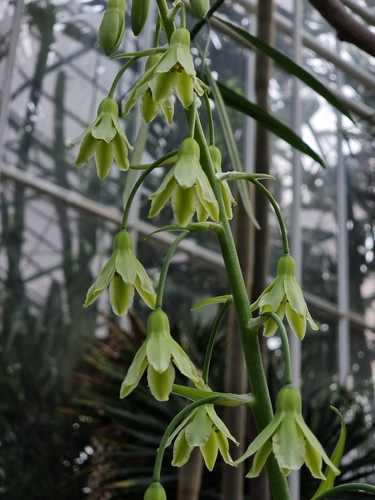
iNaturalist· cc-by
(c) Thomas Mesaglio, some rights reserved (CC BY), uploaded by Thomas Mesaglio
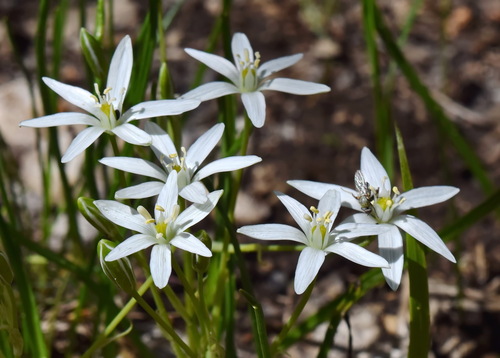
iNaturalist· cc-by-sa
(c) Tony Rebelo, some rights reserved (CC BY-SA), uploaded by Tony Rebelo
Summary
Source: WikipediaAsparagus aethiopicus, Sprenger's asparagus, is a plant native to the Cape Provinces and the Northern Provinces of South Africa. Often used as an ornamental plant, it is considered an invasive weed in many locations. Asparagus fern, asparagus grass and foxtail fern are common names; however, it is unrelated to true ferns. A. aethiopicus has been confused with A. densiflorus, now regarded as a separate species, so that information about A. aethiopicus will often be found under the name A. densiflorus.
Description
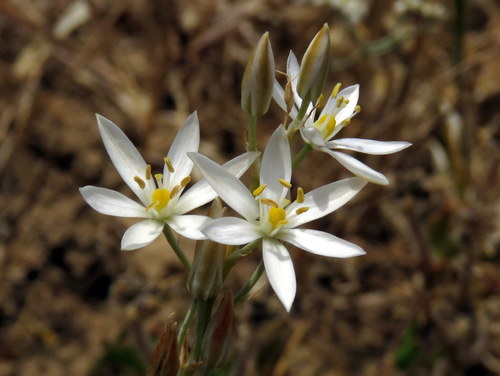
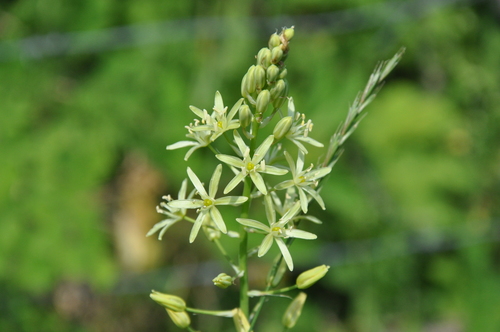
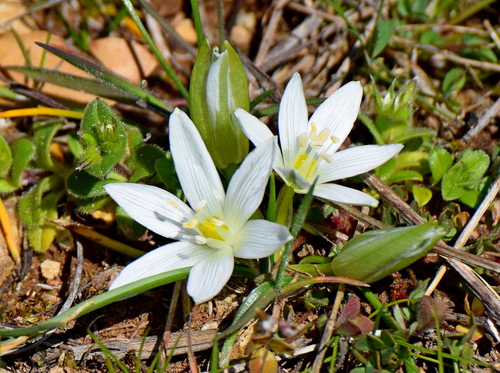
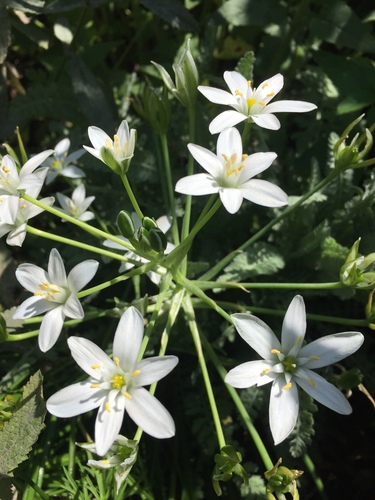
A scrambling plant. It grows from a thick tuberous root growing on the rhizomes or underground stems. The stems are thin and flattened and look like leaves. The flowers are white or pale pink and bell shaped. They are 4 mm long. They are in groups. The fruit is a berry 8 mm across. There are one or more black seeds.
Edible Uses
The shoots and leaves are eaten as a vegetable.
Traditional Uses
The plant is eaten as a vegetable.
This uses section is brief — help expand it
Known Hazards
Asparagus aethiopicus is grown as an indoor plant in cooler climates, or as an ornamental garden plant in urban gardens, rockeries or in pots. Two cultivars are seen in cultivation, 'Sprengeri' is a scrambling form with sparser foliage, while 'Meyeri' has more erect stems to 70 cm (28 in) and denser foliage. Consuming the berries of A. aethiopicus can cause gastrointestinal symptoms such as diarrhea, vomiting and abdominal pain, and contact with the skin may cause dermatitis. The plant is toxic to domestic cats and dogs.
Distribution
It is a warm temperate and tropical plant. It grows well in shaded areas.
Where It Grows
Africa, Australia, Dominican Republic, East Africa, Eswatini, Nauru, Pacific, South Africa, Southern Africa, Swaziland, Tasmania, West Indies, Zimbabwe,
Cultivation
Plants can be grown from seeds or sections of the stem.
Notes
It has become a serious weed in some parts of Australia.
Synonyms
References (6)
- Long, C., 2005, Swaziland's Flora - siSwati names and Uses http://www.sntc.org.sz/flora/
- Ruiters-Welcome, A. K., 2019, Food plants of southern Africa. Ph.D. thesis. Univ. of Johannesburg p 30
- van der Burg, W.J., 2004. Asparagus flagellaris (Kunth) Baker. [Internet] Record from Protabase. Grubben, G.J.H. & Denton, O.A. (Editors). PROTA (Plant Resources of Tropical Africa / Ressources végétales de l’Afrique tropicale), Wageningen, Netherlands. < http://database.prota.org/search.htm>. Accessed 13 October 2009.
- van Wyk, Be., & Gericke, N., 2007, People's plants. A Guide to Useful Plants of Southern Africa. Briza. p 68
- Welcome, A. K. & Van Wyk, B.-E., 2019, An inventory and analysis of the food plants of southern Africa. South African Journal of Botany 122 (2019) 136–179
Show all 6 references Hide references
- World Checklist of Useful Plant Species 2020. Royal Botanic Gardens, Kew