Dalbergia pinnata
(Lour.) Prain
iNaturalist· cc-by-nc
(c) Phuentsho, some rights reserved (CC BY-NC)
iNaturalist· cc-by-nc
(c) Phuentsho, some rights reserved (CC BY-NC)
iNaturalist· cc-by-nc
(c) Phuentsho, some rights reserved (CC BY-NC)
Description
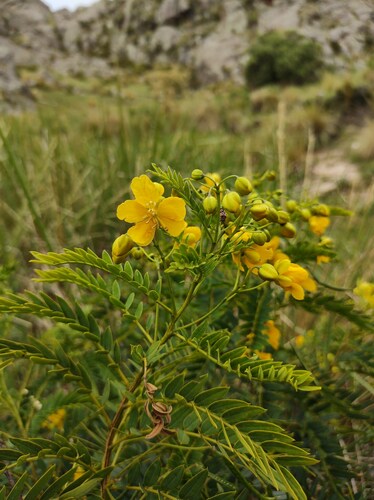
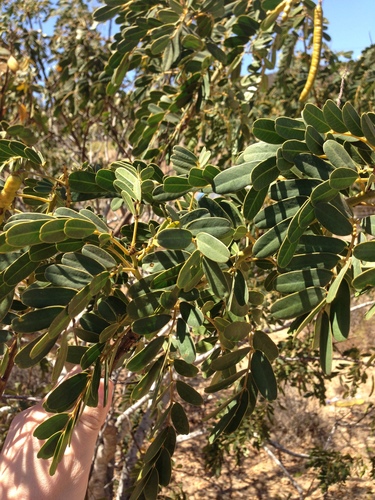
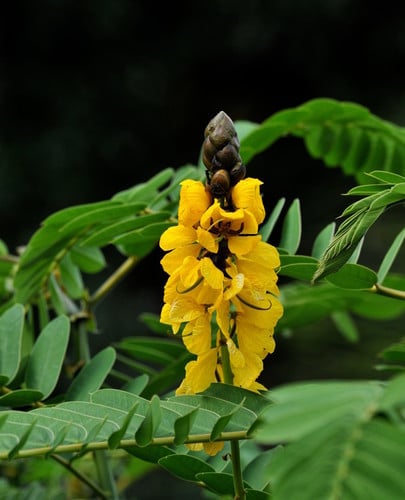
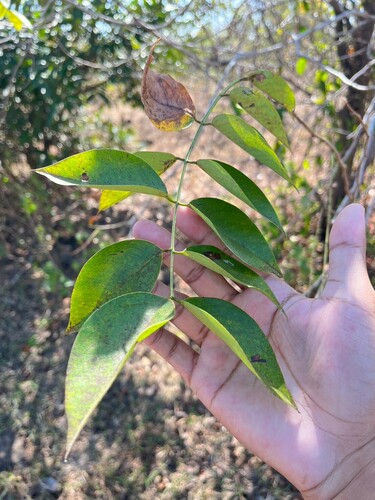
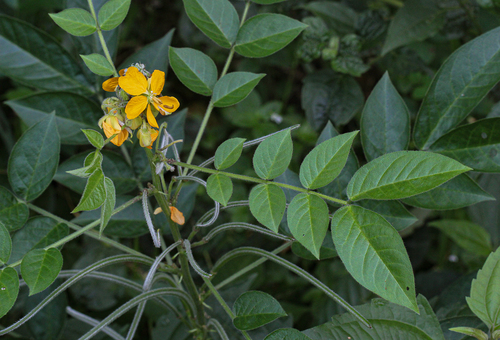
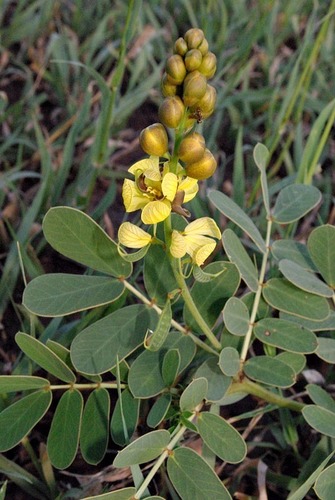
A large woody climber. It loses it leaves during the year. The small branches are twisted. The leaves are unequal at the base. The flowers are white and have long stalks. The fruit are small pods and are like straps. They are brown.
Edible Uses
The leaves are chewed with betel nut as a flavoring, and the bark is also chewed with betel leaves.
Traditional Uses
The leaves are chewed with betel nut. The bark is also chewed with betel leaves.
This uses section is brief — help expand it
Medicinal Uses
The plant is used as a medicinal plant.
Distribution
It is a tropical plant. In southern China it grows in dense forests below 1,400 m above sea level.
Where It Grows
Asia, China, India, Indochina, Indonesia, Laos, Malaysia, Myanmar, Northeastern India, Pacific, Philippines, SE Asia, Tibet, Thailand, Vietnam,
Cultivation
Species in this genus are mainly found in the wild growing in sany soils and on limestone escarpments. In cultivation they are likely to do well in a fertile, loam soil and a position in full sun. This species has a symbiotic relationship with certain soil bacteria, these bacteria form nodules on the roots and fix atmospheric nitrogen. Some of this nitrogen is utilized by the growing plant but some can also be used by other plants growing nearby.
Propagation
Like many species within the family Fabaceae, once they have been dried for storage the seeds of this species may benefit from scarification before sowing in order to speed up germination. This can usually be done by pouring a small amount of nearly boiling water on the seeds (being careful not to cook them!) and then soaking them for 12 - 24 hours in warm water. By this time they should have imbibed moisture and swollen - if they have not, then carefully make a nick in the seedcoat (being careful not to damage the embryo) and soak for a further 12 hours before sowing. Softwood cuttings of many species, especially if taken from younger plants, will root in a well-drained, sandy medium in a closed case with bottom heat.
Notes
It is used as a medicinal plant.
Synonyms
Also Known As
Amlai lewa, Cham-bia an-trau, Dat bijli, Laleng chali, Magyi-nwe, Subin rikang
References (3)
- Bodner, C. C. and Gereau, R. E., 1988, A Contribution to Bontoc Ethnobotany. Economic Botany, 43(2): 307-369
- Patiri, B. & Borah, A., 2007, Wild Edible Plants of Assam. Geethaki Publishers. p 36
- Pegu, R., et al, 2013, Ethnobotanical study of Wild Edible Plants in Poba Reserved Forest, Assam, India. Research Journal of Agriculture and Forestry Sciences 1(3):1-10