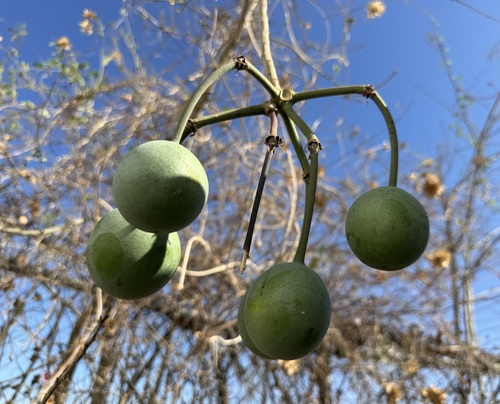
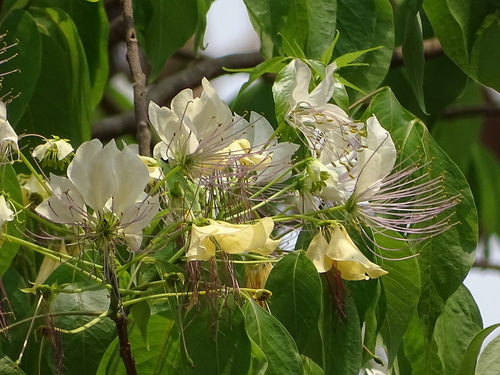
Crateva unilocularis
Buch.-Ham.
iNaturalist· cc-by-nc-nd
(c) Sunnetchan, some rights reserved (CC BY-NC-ND), uploaded by Sunnetchan
iNaturalist· cc-by-nc
(c) 張欣妍, some rights reserved (CC BY-NC)
iNaturalist· cc-by-nc
(c) 劉穎琳, some rights reserved (CC BY-NC)
Description
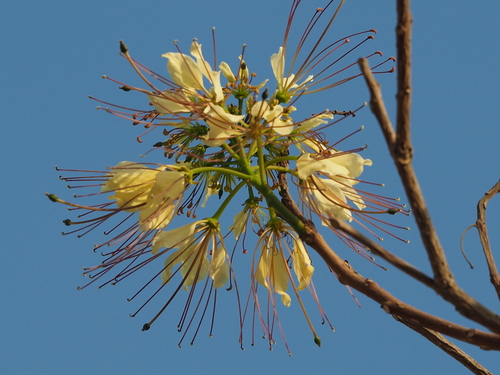
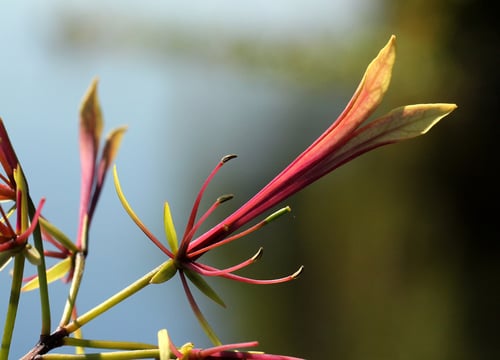
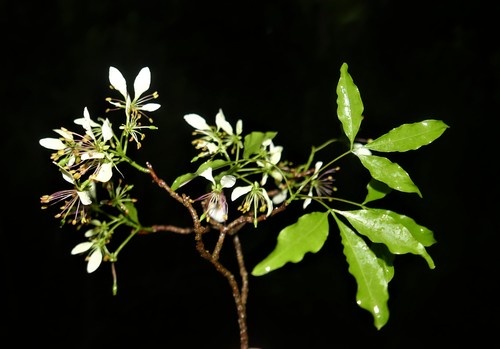
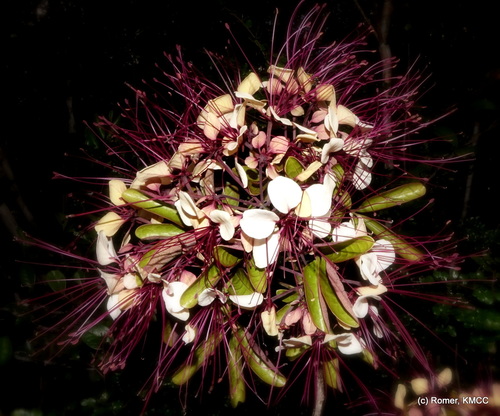
A tree. It loses its leaves during the year. It grows 5-10 m tall. It can be taller. The leaves have narrowly oval leaflets. They are 6-10 cm long by 2-3 cm wide. There are 13-25 flowers in a group. The fruit are 3-4 cm across.
Edible Uses
The young leaves and buds are used as a vegetable, prepared by cooking or pickling. The roots are also edible portions.
Traditional Uses
The young leaves and buds are used as a vegetable. They are cooked and also pickled.
This uses section is brief — help expand it
Medicinal Uses
The plant is cultivated and sold in local markets.
Distribution
It is a temperate plant. It grows in wet areas below 1,500 m in southern China. In Yunnan.
Where It Grows
Asia, Bangladesh, Bhutan, Cambodia, China, Himalayas, India, Laos, Myanmar, Nepal, SE Asia, Vietnam,
Other Uses
The bark contains tannin. The wood is moderately hard. It is used for poles. The wood is used for fuel.
Other Information
It is cultivated. It is sold in local markets.
Also Known As
Genemu, Ji bu, Man nei luo ba, Pagong, Sipligan, Uomia, Wo ni kuo tuo luo, Zhai niao gai
References (9)
- Aryal, K. P. et al, 2009, Uncultivated Plants and Livehood Support - A case study from the Cheopang people of Nepal. Ethnobotany Research and Applications. 7:409-422
- Cao, Y., et al, 2020, Ethnobotanical study on wild edible plants used by three trans-boundary ethnic groups in Jiangcheng County, Pu’er, Southwest China. Journal of Ethnobiology and Ethnomedicine (2020) 16:66
- Dangol, D. R. et al, 2017, Wild Edible Plants in Nepal. Proceedings of 2nd National Workshop on CUAOGR, 2017.
- Fu, Yongneng, et al, 2003, Relocating Plants from Swidden Fallows to Gardens in Southwestern China. Economic Botany, 57(3): 389-402
- Luo, B., et al, 2019, Wild edible plants collected by Hani from terraced rice paddy agroecosystem in Honghe Prefecture, Yunnan, China. Journal of Ethnobiology and Ethnomedicine 15:56
Show all 9 references Hide references
- Singh, A. G., Panthi, M. P., & Tewari, D. D., 2012, Wild Plants Used as Vegetable in Rupandehi District of Nepal and their Ethnomedicinal Importance. J. Nat. Hist. Mus. Vol. 26, 2012, 111-125
- Uprety, Y., et al, 2011, Plant biodiversity and ethnobotany inside the projected impact area of the Upper Seti Hydropower Project, Western Nepal. Environ. Dev. Sustain. (2011) 13:463-492
- Uprety, Y., et al, 2012, Diversity of use and local knowledge of wild edible plant resources in Nepal. Journal of Ethnobotany and Ethnomedicine 8:16
- Xu, You-Kai, et al, 2004, Wild Vegetable Resources and Market Survey in Xishuangbanna, Southwest China. Economic Botany. 58(4): 647-667.