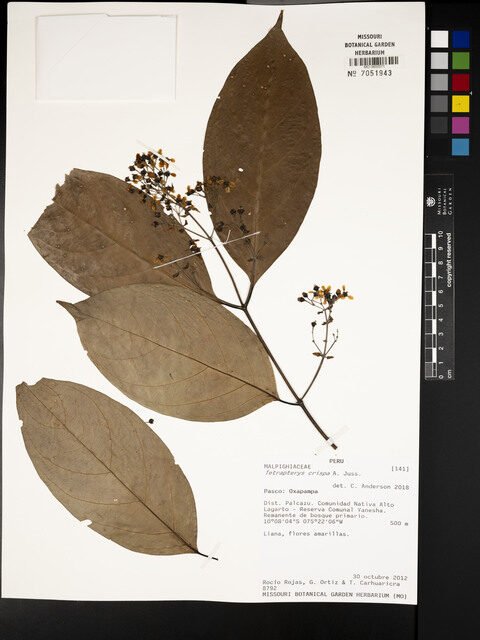
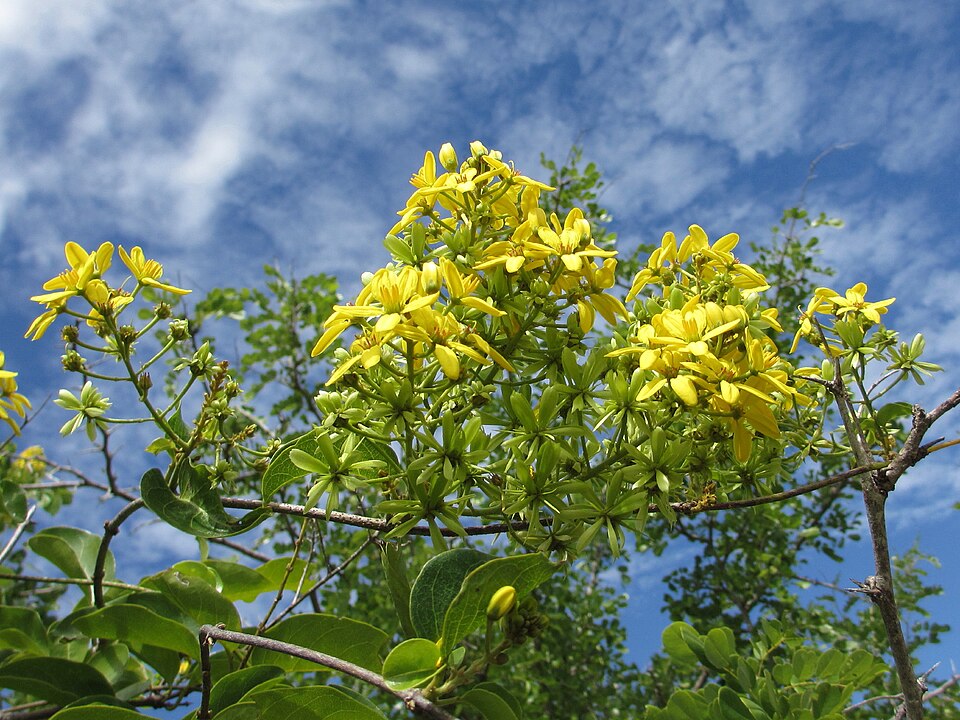
Byrsonima crassifolia
(L.) Kunth.
Nance, Golden spoon
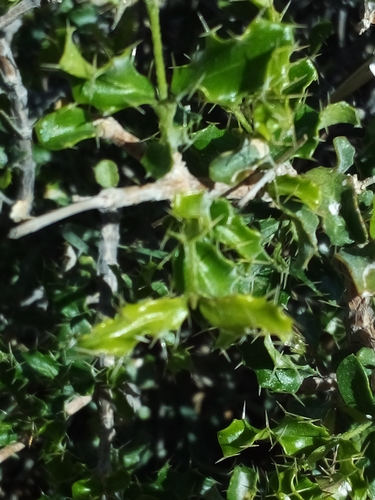
iNaturalist· cc-by-nc
(c) Carlos Galindo-Leal, some rights reserved (CC BY-NC), uploaded by Carlos Galindo-Leal
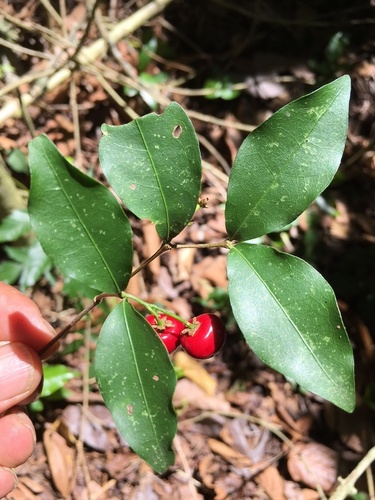
iNaturalist· cc-by-nc
(c) Callie, some rights reserved (CC BY-NC), uploaded by Callie
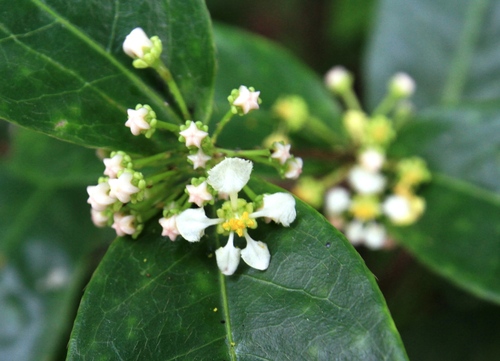
iNaturalist· cc-by-nc
(c) Nathaline E. Taylor Aquino, some rights reserved (CC BY-NC), uploaded by Nathaline E. Taylor Aquino
Summary
Source: WikipediaByrsonima crassifolia is a species of flowering plant in the family Malpighiaceae, native to tropical America. Common names used in English include nance, maricao cimun, craboo, and golden spoon. In Jamaica it is called hogberry. The plant is valued for its small (between one, and one and a quarter centimeter in diameter) round, sweet yellow fruit which is strongly scented. The fruits have a very pungent and distinct flavor and smell. When jarred, their texture resembles that of a green or kalamata olive.
Description
A medium sized evergreen tree. It grows 2-10 m tall. The bark is cracked. The leaves are simple and opposite. They are 7-15 cm long by 3-7 cm wide. They are rich green and shiny but paler underneath. The veins and leaf stalks are a rusty red colour. The flowers are rich yellow and have a crumpled appearance. The flowers are held in erect, hairy racemes. These are 6-15 cm long. The fruit are small and sweet and green when young but orange-yellow when ripe. They are 1-5 cm across. They have an aroma. They have a thin skin and white, juicy pulp.
Edible Uses
Edible Parts: Fruit Oil Edible Uses: Drink Oil Fruit - raw or cooked. Thin-skinned and peculiarly odorous, with a white, juicy, oily pulp that varies in flavour from insipid to sweet, acid or cheese-like. A very popular fruit, it is usually eaten out of hand, and is also cooked as a dessert, used in jams, soups, sherbets etc. A refreshing drink, known as 'chicha', is obtained from the fermented fruits - it is very much relished by most Panamanians. The orange-yellow round fruit is up to 5cm in diameter with a single, fairly large stone, containing 1-3 white seeds. An edible fat is extracted from the fruit with boiling water.
Traditional Uses
The fruit are eaten fresh. They are also used in desserts, jams, soups, and stuffings for meat. They are also used in drinks. In Panama they are fermented to make a drink called Chica. An edible fat is extracted from the fruit with boiling water. Caution: There has been some concern about the fruit causing gastrointestinal disorders.
Medicinal Uses
Antacid Antidiarrhoeal Antidote Antiinflammatory Astringent Dysentery Emmenagogue Febrifuge Hypotensive Mouthwash Poultice Purgative Skin Stings The bark (probably the inner bark is rich in tannins and has been used medicinally by many local peoples. It is antidote, antiinflammatory, astringent, emmenagogue, febrifuge and purgative. It has been used to treat gastrointestinal disorders, including indigestion, diarrhoea and dysentery; pulmonary complaints; snakebites; fevers; cases of leucorrhoea; and to promote menstruation. The bark has been used externally as a wash or poultice to treat wounds, skin infections, ulcers etc. As a mouthwash it has been used to tighten the teeth where gums are diseased. An infusion of the leaves is used to treat high blood pressure. The leaves are used as a wash to clean and soothe ulcers. The brown powder from the under surface of the leaf is applied onto the cut end of the umbilical cord to prevent infection. The sap from the bark and leaves is inserted into the orifice of the penis as a treatment for gonorrhoea. The leaves contain various flavonoids, saponins and terpenes.
Known Hazards
The leaves and stems, if put in water, can stupefy fish. This possibly means they contain saponins. Although poisonous, saponins are poorly absorbed by the human body and so most pass through without harm. Saponins are quite bitter and can be found in many common foods such as some beans. They can be removed by carefully leaching in running water. Thorough cooking, and perhaps changing the cooking water once, will also normally remove most of them. However, it is not advisable to eat large quantities of food that contain saponins. Saponins are much more toxic to some creatures, such as fish, and hunting tribes have traditionally put large quantities of them in streams, lakes etc in order to stupefy or kill the fish.
Distribution
A tropical plant. It suits hot tropical lowlands. It is native to C. and S. America. In the Amazon it grows to 2,000 m altitude. It can tolerate some drought and has wind resistance. It suits subtropical climates but is not very hardy. It will grow on poor soils. It can tolerate salty soils. It can grow in arid places. It suits hardiness zones 9-12.
Where It Grows
Africa, Amazon, Argentina, Asia, Australia, Barbados, Belize, Bolivia, Brazil*, Caribbean*, Central America, Colombia, Costa Rica, Cuba, Dominica, Dominican Republic, El Salvador, French Guiana, Gambia, Guadeloupe, Guatemala, Guianas, Guyana, Haiti, Hawaii, Honduras, India, Indonesia, Jamaica, Mexico, Nicaragua, North America, Pacific, Panama, Paraguay, Peru, Philippines, Puerto Rico, SE Asia, Sierra Leone, South America, Suriname, Trinidad-Tobago, USA, Venezuela, West Africa, West Indies*,
Cultivation
Plants are grown from seed. The seeds are collected from ripe fruit are the flesh removed by allowing them to partly decompose in a plastic bag. The pulp is removed under running water. Seeds need to be planted fresh. They are best in light shade. Seedlings emerge in 25-35 days.
Propagation
Seed - best sown as soon as it is ripe in a partially shaded position in a nursery seedbed. A germination rate of less than 30% can be expected, with the seed sprouting within 25 - 35 days. The seeds are collected from ripe fruit are the flesh removed by allowing them to partly decompose in a plastic bag. The pulp is removed under running water. Seeds need to be planted fresh. They are best in light shade.
Other Uses
Charcoal Dye Fibre Fire retardant Furniture Ink Oil Soil reclamation Tannin Wood Other uses rating: Medium (3/5). Small flowering tree, backyard tree, Accent, Large planter, Small street tree, Xerophytic. Agroforestry Uses: The tree is well suited for the restoration of infertile and burned-over land. It has a heavy leaf fall which helps to restore soil fertility. Other Uses The bark contains 17-28 % tannin and 3 % oxalic acid. It is employed in tanning. The fruit is high in tannin, especially when unripe and is sometimes used in dyeing. The fruit skin imparts a light-brown hue to cotton cloth. An ink can be made from the bitter green fruit. The bark yields a strong fibre. The heartwood is a reddish or pinkish-brown; the thin band of sapwood is greyish. It is coarse-textured; close and cross-grained. The wood is heavy, hard, tough, strong, brittle, and only moderately durable. It takes a good polish. The wood is usually available only in small sizes; it is highly prized for boat ribs, and is used for tool handles, turnery, cabinetwork, furniture and small-scale construction. In Brazil, the wood is chosen for the hot fire over which people smoke the stimulant paste of guaran' (Paullinia cupana) because the burning wood has a pleasant odour. In some areas, the wood is used for making a good quality charcoal. This plant is attractive to bees, butterflies and birds. Special Uses Attracts Wildlife Food Forest
Production
It is a slow growing tree.
Other Information
It is a cultivated fruit tree. The fruit are sold in Central American markets. They are commonly used in Costa Rica.
Notes
There are 127 Byrsonima species. They grow in tropical America. The roots and stems have anti-bacterial activity.
Nutrition
| Part | Moisture | kJ | kcal | Protein | Vit A | Vit C | Iron | Zinc |
|---|---|---|---|---|---|---|---|---|
| Fruit | 82.8 | 276 | 66 | 0.1 | 50 | 140 | 17 | — |
Synonyms
Also Known As
Bois corne, Cereza, Changunga, Chaparro, Craboo, Eheb, Indano, Lontoekasi, Manero, Manteco, Maricas, Marushi, Miga, Murei, Murici, Muriye, Muruci, Nananche, Nanche, Nanci, Nancite, Perpleja, Pohon ceri liar, Sabanakwari, Savanna serret, Yoco
References (62)
- Abadio Finco, F. D. B. et al, 2012, Physicochemical characteristics and Antioxidant activity of three native fruit from Brazilian savannah (Cerrado). Alim. Nutr. Araraquara, v 23, n. 2 pp 179-185
- Arellanes, Y., et al, 2013, Influence of traditional markets on plant management in the Tehuacan Valley. Journal of Ethnobiology and Ethnomedicine 9:38
- Barwick, M., 2004, Tropical and Subtropical Trees. A Worldwide Encyclopedic Guide. Thames and Hudson p 74
- Bircher, A. G. & Bircher, W. H., 2000, Encyclopedia of Fruit Trees and Edible Flowering Plants in Egypt and the Subtropics. AUC Press. p 71 (Also as Byrsonima pulchra)
- Blake, S. F., Native Names and Uses of some Plants of Eastern Guatemala and Honduras. Contributions from the National Herbarium. p 87
Show all 62 references Hide references
- Bortolotto, I. M., et al, 2018, Lista preliminar das plantas alimenticias nativas de Mato Grosso do Sul, Brasil. Iheringia, Serie Botanica, Porto Alegre, 73 (supl.):101-116
- Brazil: Biodiversity for Food and Nutrition. http://www.b4fn.org/countries/brazil/
- Burkill, H. M., 1985, The useful plants of west tropical Africa, Vol. 4. Kew.
- Casas, A., et al, 1996, Plant Management Among the Nahua and the Mixtec in the Balsas River Basin, Mexico: An Ethnobotanical Approach to the Study of Plant Domestication. Human Ecology, Vol. 24, No. 4 pp. 455-478
- Castaneda, H., & Stepp, J. R., 2007, Ecosystems as Sources of Useful Plants for the Guaymi People of Costa Rica. Ethnobotany Journal. 5:249-257
- Chizmar Fernandez, C., et al, 2009, Plantas comestibles de Centroamerica. Instituto de Biodiversidad, Costa Rica. p 224
- Coe, F. G., and Anderson, G. J., 1996, Ethnobotany of the Garifuna of Eastern Nicaragua. Economic Botany 50(1) pp 71-107
- Coe, F. G. & Anderson, G. J., 1997, Ethnobotany of the Miskitu of Eastern Nicaragua. Journal of Ethnobiology 17(2): 171-214
- Coe, F. G. and Anderson, G. J., 1999, Ethnobotany of the Sumu (Ulwa) of Southeastern Nicaragua and Comparisons with Miskitu Plant Lore. Economic Botany Vol. 53. No. 4. pp. 363-386
- Condit, R., et al, 2011, Trees of Panama and Costa Rica. Princeton Field Guides. p 270
- Cruz, I. M., et al, 2015, Edible fruits and seeds in the State of Mexico. Revista Mexicana de Ciencias Agricolas. Vol. 6. Num. 2 pp 331-346
- D'Ambrosio, U., & Puri, R. K., 2016, Foodways in transition: food plants, diet and local perceptions of change in a Costa Rican Ngäbe community. Journal of Ethnobiology and Ethnomedicine (2016) 12:3 p 26
- Facciola, S., 1998, Cornucopia 2: a Source Book of Edible Plants. Kampong Publications, p 146
- Grandtner, M. M., 2008, World Dictionary of Trees. Wood and Forest Science Department. Laval University, Quebec, Qc Canada. (Internet database http://www.WDT.QC.ca)
- Grandtner, M. M. & Chevrette, J., 2013, Dictionary of Trees, Volume 2: South America: Nomenclature, Taxonomy and Ecology. Academic Press p 83
- Hedrick, U.P., 1919, (Ed.), Sturtevant's edible plants of the world. p 140
- Hermandez Bermejo, J.E., and Leon, J. (Eds.), 1994, Neglected Crops. 1492 from a different perspective. FAO Plant Production and Protection Series No 26. FAO, Rome. p15, 30
- Hunter, D., et al, 2019, The potential of neglected and underutilized species for improving diets and nutrition. Planta (2019) 250:709-729
- Kiple, K.F. & Ornelas, K.C., (eds), 2000, The Cambridge World History of Food. CUP p 1821
- Langlois, H. C., 2004, Ethnobotanical analysis of different successional stages as sources of wild edible plants for the Guaymi people in Costa Rica. M. Sc. thesis University of Florida.
- Llamas, K.A., 2003, Tropical Flowering Plants. Timber Press. p 251
- Lopez-Diago, D. & Garcia, N., 2021, Wild edible fruits of Colombia. Biota ColomBiana 22 (2) p 41
- Lorenzi, H., Bacher, L., Lacerda, M. & Sartori, S., 2006, Brazilian Fruits & Cultivated Exotics. Sao Paulo, Instituto Plantarum de Estuados da Flora Ltda. p 157
- Lorenzi, H., 2009, Brazilian Trees. A Guide to the Identification and Cultivation of Brazilian Native Trees. Instituto Plantarum de Estuados da Flora Ltda. Vol. 3 p 190
- Mapes, C. & Basurto, F., 2016, Biodiversity and Edible Plants of Mexico. Chapter 5 in R. Lira, et al. (eds.), Ethnobotany of Mexico, Ethnobiology, Springer. p 99
- Martin, F. W., et al, 1987, Perennial Edible Fruits of the Tropics. USDA Handbook 642 p 36
- McLaughlin, J., Woody and Herbaceus Plants Native to Haiti. University of Florida. p 11
- Meerman, J. C., 1993, Provisional Annonated Checklist of the Flora of the Shipstern Nature Reserve. Occasional Papers of The Belizean Natural History. Vol.2, Nos. 1-11 p 27
- Miguel, E., et al, 1989, A checklist of the cultivated plants of Cuba. Kulturpflanze 37. 1989, 211-357
- Morton, J. F., 1987, Fruits of Warm Climates. Wipf & Stock Publishers p 206
- Mutchnick, P. A. and McCarthy, B. C., 1997, An Ethnobotanical Analysis of the Tree Species Common to the Subtropical Moist Forests of the Peten, Guatemala. Economic Botany, Vol. 51, No. 2, pp. 158-183
- Pascual-Mendoza, S. et al, 2021, Traditional knowledge of edible plants in an indigenous community in the Sierra Norte of Oaxaca, Mexico. Plant Biosystems - An International Journal Dealing with all Aspects of Plant Biology
- Paz, F. S., et al, 2021, Edible Fruit Plant Species in the Amazon Forest Rely Mostly on Bees and Beetles as Pollinators. Journal of Economic Entomology, XX(XX), 2021, 1–13
- Piedra-Malagón, E. M., et al, 2022, Edible native plants of the Gulf of Mexico Province. Biodiversity Data Journal 10: e80565 p 23
- Plants of Haiti Smithsonian Institute http://botany.si.edu/antilles/West Indies
- Recher, P, 2001, Fruit Spirit Botanical Gardens Plant Index. www.nrg.com.au/~recher/ seedlist.html p 1
- Reis, S. V. and Lipp, F. L., 1982, New Plant Sources for Drugs and Foods from the New York Botanical Garden herbarium. Harvard. p 150 (As Byrsonima karwinskiana)
- Roa, J. A. G. & Boada, D. S. G., 2018, Fundación para el Fortalecimiento de la Fruticultura y Plantas Alimenticias no Convencionales en Colombia.
- Royal Botanic Gardens, Kew (1999). Survey of Economic Plants for Arid and Semi-Arid Lands (SEPASAL) database. Published on the Internet; http://www.rbgkew.org.uk/ceb/sepasal/internet [Accessed 3rd May 2011]
- Rufina, M. S. M., et al, 2009, Free radical-scavenging behaviour of some north-east Brazilian fruits in a DPPH system. Food Chemistry 114:693-695
- Smith, N., Mori, S.A., et al, 2004, Flowering Plants of the Neotropics. Princeton. p 232
- Standley, P. C. & Record, S. J., 1936, The Forests and Flora of British Honduras. (Belize). p 206
- Staples, G.W. and Herbst, D.R., 2005, A tropical Garden Flora. Bishop Museum Press, Honolulu, Hawaii. p 382
- Sukarya, D. G., (Ed.) 2013, 3,500 Plant Species of the Botanic Gardens of Indonesia. LIPI p 168
- Tomchinsky, B., et al, 2021, Food Composition Data: Edible Plants from the Amazon. in M. C. M. Jacob, U. P. Albuquerque (eds.), Local Food Plants of Brazil, Ethnobiology, Springer p 276
- Turreira-Garcia, N., et al, 2015, Wild edible plant knowledge, distribution and transmission: a case study of the Achi Mayans of Guatemala. Journal of Ethnobiology and Ethnomedicine. 11:52
- USDA, ARS, National Genetic Resources Program. Germplasm Resources Information Network - (GRIN). [Online Database] National Germplasm Resources Laboratory, Beltsville, Maryland. Available: www.ars-grin.gov/cgi-bin/npgs/html/econ.pl (10 April 2000)
- van Roosmalen, M.G.M., 1985, Fruits of the Guianan Flora. Utrecht Univ. & Wageningen Univ. p 263
- Vazquez-Garcia. V., 2008, Gender, ethnicity, and economic status in plant management: Uncultivated edible plants among the Nahuas and Popolucas of veracruz, Mexico. Agriculture and Human Values 25: 65-77
- Villachica, H., (Ed.), 1996, Frutales Y hortalizas promisorios de la Amazonia. FAO, Lima. p 165
- F. W. H. A. von Humboldt et al., Nov. gen. sp. 5:115[folio]; 5:149[quarto]. 1822
- Wiersema, J. H. & Leon, B., 2013, World Economic Plants. A Standard Reference CRC Press. 2nd Ed. p 125
- World Checklist of Useful Plant Species 2020. Royal Botanic Gardens, Kew
- www.colecionandofrutas.org
- www.worldagroforestrycentre.org/treedb/
- Yuncker, T.G., 1940, Flora of the Aguan Valley and the coastal regions near La Ceiba, Honduras. Botany Series, Field Museum of Natural History 9(4) p 300
- Zuchowski W., 2007, Tropical Plants of Costa Rica. A Zona Tropical Publication, Comstock Publishing. p 53