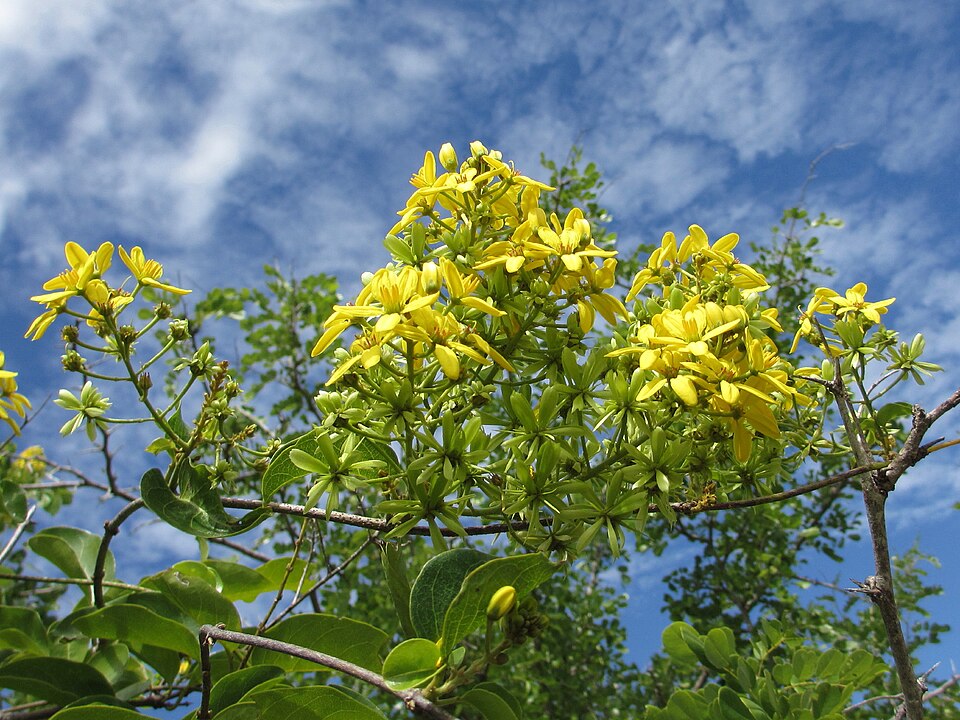
Malpighia glabra
L.
Escobillo, Acerola
iNaturalist· cc-by
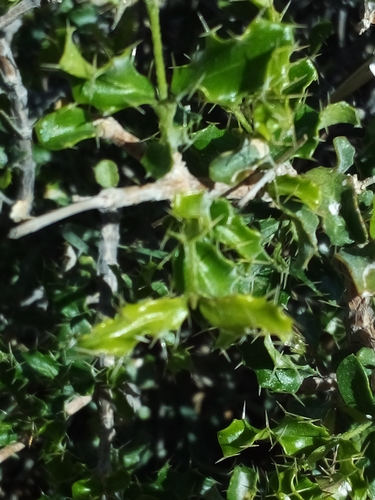
(c) John Rosford, some rights reserved (CC BY), uploaded by John Rosford
iNaturalist· cc0
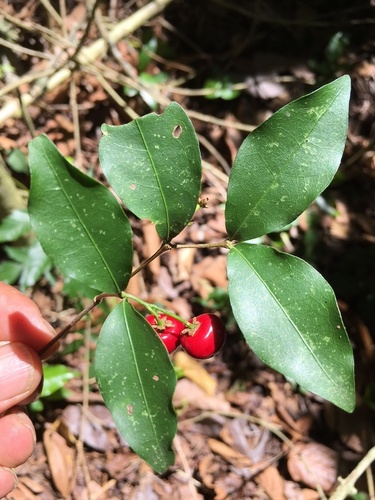
no rights reserved, uploaded by Center for Urban Ecology
iNaturalist· cc-by-nc
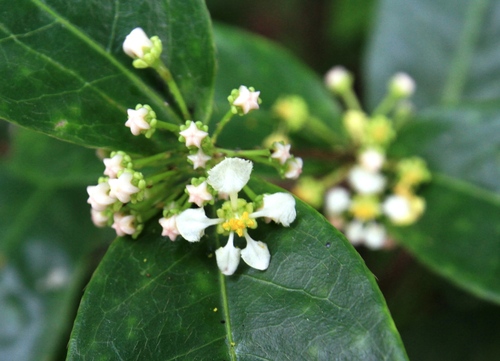
(c) gmartinezx, some rights reserved (CC BY-NC), uploaded by gmartinezx
Description
Malpighia glabra is an evergreen Shrub growing to 6 m (19ft) by 6 m (19ft) at a medium rate. See above for USDA hardiness. It is hardy to UK zone 10 and is frost tender. The flowers are pollinated by Bees. The plant is not self-fertile. It is noted for attracting wildlife. Suitable for: light (sandy), medium (loamy) and heavy (clay) soils and prefers well-drained soil. Suitable pH: mildly acid and neutral soils and can grow in very acid and saline soils. It can grow in semi-shade (light woodland) or no shade. It prefers moist soil and can tolerate drought. The plant can tolerates strong winds but not maritime exposure.
Edible Uses
Drink. Fruit - raw or cooked. The bright red fruit can range in flavour from sweet to somewhat acid. As well as being eaten out of hand, they can also be stewed, made into juices, sauces, jellies, jams, wines or purees. The ovoid fruit is 10 - 35mm in diameter.
Medicinal Uses
Antidiarrhoeal Antitussive Dysentery Pectoral Vitamin CThe fruits are considered beneficial against liver problems, diarrhoea, dysentery, coughs and colds. The bark exudes a gum that is recommended as a pectoral. Known historically as a natural source of ascorbic acid (Vitamin C). Ascorbic acid levels in fresh acerola fruit are in the range of 1.5 to 4% by weight. A glass of acerola juice (180-ml) contains 35mg/ml of ascorbic acid the same as 14 litres of orange Juice.
Distribution
C. America - Mexico to northern S. America and the Caribbean.
Where It Grows
NORTHERN AMERICA: United States, Texas, Mexico, Nuevo León, San Luis Potosí, Tamaulipas, Campeche, Chiapas, Guerrero, Hidalgo, Oaxaca, Quintana Roo, Tabasco, Veracruz de Ignacio de la Llave, Yucatán, SOUTHERN AMERICA: Hispaniola, Netherlands Antilles, Cuba, Haiti, Jamaica, Belize, Costa Rica, Guatemala, Honduras, Nicaragua, Panama, El Salvador, French Guiana, Venezuela, Colombia, Peru,
Cultivation
A plant of the subtropics to hot, tropical, lowland areas with medium to high rainfall. It can be found at elevations up to 1,700 metres, but does best below 800 metres. It grows best in areas where annual daytime temperatures are within the range 24 - 30°c, but can tolerate 5 - 34°c. When dormant, the plant can survive temperatures down to about -2°c, but young growth can be severely damaged at -1°c. It prefers a mean annual rainfall in the range 1,300 - 2,000mm, but tolerates 700 - 2,400mm. Tolerates seasonally dry periods. Easily grown in a good soil and a sunny position. Prefers a rich, deep and well drained soil but is able to tolerate a variety of soil conditions. Sandy soils carry an increasing risk of nematode infection. Prefers a pH in the range 5.5 - 7.5, tolerating 5 - 8. Requires a pH in excess of 5.5. Established plants are drought tolerant. Plants are fairly tolerant of salt-laden winds. Seedlings can fruit when only 2 - 3 years old, but are not always of as good quality as their parents. Trees start to produce well 3 - 4 years after planting and continue for 15 years. Plants can produce several flushes of flowers each year. The flowers are very attractive to bees. Plants can produce 2 - 3 crops of fruit a year. Individual trees can produce 15 - 30 kilos of fruit each year. Yields of 6.7 - 105 tonnes per hectare have been recorded. Plants usually require cross-pollination to ensure a good fruit set, though there are some reports of self-fertilization. Flowering Time: Mid Spring Late Spring/Early Summer. Bloom Color: Rose/Mauve. Spacing: 15-20 ft. (4.7-6 m).
Propagation
Seed - germination is slow, with only 5 - 50% of the seed germinating. Cuttings Layering Grafting
Other Uses
Hedge Tannin Wood. Agroforestry Uses: The plants are suitable for hedges. Other Uses The bark has been used as a source of tannin. The wood is hard and heavy. It can be used for making small utensils.
Synonyms
Also Known As
Escobillo, Acerola, Barbados Cherry, Wild Crapemyrtle, Antilles cherry, Buesito, Cereso, Choeri, Escobillo, Murta, Palo bonito, San juanillo, San ruanillo, Simeyaranelli, So'ri, Vallari, West Indian cherry, Xochototl