Miconia calvescens
DC.
Velvet tree
iNaturalist· cc-by-nc
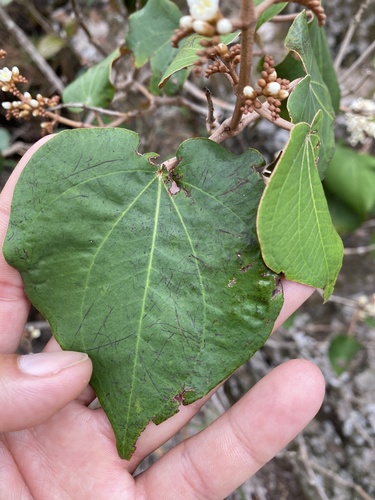
(c) John, some rights reserved (CC BY-NC), uploaded by John
iNaturalist· cc-by-nc
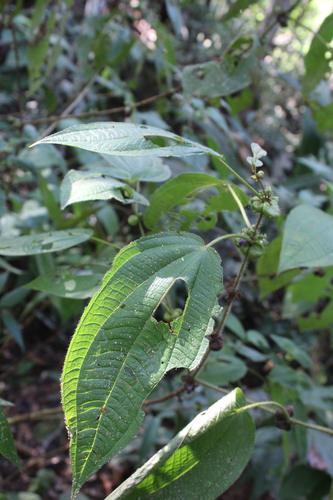
(c) Chris Buddenhagen, some rights reserved (CC BY-NC)
iNaturalist· cc-by-nc
(c) Sabina Lucke Lawrence, some rights reserved (CC BY-NC)
Summary
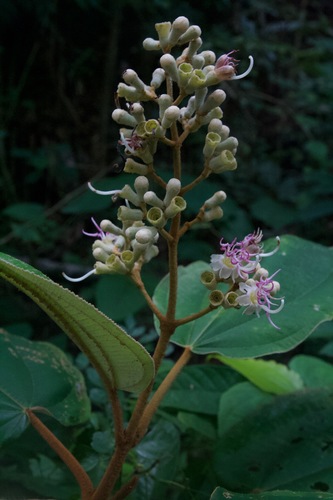
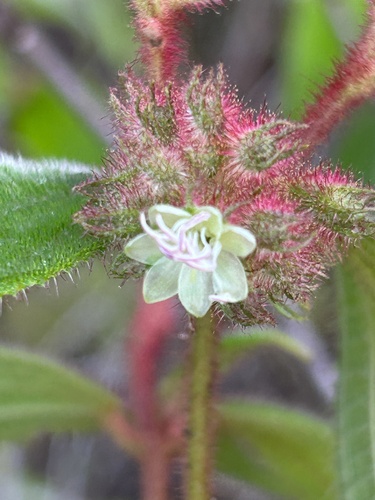
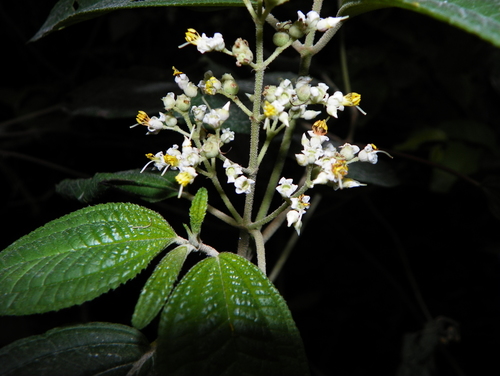
Source: WikipediaMiconia calvescens, the velvet tree, miconia, or bush currant, is a species of flowering plant in the family Melastomataceae. It is native to Mexico and Central and South America and it has become one of the world's most invasive species. Miconia trees can flower several times a year and bear fruit simultaneously. The inflorescences are large panicles of white to light pink blossoms. The tiny purple fruits are about half a centimeter in diameter and packed with about 120–230 minuscule seeds. The sweet fruits are attractive to birds and other animals which disperse the seeds. A young tree with only two flower panicles can produce 200,000 seeds in its first fruiting season. This heavy seed production and potential for long-distance dispersal help make miconia an invasive threat. The seeds can lie dormant in the soil of the forest for more than 12 years, and whenever a break in the canopy allows sun to shine through to a patch of soil the seeds there undergo germination. Once the plants grow to full height, their enormous leaves shade out all the space below them, preventing any other plant from growing nearby. It also has a shallow root system that facilitates soil erosion. The tree can grow to a height of 15 metres (49 ft) and has very large leaves, each up to 1 metre (3.3 ft) in length. Its purple and green leaves with flashy white veining made it attractive as an ornamental, and it was imported to Hawaii and other new areas in the mid-twentieth century.
Description
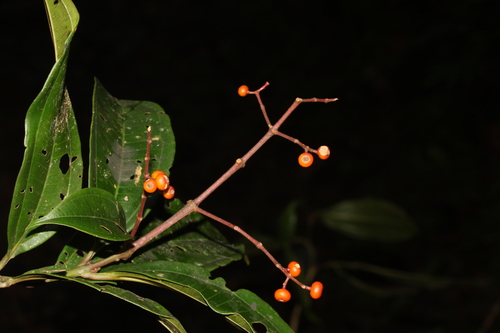
A tree. It grows 15 m tall. The leaves are large and can be 1 m long. The leaves are purple and green with white veins. The flowers are in large panicles. They are white or pink. The fruit are small and purple. They are about 1 cm across. They are filled with many very small seeds.
Edible Uses
We have no specific information for this species, but the small, blue, purple or black fruits of many, if not all, species in this genus is edible. The fruit of this species is ovoid, pinkish-brown or yellow when mature, around 4mm in diameter. A sweet flavour.
Traditional Uses
The fruit are eaten raw.
This uses section is brief — help expand it
Distribution
It is a tropical plant. In Argentina it grows from sea level to 2,000 m above sea level.
Where It Grows
Argentina, Australia, Belize, Bolivia, Brazil, Central America, Colombia, Ecuador, Guatemala, Hawaii, Honduras, Jamaica, Mexico, Nicaragua, Panama, Peru, South America*, Sri Lanka,
Cultivation
Seeds can be produced in large numbers and lie dormant in the soil for 12 years. They need sun to germinate.
Other Uses
The heartwood is a pale pinkish or dark brown; the sapwood pale white or light yellowish brown with a grayish cast, darkening somewhat on exposure. The texture is fine or medium, lustrous. The wood is of light to medium weight. It is easy to work, though it saws slightly woolly; it takes a smooth, fairly lustrous finish; liable to check in drying. The wood is sometimes used for fuel.
Notes
It can be invasive.
Synonyms
Also Known As
Abranda-fogo, Barbecho, Bush currant, Chhiriria tetacho, Chinchak, Green cancer, Moreda, Pepa de pajaro, Pishku mikuna muyu yura, Purple plague, Sirak
References (5)
- Kermath, B. M., et al, 2014, Food Plants in the Americas: A survey of the domesticated, cultivated and wild plants used for Human food in North, Central and South America and the Caribbean. On line draft. p 536
- Kew Plants of the World Online
- Roa, J. A. G. & Boada, D. S. G., 2018, Fundación para el Fortalecimiento de la Fruticultura y Plantas Alimenticias no Convencionales en Colombia.
- Torre, de la, L., et al, 2008, Enciclopedia de las Plantas Útiles del Ecuador. Herbario QCA. Pontificia Universidad Católica del Ecuador. p 427
- Van den Eynden, V., et al, 2003, Wild Foods from South Ecuador. Economic Botany 57(4): 576-603