Miconia secundivaricata
Ocampo & Almeda
Black seed
iNaturalist· cc-by-nc
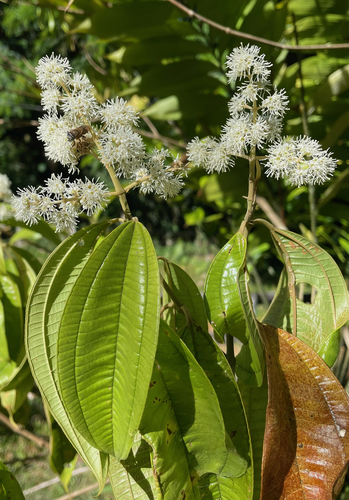
(c) accidentalshrike, some rights reserved (CC BY-NC), uploaded by accidentalshrike
iNaturalist· cc-by-nc
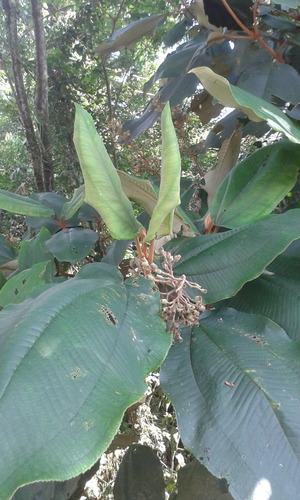
(c) Nils Servientis - Bivouac Naturaliste, some rights reserved (CC BY-NC)
Description
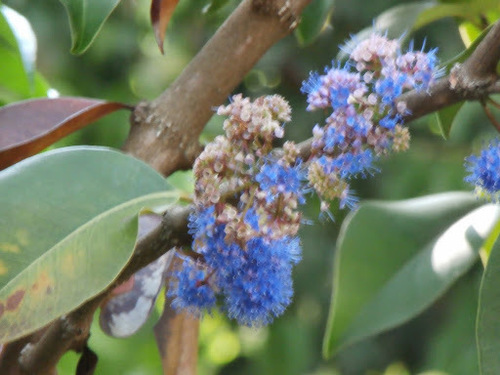
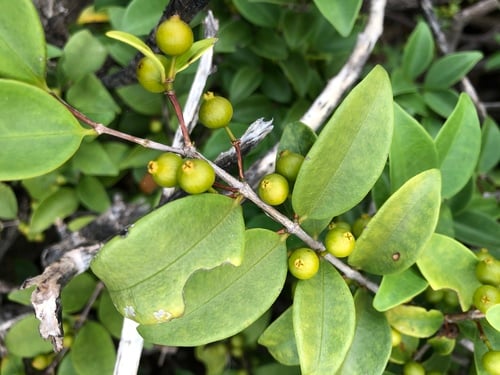
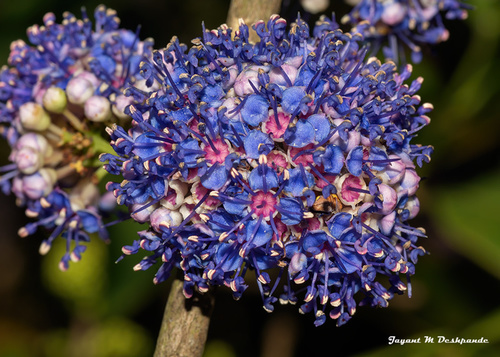
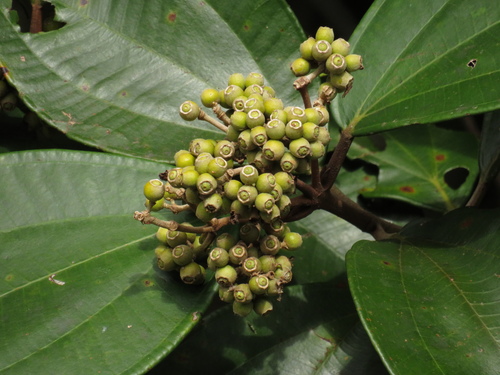
A small shrub. It grows 50 cm high. The young leaves are covered with long white hairs. The flowers are white. They are in groups at the ends of branches. The fruit are red berries that turn black when ripe.
Edible Uses
The small fruit are eaten for fun, especially by children, to stain the mouth purple.
Traditional Uses
The small fruit are eaten for fun to stain the mouth purple.
This uses section is brief — help expand it
Distribution
It is a tropical plant. It grows in secondary forest. It has been recorded at 380 m above sea level.
Where It Grows
America, Brazil, Colombia, French Guiana, Guianas, Guyana, South America, Suriname, Venezuela,
Other Information
The small fruit are eaten for fun especially by children to stain the mouth purple.
Synonyms
Also Known As
Nono pokono, Sokosoko
References (4)
- Kew Plants of the World On line
- NYBG herbarium "edible" (As Leandra divaricata)
- Roa, J. A. G. & Boada, D. S. G., 2018, Fundación para el Fortalecimiento de la Fruticultura y Plantas Alimenticias no Convencionales en Colombia. (As Leandra divaricata)
- van Andel, T., 2000, Useful plants of Guyana. Non-timber forest products of the North-West District of Guyana. Part 2. A Field Guide. Tropenbos-Guyana Programme. p 289 (As Leandra divaricata)