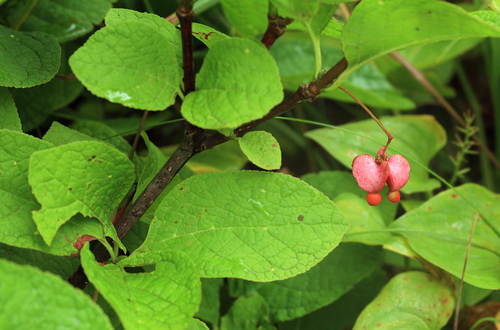
Salacia cordata
(Miers) Mennega
Luma blanca
iNaturalist· cc-by-nc
(c) Leonardo Álvarez-Alcázar, some rights reserved (CC BY-NC), uploaded by Leonardo Álvarez-Alcázar
iNaturalist· cc-by-nc
(c) sarievanbelle, some rights reserved (CC BY-NC)
iNaturalist· cc-by-nc
(c) sarievanbelle, some rights reserved (CC BY-NC)
Description
A small tree or vine. The vine can be 30 m tall. The fruit are yellow. They are round and 3 cm across. They have a downy cream to white coating. There are 4 seeds in a jelly like pulp.
Edible Uses
Fruit - raw. The translucent, jelly-like pulp surrounding the seeds is eaten. The yellow to peach-coloured, globose fruit is around 3cm in diameter, containing around 4 seeds.
Medicinal Uses
The fruit has some medicinal applications.
Distribution
It is a tropical plant. It grows in the understorey. It grows in flood plain forests. It grows below 1,900 m above sea level.
Where It Grows
Amazon, Bolivia*, Brazil, Central America, Colombia, Ecuador, Guianas, Guyana, Mexico, North America, Peru*, South America, Suriname, Venezuela,
Production
The fruit ripen in the rainy season.
Notes
Also in family Hippocrataceae.
Also Known As
Auca murco huasco, Chuchuaso, Chuchuhuaso, Gogo, Luma blanca, Puricho huayo, Tegualala, Tiribu, Zapote de campo
References (7)
- NYBG herbarium "edible"
- Piedra-Malagón, E. M. et al, 2022, Edible native plants of the Gulf of Mexico Province. Biodiversity Data Journal 10: e80565 p 17 (As Myginda latifolia)
- Roa, J. A. G. & Boada, D. S. G., 2018, Fundación para el Fortalecimiento de la Fruticultura y Plantas Alimenticias no Convencionales en Colombia.
- Segura, S., et al, 2018, The edible fruit species in Mexico. Genet Resour Crop Evol (2018) 65:1767–1793
- Smith, N., et al, 2007, Amazon River Fruits. Flavors for Conservation. Missouri Botanical Gardens Press. p 92
Show all 7 references Hide references
- Torre, de la, L., et al, 2008, Enciclopedia de las Plantas Útiles del Ecuador. Herbario QCA. Pontificia Universidad Católica del Ecuador. p 380
- Van den Eynden, V., et al, 2003, Wild Foods from South Ecuador. Economic Botany 57(4): 576-603