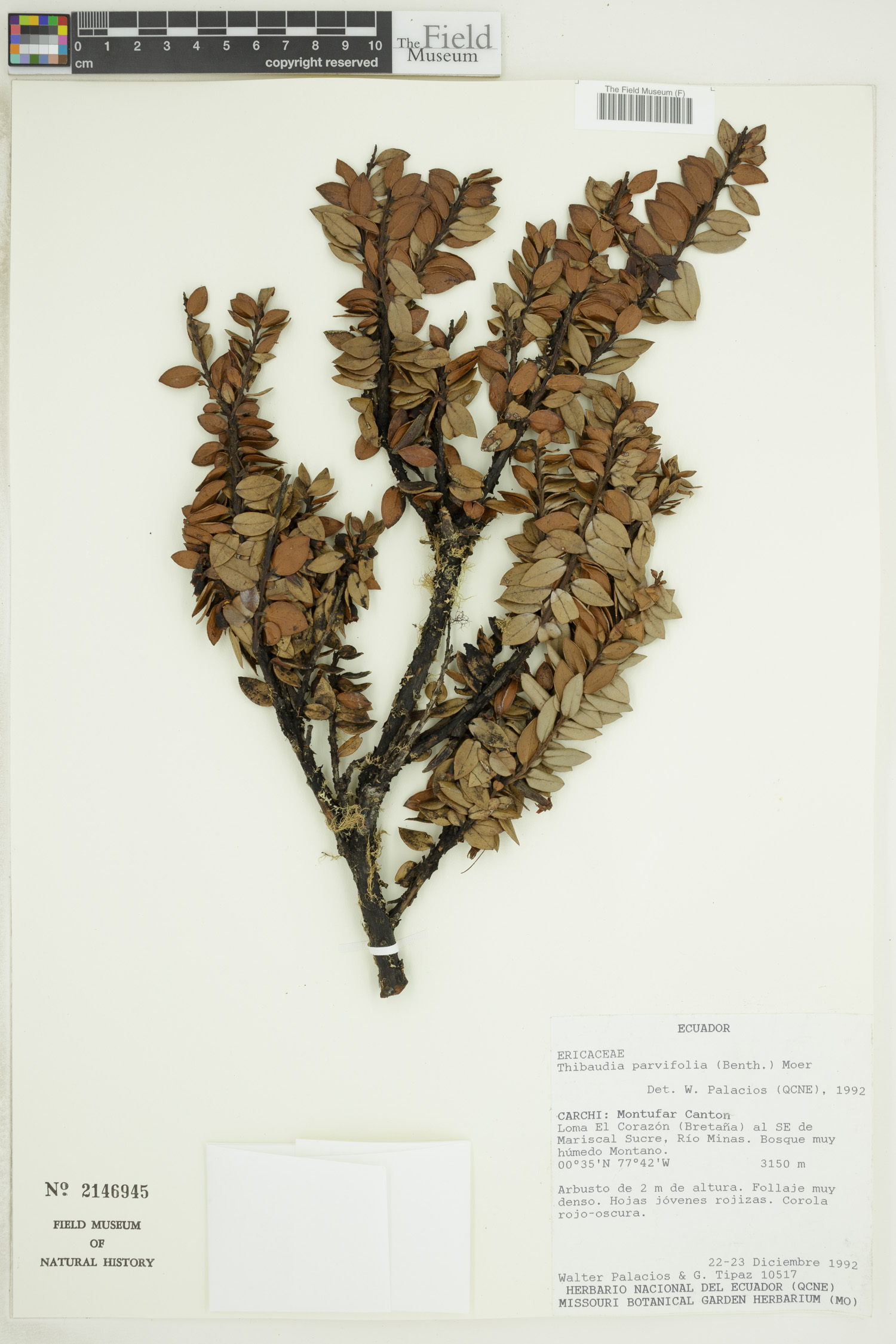
Vaccinium macrocarpon
Aiton
American cranberry, Cranberry
iNaturalist· cc-by-nc
(c) doug_mcgrady, some rights reserved (CC BY-NC), uploaded by doug_mcgrady
iNaturalist· cc-by
(c) christine123, some rights reserved (CC BY)
iNaturalist· cc-by-nc
(c) Erik Erbes, some rights reserved (CC BY-NC)
Summary
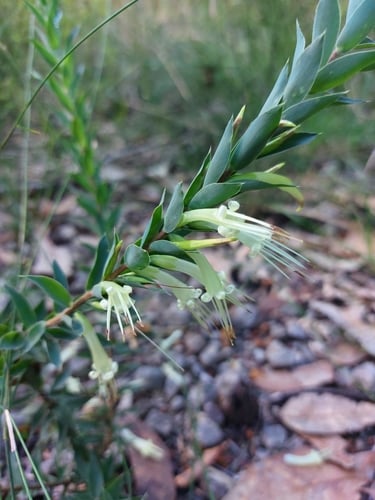
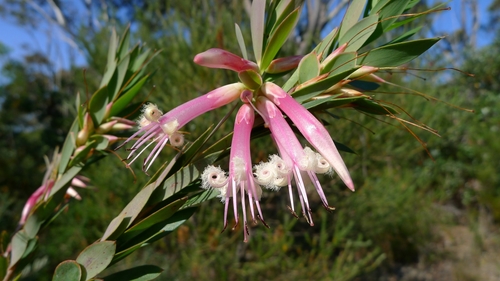
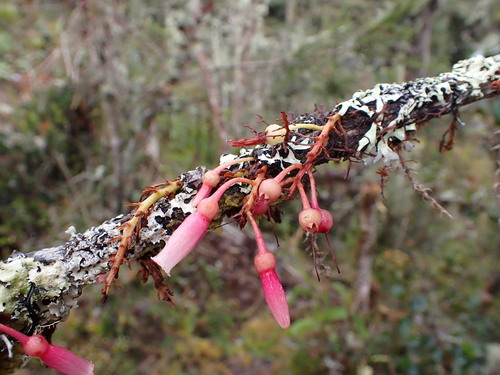
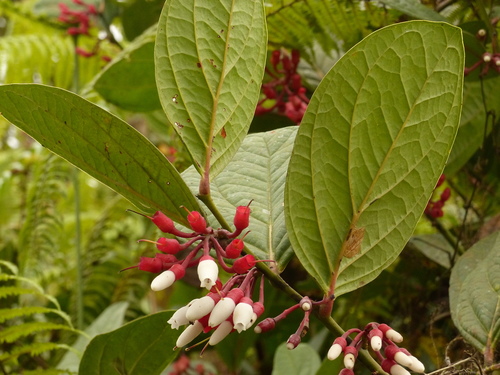
Source: WikipediaVaccinium macrocarpon, also called large cranberry, American cranberry and bearberry, is a North American species of cranberry in the subgenus Oxycoccus. The name cranberry comes from the shape of the flower stamen, which looks like a crane's beak.
Description
A perennial shrub. It grows 0.9 m high and spreads 1.5-3 m wide. It is low growing and evergreen. It forms roots as it spreads. The leaves are dark green. They are lighter underneath. The leaves are 5-8 mm long by 2-3 mm wide. The leaves have round tips and edges that roll under. The flowers are mauve. The stamens are longer than the petals. The flower stalks are slender and curved. The fruit are red. They are 12-20 mm across. They have 4 locules full of seeds. The seeds are small and there can be a few or up to 50 in each fruit. The fruit deepen in colour as they ripen. There are many named cultivated varieties.
Edible Uses
The fruit, which measures between 1 and 2cm in diameter, can be eaten raw or cooked, and dried for winter use. It is rich in vitamin C but too acid for most people to enjoy raw, so it is most commonly used in pies, preserves, and similar preparations. Adding a teaspoon of salt to the fruit while cooking is said to allow you to use about half the usual amount of sugar.
Traditional Uses
The fruit are used for pies, tarts, relishes and for sauce. They are used for juice. They are especially used for cranberry sauce with turkey meat. The dried fruit are called craysons.
Medicinal Uses
An infusion made from the branches has been used as a treatment for pleurisy.
Distribution
It is a temperate plant. They grow in sandy bogs that are irrigated. It grows in damp acidic soils mainly between 40°N and 50°N. It needs a very acidic soil. A pH of 4.0-5.5 is suitable. It suits hardiness zones 2-9.
Where It Grows
Asia, Australia, Britain, Canada, Europe, Lithuania, North America, Tasmania, USA,
Cultivation
Requires a moist or semi-boggy lime free soil, preferring one that is rich in peat or a light loamy soil with added leaf-mould. Prefers a very acid soil with a pH in the range of 4 to 4.5, plants soon become chlorotic when lime is present. Plants grow best in a poor soil, richer soils result in extra foliage production at the expense of fruit. Succeeds in full sun or light shade though it fruits better in a sunny position. Requires shelter from strong winds. A very dwarf shrub producing long slender creeping stems that root into the soil. Upright stems grow from the axillary buds in the second year and these upright stems flower and fruit the following year. Widely cultivated for its edible fruit in N. America, there are many named varieties. Cultivated plants are usually grown in artificial bogs that are often flooded in the winter. Plants can self-fertilize but cross-fertilization by insects results in higher yields. Cultivated plants take about 5 years to come into full bearing but will then crop well for 60 - 100 years. Dislikes root disturbance, plants are best grown in pots until being planted out in their permanent positions. Plants in this genus are notably resistant to honey fungus. An evergreen.
Propagation
Sow seed in late winter in a greenhouse using a lime-free potting mix, barely covering the seed. Stored seed may need up to 3 months of cold stratification. Alternatively, sow fresh seed in a greenhouse as soon as it is ripe. Prick seedlings out into individual pots once they reach about 5cm tall and grow on in a lightly shaded position in the greenhouse for at least their first winter. Plant out in late spring or early summer after the last expected frosts. Cuttings of shoots 15cm long can be taken in April, placed in a sandy mix in a frame and covered with plastic to retain moisture. Half-ripe cuttings, 5–8cm with a heel, can be taken in August and rooted in a frame, though this is slow and difficult. Layering can be done in late summer or early autumn, or in spring according to some sources, and takes 18 months. Suckers can be divided in spring or early autumn.
Other Uses
Plants can be used as ground cover when planted approximately 1 metre apart in each direction. They spread rapidly once well established.
Production
The flowers and fruit are produced on side shoots from the upright vines. The fruit are harvested by flooding the marshes and collecting them as they float. A useful crop can be harvested 4 years after planting.
Other Information
It is cultivated. Over 150,000 tons are produced each year.
Notes
It has anticancer properties.
Dangerous Lookalikes
This plant can be confused with the following toxic species. Always verify identification carefully before consuming any wild plant.
Deadly Nightshade
Atropa belladonna
Joan Simon from Barcelona, España
American cranberry
Vaccinium macrocarpon
(c) doug_mcgrady, some rights reserved (CC BY-NC), uploaded by doug_mcgrady
Deadly Nightshade: Tall herbaceous plant (1-2m), single shiny black cherry-sized berries, star-shaped calyx, large oval leaves, sweet but dangerous taste.
American cranberry: Low woody shrub, berries in clusters with crown/remnant calyx ring, sweet taste.
Nutrition
| Part | Moisture | kJ | kcal | Protein | Vit A | Vit C | Iron | Zinc |
|---|---|---|---|---|---|---|---|---|
| Fruit | 87 | 205 | 49 | 0.4 | 20 | 12 | 1.1 | 0.1 |
Synonyms
Also Known As
Airelle a gros fruits, Arando trepador, Craisons, Da guo yue jie, Kranbeere, Large cranberry, Mirtillo palustre
References (28)
- Beckstrom-Sternberg, Stephen M., and James A. Duke. "The Foodplant Database." http://probe.nalusda.gov:8300/cgi-bin/browse/foodplantdb.(ACEDB version 4.0 - data version July 1994) (As Oxycoccos macrocarpus)
- Bodkin, F., 1991, Encyclopedia Botanica. Cornstalk publishing, p 1003
- Bremness, L., 1994, Herbs. Collins Eyewitness Handbooks. Harper Collins. p 134
- Brickell, C. (Ed.), 1999, The Royal Horticultural Society A-Z Encyclopedia of Garden Plants. Convent Garden Books. p 1039
- Cundall, P., (ed.), 2004, Gardening Australia: flora: the gardener's bible. ABC Books. p 1453
Show all 28 references Hide references
- Elias, T.S. & Dykeman P.A., 1990, Edible Wild Plants. A North American Field guide. Sterling, New York p 163
- Esperanca, M. J., 1988. Surviving in the wild. A glance at the wild plants and their uses. Vol. 1. p 51
- Facciola, S., 1998, Cornucopia 2: a Source Book of Edible Plants. Kampong Publications, p 97
- Fisk, J. R. & Hoover, E., 2015, Wild Fruits of Minnesota. A Filed Guide. University of Minnesota p 13 (As Oxycoccus macrocarpus)
- Flowerdew, B., 2000, Complete Fruit Book. Kyle Cathie Ltd., London. p 68
- Glowinski, L., 1999, The Complete Book of Fruit Growing in Australia. Lothian. p 164
- Hedrick, U.P., 1919, (Ed.), Sturtevant's edible plants of the world. p 458 (As Oxycoccus macrocarpus)
- Hort. kew. 2:13, t. 7. 1789
- Jackes, D. A., 2007, Edible Forest Gardens
- John, L., & Stevenson, V., 1979, The Complete Book of Fruit. Angus & Robertson p 119
- Kermath, B. M., et al, 2014, Food Plants in the Americas: A survey of the domesticated, cultivated and wild plants used for Human food in North, Central and South America and the Caribbean. On line draft. p 893
- Kintzios, S. E., 2006, Terrestrial Plant-Derived Anticancer Agents and Plant Species Used in Anticancer research. Critical Reviews in Plant Sciences. 25: pp 79-113
- Kiple, K.F. & Ornelas, K.C., (eds), 2000, The Cambridge World History of Food. CUP p 1764
- MacKinnon, A., et al, 2009, Edible & Medicinal Plants of Canada. Lone Pine. p 116 (As Oxycoccus)
- Moerman, D. F., 2010, Native American Ethnobotany. Timber Press. p 583
- Plants for a Future database, The Field, Penpol, Lostwithiel, Cornwall, PL22 0NG, UK. http://www.scs.leeds.ac.uk/pfaf/
- Romanowski, N., 2007, Edible Water Gardens. Hyland House. p 91
- Toupal, R. S. & Hollenback, K., 2009, An Ethnobotany of Indiana Dunes National Lakeshore: Plant Uses of the Ojibwa People. Bureau of Applied Research in Anthropology. University of Arizona
- Trehane, J., 2004. Blueberries, Cranberries and Other Vacciniums. Timber Press. p 29, 230
- USDA, ARS, National Genetic Resources Program. Germplasm Resources Information Network - (GRIN). [Online Database] National Germplasm Resources Laboratory, Beltsville, Maryland. Available: www.ars-grin.gov/cgi-bin/npgs/html/econ.pl (10 April 2000)
- van Wyk, B., 2005, Food Plants of the World. An illustrated guide. Timber press. p 374
- Wiersema, J. H. & Leon, B., 2013, World Economic Plants. A Standard Reference CRC Press. 2nd Ed. p 709
- World Checklist of Useful Plant Species 2020. Royal Botanic Gardens, Kew