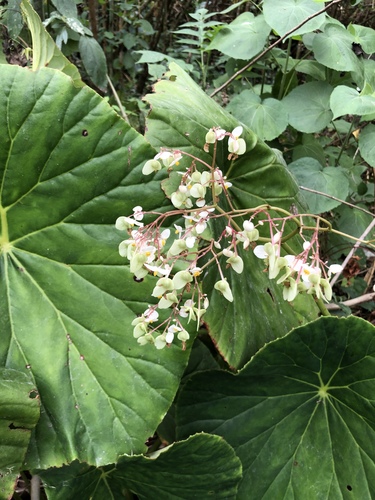
Begonia cucullata
Willd.
Begonia, Wax begonia
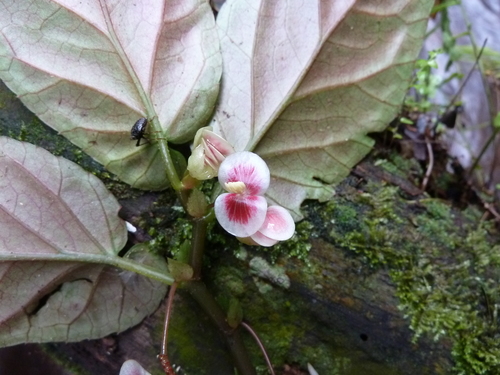
iNaturalist· cc-by-nc
(c) julianisilva, some rights reserved (CC BY-NC)
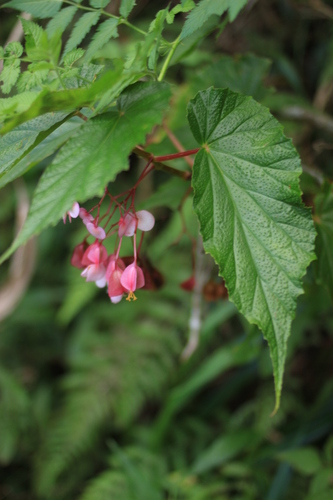
iNaturalist· cc-by-nc
(c) João Gava Just, some rights reserved (CC BY-NC), uploaded by João Gava Just
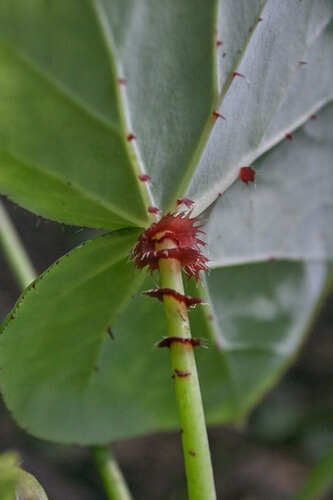
iNaturalist· cc-by-nc
(c) Leandro Belga, some rights reserved (CC BY-NC), uploaded by Leandro Belga
Summary
Source: WikipediaBegonia cucullata, also known as clubbed begonia, is a species of the Begoniaceae that is native to South American countries of Argentina, Brazil, Paraguay, and Uruguay. A common garden plant and part of the section Begonia, it was described in 1805 by Carl Ludwig Willdenow (1765–1812). The specific epithet "cucullata" means "resembling a hood" or "hooded".
Description
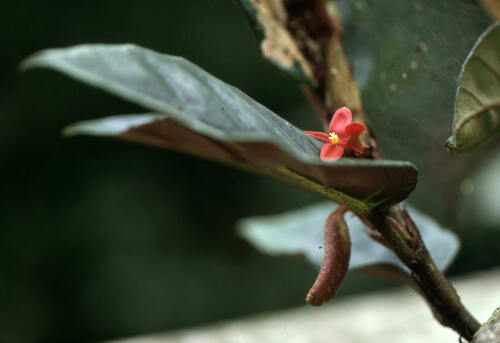
A herb. It grows 1.5 m tall. The stems are fleshy. They are erect and branched. They are green to red and hairy when young. The leaves are oblique and oval and unequal on opposite sides. They are 1-14 cm long by 2-9 cm wide. They can be rolled inwards at the tip. There are teeth along the edge. The leaves are waxy green above and pale green underneath. The leaf stalks are reddish and 5 cm long. The flowers are white to pink. The fruit is an oval capsule 1 cm long.
Edible Uses
The leaves are eaten as a cooling salad and are considered the edible portion, along with rhizomes.
Traditional Uses
The leaves are eaten as a cooling salad.
This uses section is brief — help expand it
Medicinal Uses
The leaves are traditionally used for their cooling properties.
Distribution
A tropical plant. It grows in rainforests and disturbed areas up to 3,000 m above sea level.
Where It Grows
Argentina, Asia, Australia, Bangladesh, Bolivia, Brazil*, Colombia, Dominican Republic, Eritrea, Ethiopia, French Guiana, Haiti, Hawaii, Himalayas, Indonesia, Korea, Mauritius, Mexico, North America, Pacific, Paraguay, Puerto Rico, Reunion, SE Asia, South Africa, South America, Uruguay, USA, Venezuela,
Cultivation
Plants can be grown from seeds or stem or leaf cuttings.
Notes
There are 900-1,000-1,500 Begonia species. It can become invasive.
Also Known As
Azedinha-do-brejo, Begonia lilin
References (9)
- Bircher, A. G. & Bircher, W. H., 2000, Encyclopedia of Fruit Trees and Edible Flowering Plants in Egypt and the Subtropics. AUC Press. p 56
- Hedrick, U.P., 1919, (Ed.), Sturtevant's edible plants of the world. p 95
- Hibbert, M., 2002, The Aussie Plant Finder 2002, Florilegium. p 40
- Kew Plants of the World Online
- Kinupp, V. F., 2007, Plantas alimenticias nao-convencionais da regiao metropolitana de Porto Alegre, RS, Brazil p 69
Show all 9 references Hide references
- Laferriere, J. E., 1992, Begonias as Food and Medicine. Economic Botany, Vol. 46, No. 1, pp. 114-116
- Marinelli, J. (Ed), 2004, Plant. DK. p 446
- Sp. pl. 4(1):414. 1805
- Sukarya, D. G., (Ed.) 2013, 3,500 Plant Species of the Botanic Gardens of Indonesia. LIPI p 1071