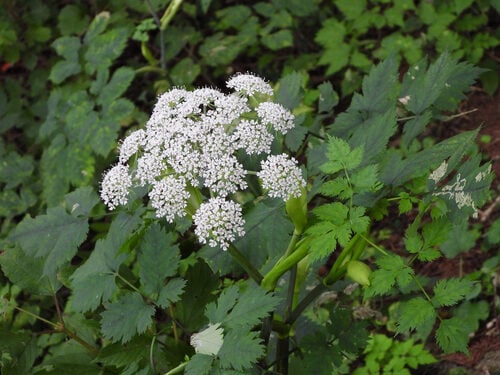
Sanicula graveolens
Poepp. ex DC.
Cilantro silvestre
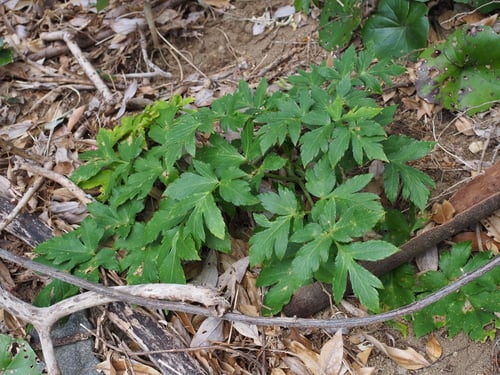
iNaturalist· cc-by-nc-nd
(c) David Greenberger, some rights reserved (CC BY-NC-ND), uploaded by David Greenberger
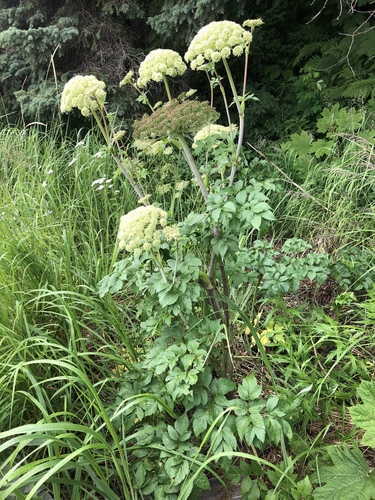
iNaturalist· cc-by-nc
(c) Jeremy Gatten, some rights reserved (CC BY-NC), uploaded by Jeremy Gatten
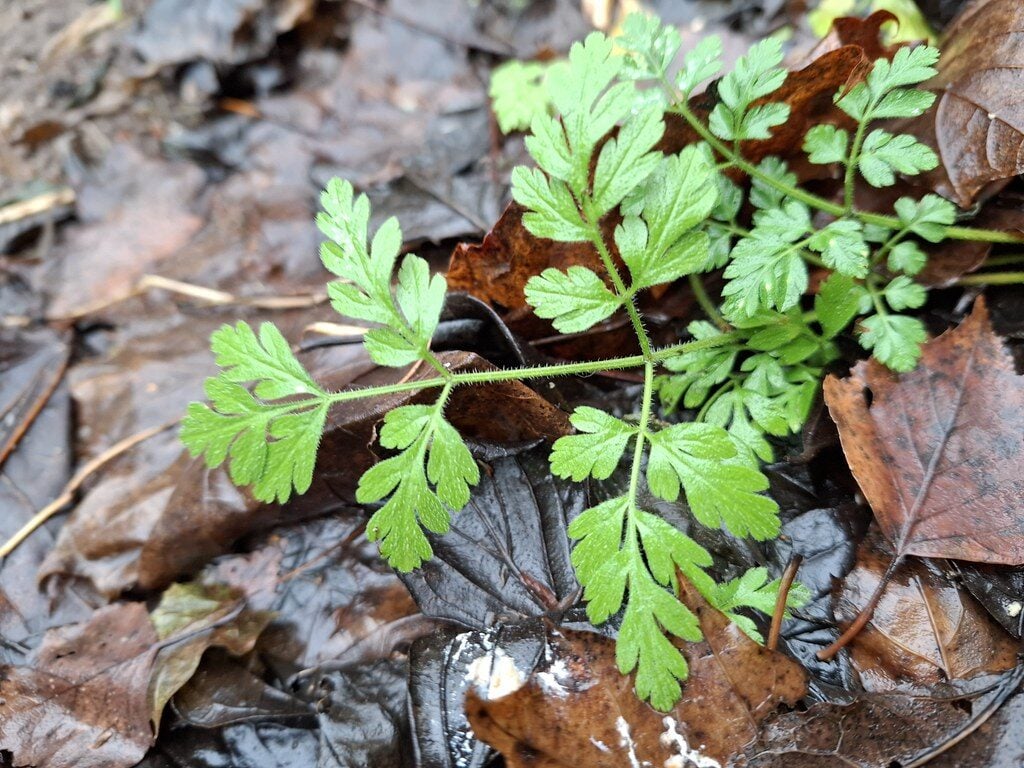
iNaturalist· cc0
no rights reserved, uploaded by Braden J. Judson
Summary
Source: WikipediaSanicula graveolens is a species of flowering plant in the family Apiaceae known by the common names northern sanicle and Sierra blacksnakeroot. It is native to western North America from British Columbia to Montana to California, and southern South America, including southern Chile. Its habitat includes mountain slopes, forests, and woodlands on serpentine soils. It is a perennial herb producing a slender, branching stem up to half a meter tall from a taproot, with leaves alternate. The lowest leaves have long stalks and are often attached below ground. The upper leaves are smaller, sparse and often sessile. The leaves are compound, the blades each divided into three deeply lobed, toothed leaflets. The herbage is green to purple-tinged to all purple in color. The inflorescence is made up of one or more heads of bisexual and male-only flowers with tiny, curving, yellow petals. Each head has an array of narrow, toothed bracts at its base. The rounded fruits are a few millimeters long, covered in curving prickles, and borne in small clusters.
Description
A temperate herb in the carrot family found in the Subantarctic forests and Patagonian steppe of Argentina.
This description is brief — help expand it
Edible Uses
The leaves are used as a seasoning in soups and salads, eaten either raw or cooked.
Traditional Uses
The leaves are eaten as seasoning in soups and salads. They are used raw or cooked.
This uses section is brief — help expand it
Distribution
It is a temperate plant. It grows in Subantarctic forest and Patagonian steppe in Argentina.
Where It Grows
Andes, Argentina*, Chile, South America,
References (8)
- Ladio, A. H. & Lozada, M., 2000, Edible Plant Use in a Mapuche Community of North-western Patagonia, Human Ecology. Vol. 28, No. 1. pp. 53-71
- Ladio, A. H., 2001, The Maintenance of Wild Edible Plant Gatherings in a Mapuche Community of Patagonia. Economic Botany, Vol. 55, No. 2, pp. 243-254
- Ladio, A. H. and Lozada, M., 2003, Comparison of wild edible plant diversity and foraging strategies in two aboriginal communities of northwestern Patagonia. Biodiversity and Conservation 12: 937–951
- Ladio, A. H. and Lozada, M., 2004, Patterns of use and knowledge of wild edible plants in distinct ecological environments: a case study of a Mapuche community from northwestern Patagonia. Biodiversity and Conservation 13:1153-1173
- Ladio, A., Lozada, M. & M. Weigandt, 2007, Comparison of traditional wild plant knowledge between aboriginal communities inhabiting arid and forest environments in Patagonia, Argentina. Journal of Arid Environments 69 (2007) 695–715
Show all 8 references Hide references
- Leon-Lobos, P., et al, 2022, Patterns of Traditional and Modern Uses of Wild Edible Native Plants of Chile: Challenges and Future Perspectives. Plants (Basel) v 11 (6) Table S1
- Rapoport, E. H. & Ladio, A. H., 1999, Plantas comestibles. Bosque Volume 20 No. 2. ISSN 0314-8799
- Schmeda-Hirschmann, G., et al, 1999, Proximate Composition and Biological Activity of Food Plants gathered by Chilean Amerindians. Economic Botany Vol. 53. No. 2. pp. 177-187