Cyttaria espinosae
Lloyd.
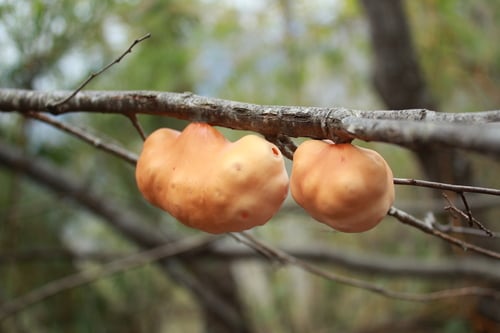
iNaturalist· cc-by-nc
(c) Chris Valdés, some rights reserved (CC BY-NC), uploaded by Chris Valdés
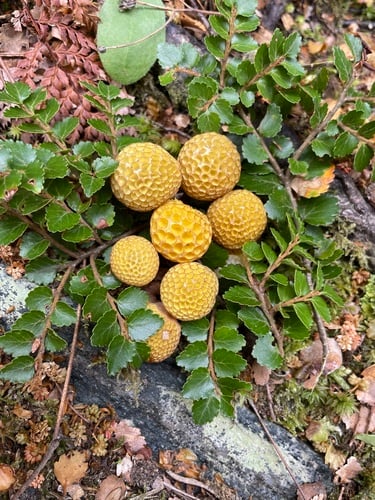
iNaturalist· cc-by-nc
(c) Tito Lahaye, some rights reserved (CC BY-NC)
Summary
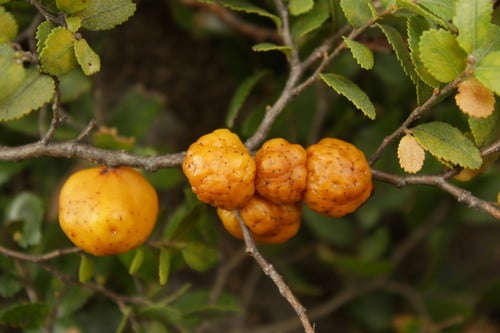
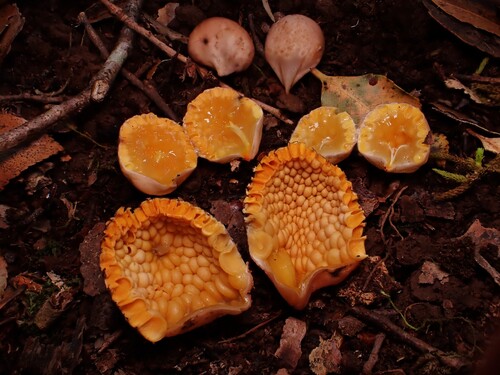
Source: WikipediaCyttaria espinosae, also known by its local name digüeñe, dihueñe, lihueñe, quireñe, pinatra, or quideñe, is an orange-white coloured and edible species of ascomycete fungus.
Description
A mushroom. It is 4 cm high.
This description is brief — help expand it
Edible Uses
C. espinosae's flavor is described as between sweet and bland. In Patagonian cuisine, the digüeñe is usually consumed fresh in salads or fried with scrambled eggs for empanada stuffing. They are traditionally consumed by the Mapuche people.
Traditional Uses
It is usually eaten fresh in salads.
This uses section is brief — help expand it
Distribution
It grows on Nothofagus glauca and Nothofagus obliqua var. macrocarpa. In Chile it grows for low altitudes to high altitudes. It grows in humid areas. It suits hardiness zone 8. It can tolerate some snow.
Where It Grows
Chile*, South America,
Also Known As
Diguene, Diwen, Lihuene, Quirene
References (6)
- Barreau, A., et al, 2016, How Can We Teach Our Children if We Cannot Access the Forest? Generational Change in Mapuche Knowledge of Wild Edible Plants in Andean Temperate Ecosystems of Chile. Journal of Ethnobiology 36(2): 412–432
- Boa, E. R., 2004, Wild edible fungi and their importance to people. FAO Non Wood Forest Products Booklet 17
- Daly, A. B., 20014, Narrating changing foodways: wild edible plant knowledge and traditional food systems in Mapuche lands of the Andean Temperate Forests, Chile. Masters Thesis Vancouver. p 45
- Martin, J. S. & Villagra M. M., 2013, Productos forestales no madereros de la Region del Maule. p 19
- Schmedia-Hirschmann, G., et al, 1999, Biological Activity and Food Analysis of Cyttaria spp. (Discomyctes) Economic Botany, Vol. 53, No. 1, pp. 30-40
Show all 6 references Hide references
- www.chileflora.com