Vitis tiliifolia
Humb. & Bonpl. ex Roem. & Schult.
Uva cimarrona
iNaturalist· cc-by-nc
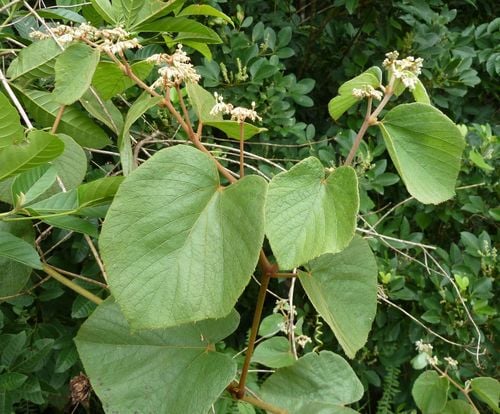
(c) Sune Holt, some rights reserved (CC BY-NC), uploaded by Sune Holt
iNaturalist· cc-by-nc
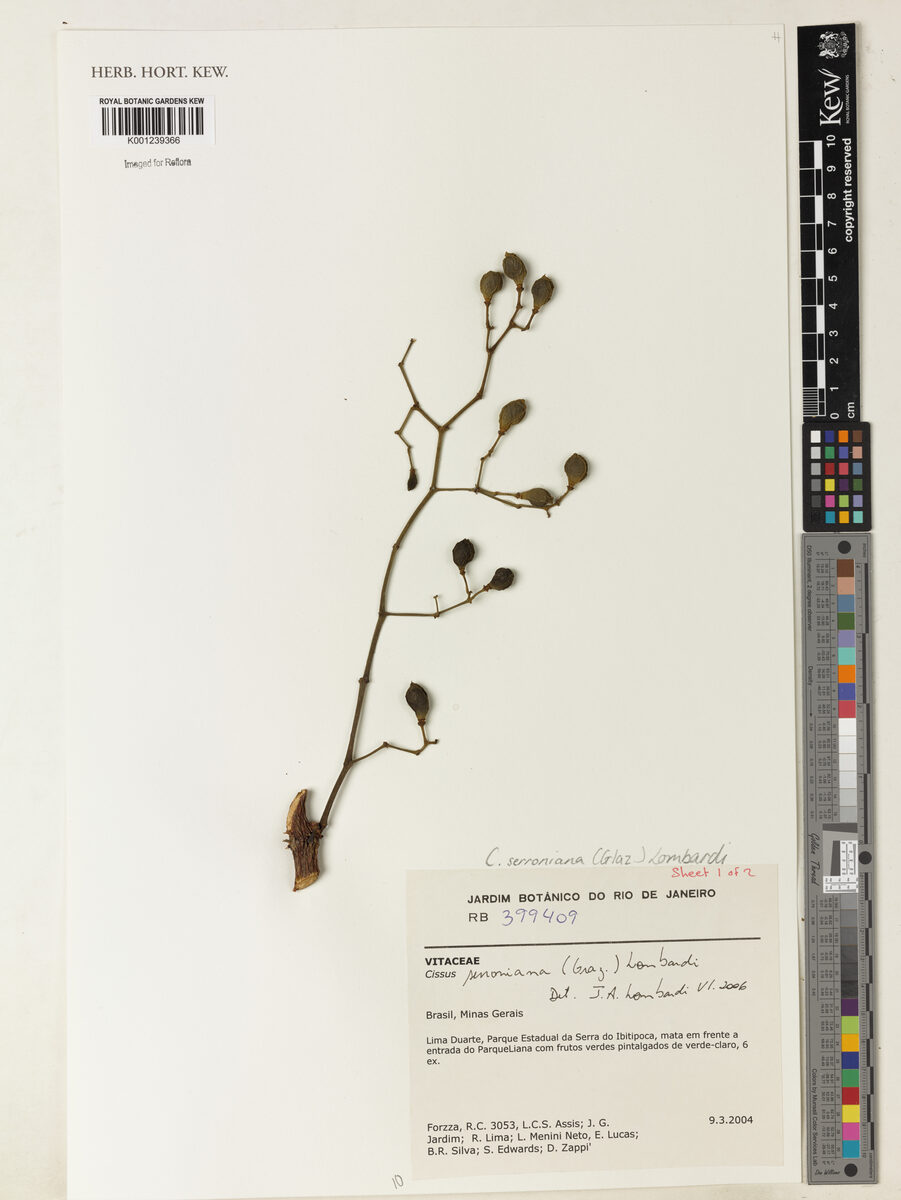
(c) Aurelio Molina Hernández., some rights reserved (CC BY-NC), uploaded by Aurelio Molina Hernández.
iNaturalist· cc-by-nc
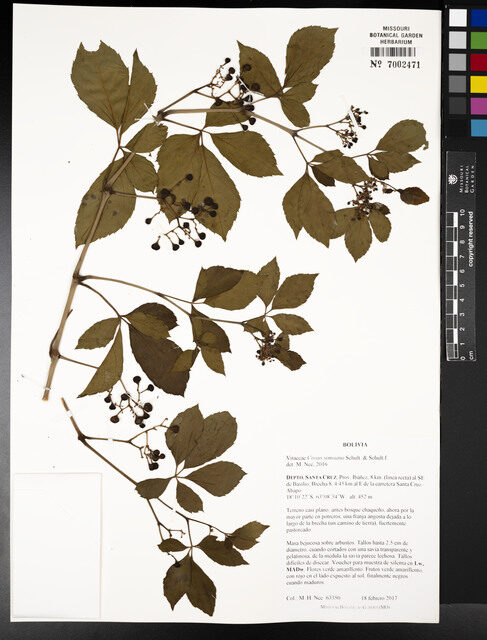
(c) Sune Holt, some rights reserved (CC BY-NC), uploaded by Sune Holt
Summary
Source: WikipediaVitis tiliifolia is a New World liana in the grape family commonly known as Caribbean grape. Other names include West Indian grape, water vine, Agrá and Bejuco de Agua (in Costa Rica) and (in Belizean Creole) water tie-tie and water-wise.
Description
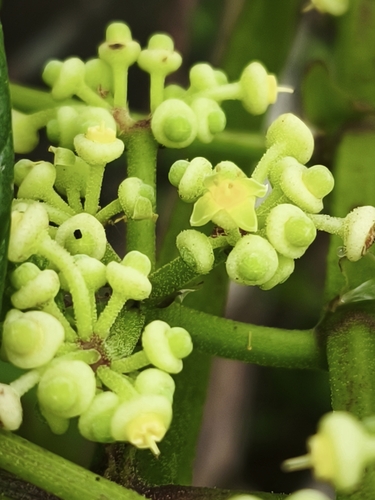
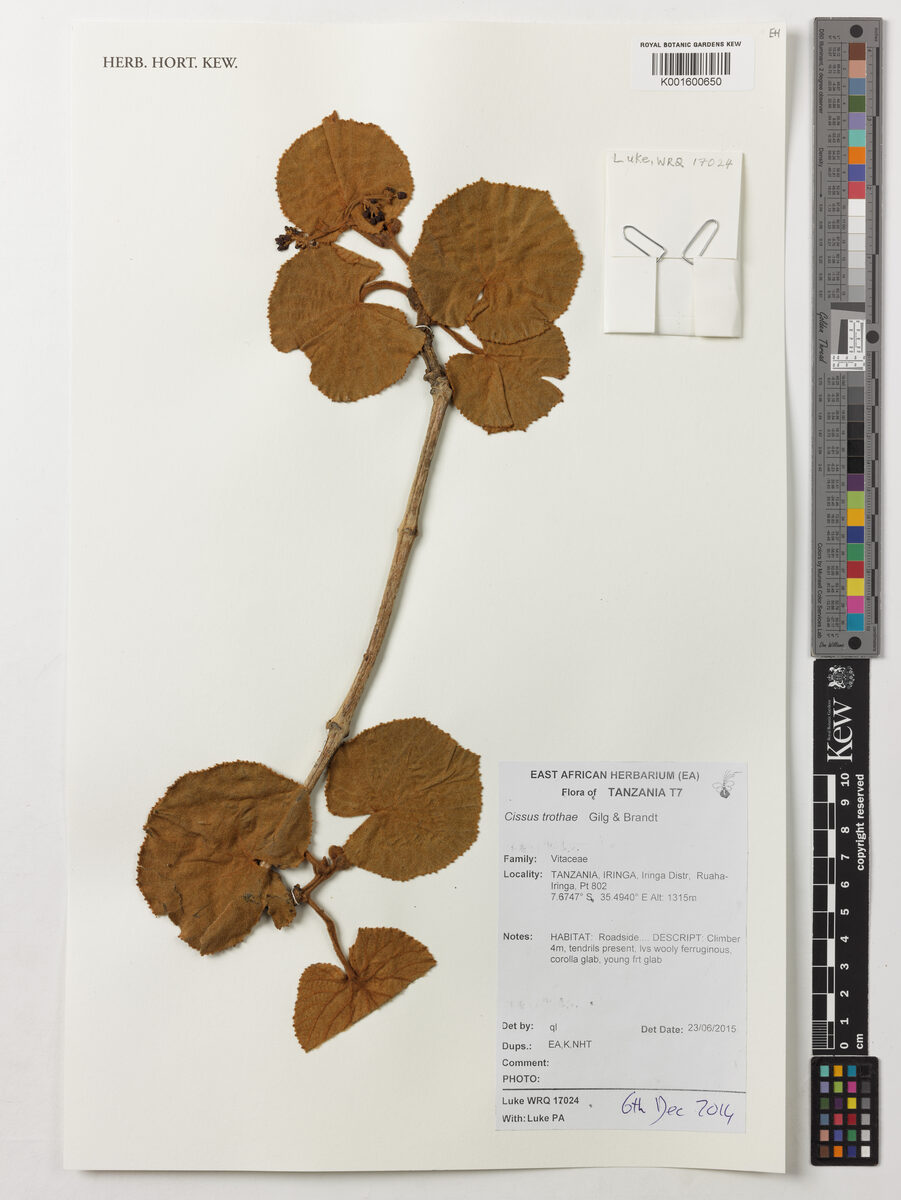
A vine. It climbs by mean of tendrils and can be 10-35 m long. The young vine has a dense covering. The stems can be 8 cm across. The leaves are simple and opposite. The leaf blades are 7-16 cm long by 7-13 cm wide. They are oval and have 3 lobes. The base is heart shaped. The flowers are in groups 6-12 cm long in the axils of leaves. The flowers are green. The fruit are 5-6 mm across.
Edible Uses
Vitis tiliifolia is grown as a forest crop in Mayan agriculture, and is used for food or drink, or as an ingredient in medicines. The vine is most commonly dioecious, with separate male and female vines, though wild hermafrodite vines have been found. Flowering is usually at the beginning of the dry season (December in the northern hemisphere) and fruit production can be up to 20 kg per vine in cultivation. The fruits are small and acid with low sugar near 8 Brix but are sometimes made into wine resembling that of the Norton grape of the east and central USA. In cultivation the vines are vigorous similar to the Muscadine grape and should be given ample trellis room of near 6 meters or 20 feet. V. tiliifolia can and should be pruned and can be propagated from cuttings just like other grapes.
Traditional Uses
The ripe fruit are eaten fresh. They are also used to make vinegar.
This uses section is brief — help expand it
Medicinal Uses
The plant has a long history of medicinal use in Mexico, where it is valued particularly in the treatment of kidney, skin and eye problems. In Puebla and Veracruz it is used to relieve diseases of the eyes, such as infections or irritation A decoction of the root is administered orally as a treatment for kidney pain.. A decoction of the whole plant is rubbed into the affected area to treat the bacterial infection erysipelas. A deccoción of the leaves is applied topically as acompress to treat snake bites. The water obtained from the stem is reputed to be diuretic and efficacious as a remedy for venereal diseases.
Distribution
It is a tropical plant. In Central America it grows between 100-1,300 m altitude.
Where It Grows
Andes, Belize, Central America, Colombia, Costa Rica, Dominican Republic*, Ecuador, El Salvador, Guatemala, Guiana, Haiti, Honduras, Jamaica, Mexico, Nicaragua, North America, Panama, Puerto Rico, South America*, Venezuela, Virgin Islands, West Indies*,
Other Uses
The tough stems are used for temporary cordage in gathering firewood and for other purposes.
Dangerous Lookalikes
This plant can be confused with the following toxic species. Always verify identification carefully before consuming any wild plant.
Canadian Moonseed
Menispermum canadense
Cbaile19
Uva cimarrona
Vitis tiliifolia
(c) Sune Holt, some rights reserved (CC BY-NC), uploaded by Sune Holt
Canadian Moonseed: No tendrils, single crescent/moon-shaped seed, leaf stem attaches to underside of leaf.
Uva cimarrona: Vine with tendrils, round seeds, leaf stem at edge of leaf, bark that peels.
Synonyms
Also Known As
Agra, Bejuco de agua, Miona negra, Parra broncadora, Tsurure, Uva cimarrona, Uva silvestre, Water tietie
References (15)
- Chizmar Fernandez, C., et al, 2009, Plantas comestibles de Centroamerica. Instituto de Biodiversidad, Costa Rica. p 322
- Cruz, I. M., et al, 2015, Edible fruits and seeds in the State of Mexico. Revista Mexicana de Ciencias Agricolas. Vol. 6. Num. 2 pp 331-346
- Ibarra-Manriquez, G., et al, 1997, Useful Plants of the Los Tuxtlas Rain Forest (Veracruz, Mexico): Considerations of their Market Potential. Economic Botany, Vol. 51, No. 4, pp. 362-376
- Kermath, B. M., et al, 2014, Food Plants in the Americas: A survey of the domesticated, cultivated and wild plants used for Human food in North, Central and South America and the Caribbean. On line draft. p 923
- Kew Plants of the World Online
Show all 15 references Hide references
- Krings, A. & Braham, R. R., 2005, Guide to Tendrillate Climbers of Costa Rican Mountains. Blackwell Publishing. p 168
- Lentz, D. L., 1993, Medicinal and Other Economic Plants of the Paya of Honduras. Economic Botany, Vol. 47, No. 4, pp. 358-370
- Lopez-Diago, D. & Garcia, N., 2021, Wild edible fruits of Colombia. Biota ColomBiana 22 (2) p 53
- Piedra-Malagón, E. M., et al, 2022, Edible native plants of the Gulf of Mexico Province. Biodiversity Data Journal 10: e80565 p 32
- Plants of Haiti Smithsonian Institute http://botany.si.edu/antilles/West Indies
- Reis, S. V. and Lipp, F. L., 1982, New Plant Sources for Drugs and Foods from the New York Botanical Garden herbarium. Harvard. p 174
- Roa, J. A. G. & Boada, D. S. G., 2018, Fundación para el Fortalecimiento de la Fruticultura y Plantas Alimenticias no Convencionales en Colombia.
- Segura, S., et al, 2018, The edible fruit species in Mexico. Genet Resour Crop Evol (2018) 65:1767–1793
- Standley, P. C. & Record, S. J., 1936, The Forests and Flora of British Honduras. (Belize). p 240
- World Checklist of Useful Plant Species 2020. Royal Botanic Gardens, Kew