Vitis amurensis
Ruprecht
Amur River grape, Wangmoru
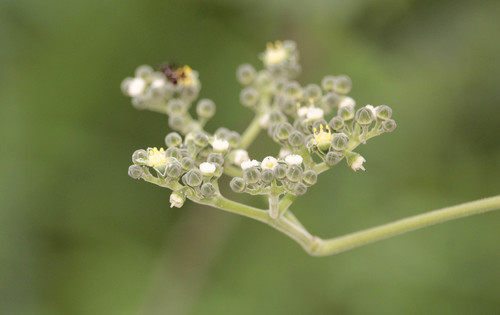
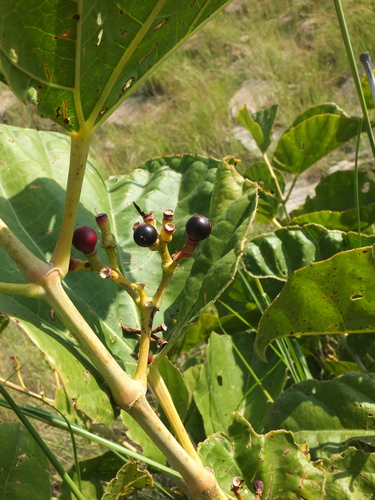
iNaturalist· cc-by-nc
(c) Natalya Vilyaeva, some rights reserved (CC BY-NC), uploaded by Natalya Vilyaeva
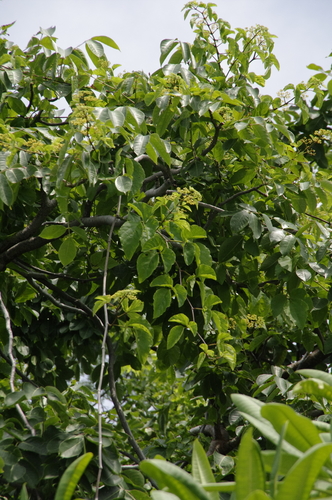
iNaturalist· cc-by-nc
(c) Игорь Поспелов, some rights reserved (CC BY-NC)
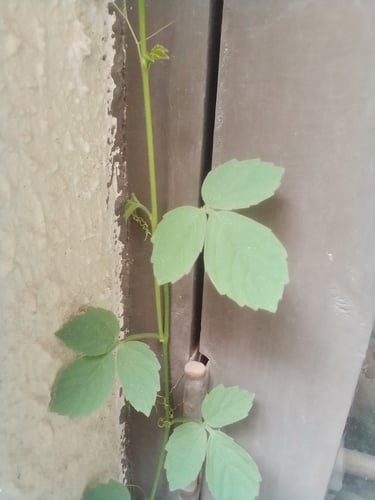
iNaturalist· cc-by-nc
(c) Игорь Поспелов, some rights reserved (CC BY-NC)
Summary
Source: WikipediaVitis amurensis, the Amur grape, is a species of grape native to the Asian continent. Its name comes from the Amur Valley in Russia and China. It is very resistant to frost, but is not tolerant to drought. Selections vary, but as a species it has strong resistance to anthracnose and ripe rot, and moderately strong resistance to downy mildew and powdery mildew.
Description
A vine or shrub. It grows 15 m high and spreads 3-6 m wide. The young shoots are reddish. The leaves are large and have 3-5 lobes. The turn rich red, orange or purple in autumn. The fruit is oval and black. They can be 1.5 cm across. They are often bitter.
Edible Uses
The fruit can be eaten raw, cooked, or dried for winter use, and can also be made into drinks. It is much esteemed despite being small and somewhat harsh — succulent but usually bitter — measuring about 16mm long and 10mm wide. Young leaves can be boiled as a vegetable or wrapped around other foods and baked, where they impart a pleasant flavour. Young tendrils are edible raw or cooked.
Traditional Uses
The fruit are eaten raw or used for juice, jams and wine. The leaves can be eaten as a boiled vegetable.
This uses section is brief — help expand it
Medicinal Uses
The root is tonic.
Distribution
It is a temperate plant. It does best in rich, moist soils. It needs an open, sunny position. It is resistant to frost. It is sensitive to drought. It can tolerate winter temperatures down to -40°C. It suits hardiness zones 4-9. In Sichuan.
Where It Grows
Asia, Australia, China*, Korea*, North America, Russia, Tasmania, USA,
Cultivation
Prefers a deep rich moist well-drained moderately fertile loam. Grows best in a calcareous soil. Succeeds in sun or partial shade though a warm sunny position is required for the fruit to ripen. Very hardy, tolerating temperatures down to about -40°c, this species is a potential source of hardiness in a breeding programme with the common grape, Vitis vinifera. Plants climb by means of tendrils. Any pruning should be carried out in winter when the plants are dormant otherwise they bleed profusely. Plants in this genus are notably susceptible to honey fungus.
Propagation
Seed is best sown in a cold frame as soon as it is ripe. Six weeks of cold stratification improves germination, so stored seed should also be sown in a cold frame as soon as it is obtained. Germination usually occurs in the first spring but can take another 12 months. Prick out seedlings into individual pots when large enough to handle and grow on in a cold frame through their first winter, then plant out in early summer. Cuttings of mature wood from the current season's growth can be taken in December or January and rooted in a frame. These can be 15–30cm long, or short sections about 5cm long with a single bud at the top. For the shorter sections, remove a thin, narrow strip of bark about 3cm long from the lower portion of one side to encourage callusing and root formation; these shorter cuttings require a more sheltered environment than longer ones. Layering is also an option.
Other Uses
A yellow dye is obtained from the fresh or dried leaves.
Other Information
It is cultivated.
Notes
There are 60 to 70 species of Vitis.
Dangerous Lookalikes
This plant can be confused with the following toxic species. Always verify identification carefully before consuming any wild plant.
Canadian Moonseed
Menispermum canadense
Cbaile19
Amur River grape
Vitis amurensis
(c) Natalya Vilyaeva, some rights reserved (CC BY-NC), uploaded by Natalya Vilyaeva
Canadian Moonseed: No tendrils, single crescent/moon-shaped seed, leaf stem attaches to underside of leaf.
Amur River grape: Vine with tendrils, round seeds, leaf stem at edge of leaf, bark that peels.
Nutrition
| Part | Moisture | kJ | kcal | Protein | Vit A | Vit C | Iron | Zinc |
|---|---|---|---|---|---|---|---|---|
| Fruit | 80.5 | 401 | 69 | 1 | — | — | 1.7 | — |
Also Known As
Heger-e in Yeem, Shan pu tao
References (21)
- Arora, R. K., 2014, Diversity in Underutilized Plant Species - An Asia-Pacific Perspective. Bioversity International. p 90
- Bodkin, F., 1991, Encyclopedia Botanica. Cornstalk publishing, p 1020
- Brickell, C. (Ed.), 1999, The Royal Horticultural Society A-Z Encyclopedia of Garden Plants. Convent Garden Books. p 1056
- Bull. Cl. Phys.-Math. Acad. Imp. Sci. Saint-Petersbourg 15:266. 1857
- Cundall, P., (ed.), 2004, Gardening Australia: flora: the gardener's bible. ABC Books. p 1478
Show all 21 references Hide references
- Davis, S.D., Heywood, V.H., & Hamilton, A.C. (eds), 1994, Centres of plant Diversity. WWF. Vol 1 or 2. p 176
- Facciola, S., 1998, Cornucopia 2: a Source Book of Edible Plants. Kampong Publications, p 245
- Fan, L., et al, The Use of Edible Wild Plants and Fungi in Korean-Chinese Villages. Journal of Environmental Information Science 44-5 p 71-79
- Food Composition Tables for use in East Asia FAO http://www.fao.org/infoods/directory No. 867
- Heywood, V.H., Brummitt, R.K., Culham, A., and Seberg, O. 2007, Flowering Plant Families of the World. Royal Botanical Gardens, Kew. p 335
- Hibbert, M., 2002, The Aussie Plant Finder 2002, Florilegium. p 308
- Hu, Shiu-ying, 2005, Food Plants of China. The Chinese University Press. p 533
- Hwang, HS, et al, 2014, Distribution characteristics of plant in the Ungseokbong Mountain, Gyeongsangnam-do, Korea. Journal of Asia-Pacific Biodiversity. 7(2014) e164-e178
- Lord, E.E., & Willis, J.H., 1999, Shrubs and Trees for Australian gardens. Lothian. p 339
- Pemberton, R. W. & Lee, N. S., 1996, Wild Food Plants in South Korea: Market Presence, New Crops, and Exports to the United States. Economic Botany, Vol. 50, No. 1, pp. 57-70
- Plants for a Future database, The Field, Penpol, Lostwithiel, Cornwall, PL22 0NG, UK. http://www.scs.leeds.ac.uk/pfaf/
- Sachula, et al, 2020, Wild edible plants collected and consumed by the locals in Daqinggou, Inner Mongolia, China. Journal of Ethnobiology and Ethnomedicine (2020) 16:60
- Tanaka,
- Uphof,
- Wang, J. et al, 2013, A Study on the Utilization of Wild Plants for Food in Liangshan Yi Autonomous Prefecture. Plant Diversity and Resources. 35(4): 416-471
- World Checklist of Useful Plant Species 2020. Royal Botanic Gardens, Kew