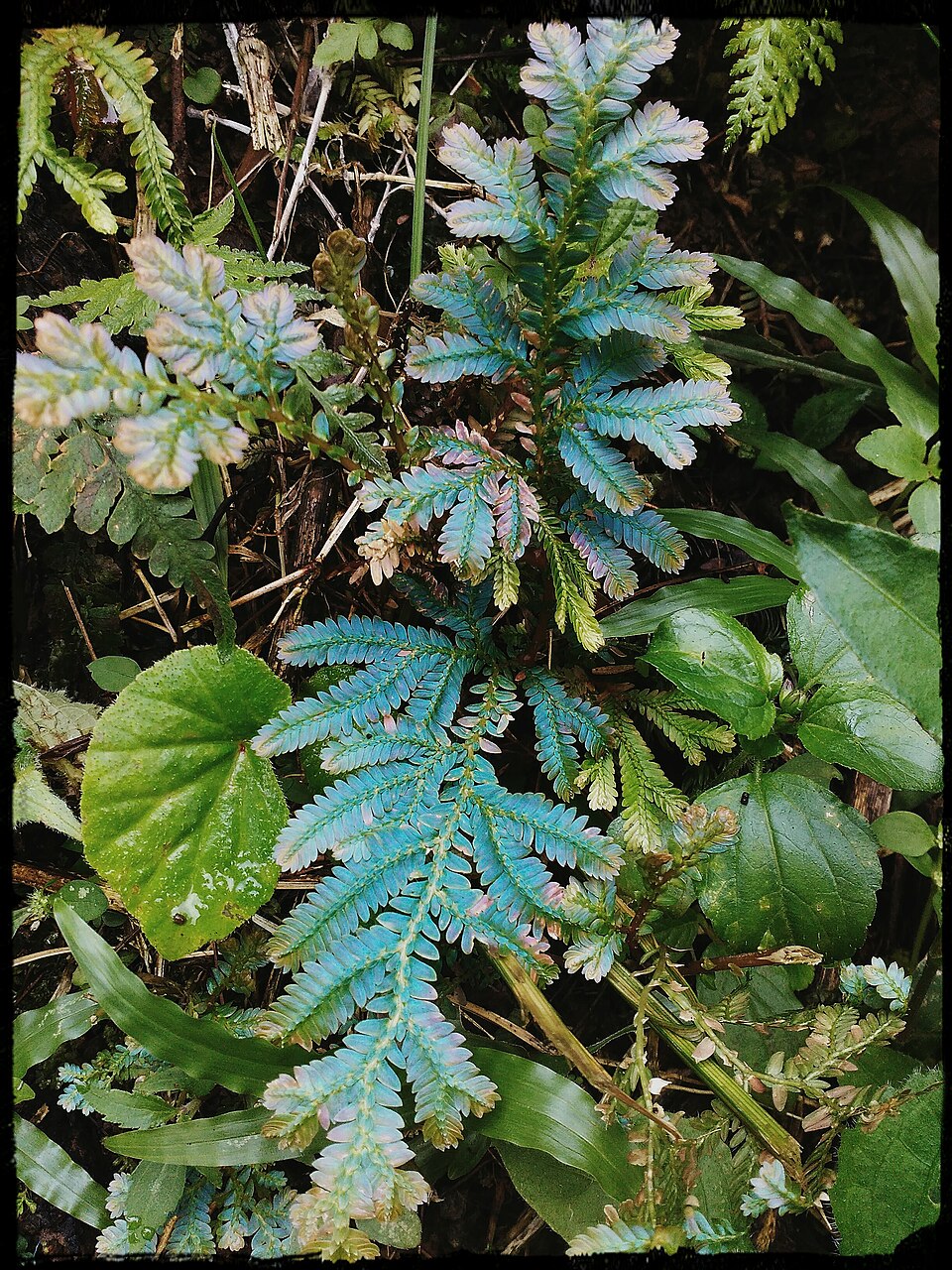
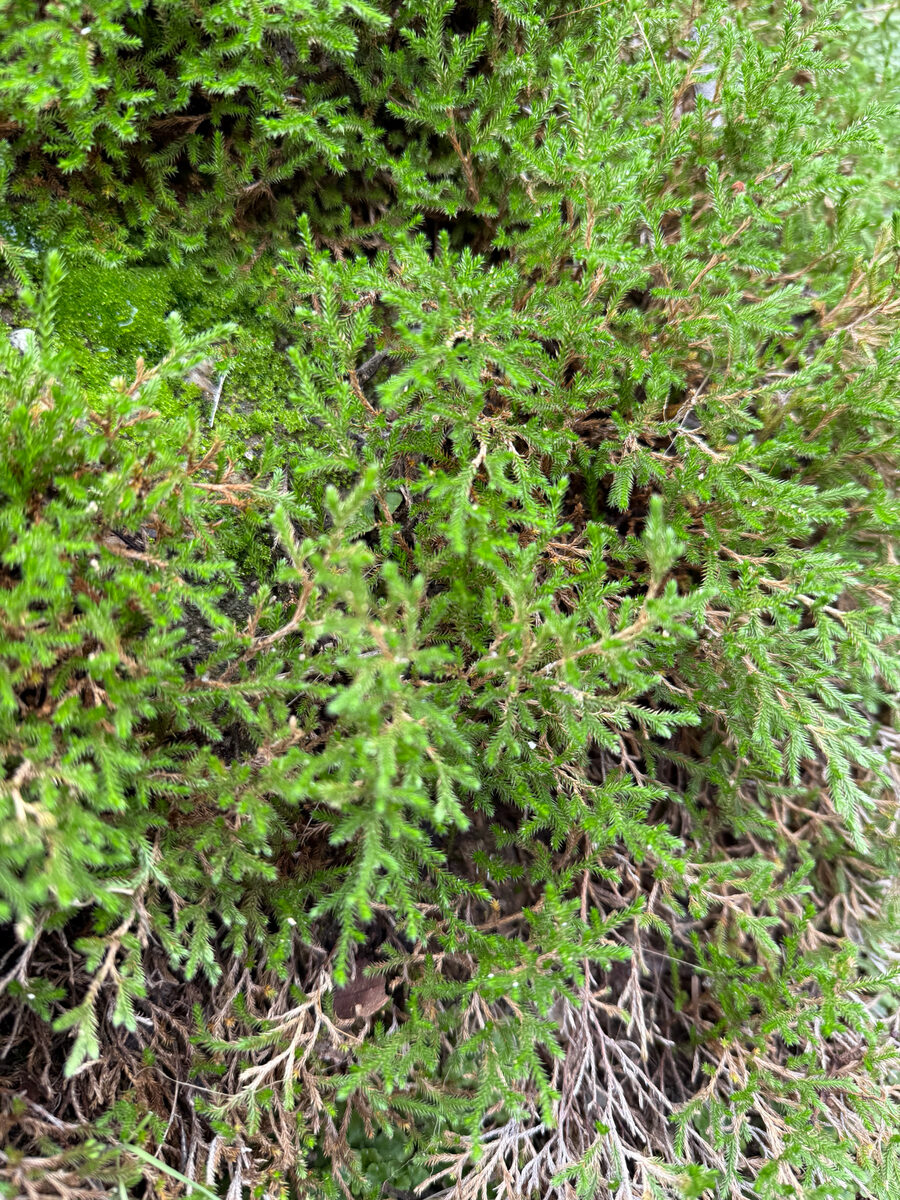
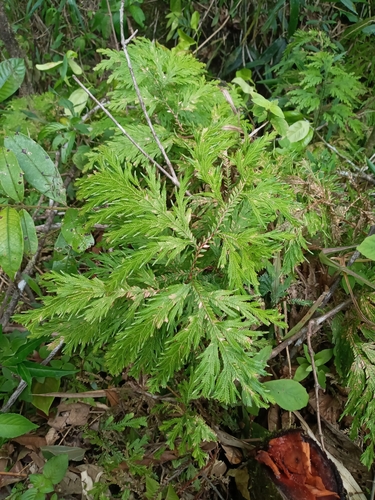
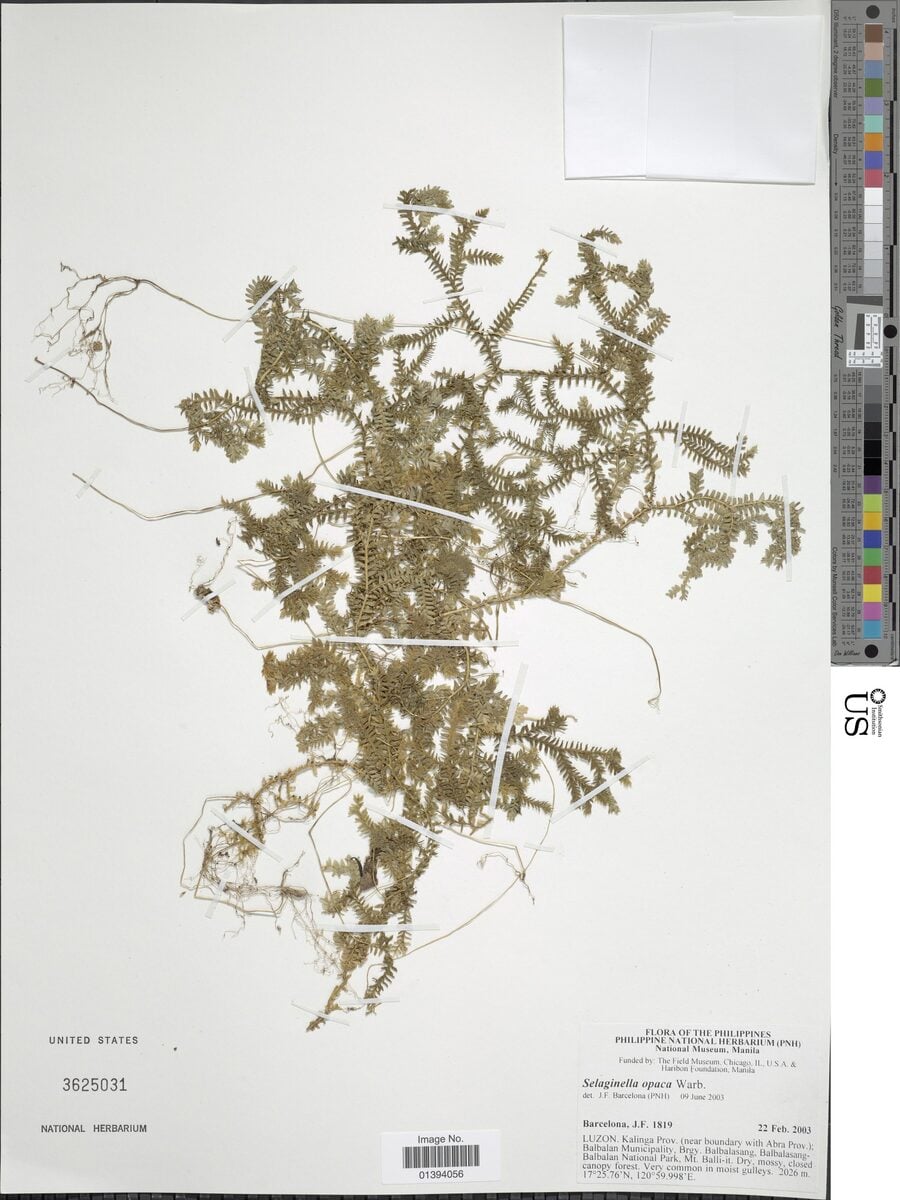
Selaginella biformis
A. Br. ex Kuhn
Husum-ow
wikimedia· cc0
Wikimedia Commons - Chhe (talk)
gbif· cc-by-sa
GBIF
gbif· cc-by-sa
GBIF
Summary
Source: WikipediaSelaginella biformis is a species of plant in the family Selaginellaceae. It is native to Bangladesh, Borneo, Cambodia, China, Eastern Himalaya, India, Java, Laos, the Lesser Sunda Islands, Myanmar, New Guinea, the Nicobar Islands, the Philippines, the Ryukyu Islands, Sulawesi, Sumatra, Thailand, and Vietnam.
Description
A tropical fern-ally (Selaginellaceae) that is either erect or creeping, reaching 15–45 cm in length. It grows in shaded forest locations and on rocks between 100–1,500 m elevation in southern China.
Edible Uses
The stems and leaves are used as a vegetable.
Traditional Uses
The stems and leaves are used as a vegetable.
This uses section is brief — help expand it
Distribution
It is a tropical plant. It grows in shaded places and on rocks in forests between 100-1,500 m above sea level in southern China.
Where It Grows
Asia, China, Himalayas, India, Indochina, Indonesia, Japan, Malaysia, Myanmar, Northeastern India, Philippines, SE Asia, Sri Lanka, Thailand, Vietnam,
Also Known As
Husum ao
References (2)
- Gangwar, A. K. & Ramakrishnan, P. S., 1990, Ethnobotanical Notes on Some Tribes of Arunachal Pradesh, Northeastern India. Economic Botany, Vol. 44, No. 1 pp. 94-105
- Murtem, G. & Chaudhrey, P., 2016, An ethnobotanical note on wild edible plants of Upper Eastern Himalaya, India. Brazilian Journal of Biological Sciences, 2016, v. 3, no. 5, p. 63-81