Phyllostachys bissetii
McClure
Bisset's bamboo, David Bisset bamboo
iNaturalist· cc-by
(c) Sykes, Bill, some rights reserved (CC BY)
iNaturalist· cc-by-nc
(c) Oliver Stöhr, some rights reserved (CC BY-NC)
iNaturalist· cc-by-nc
(c) Oliver Stöhr, some rights reserved (CC BY-NC)
Summary
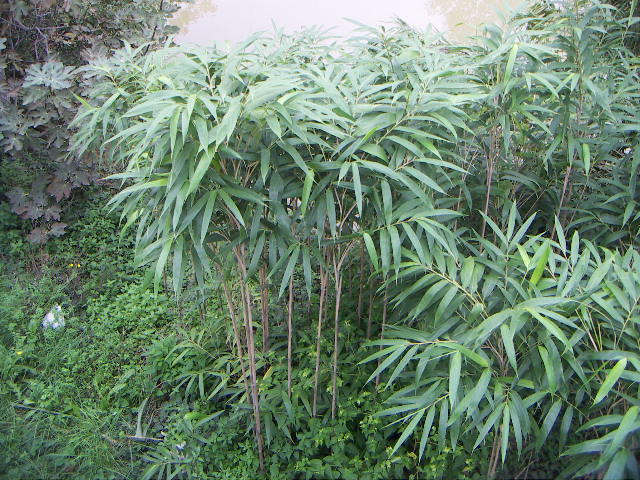
Source: WikipediaPhyllostachys bissetii is a species of bamboo found in Sichuan, Zhejiang provinces of China and introduced elsewhere. It is among the most cold-hardy bamboos. Its culms are relatively thin for its height in comparison to other running bamboo species.
Description
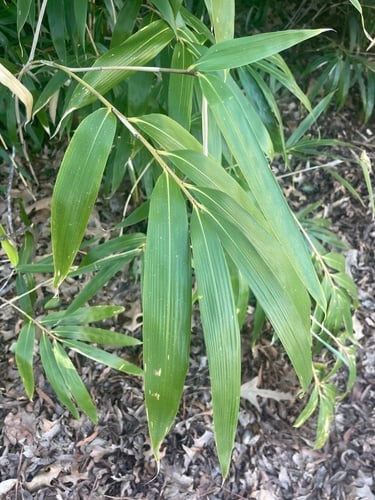
A bamboo. It grows 5-6 m tall. The stems are 2 cm across. The internodes are 25 cm long. There are 2 leaves on the last branch. The leaf blades are 7-11 cm long by 2 cm wide.
Edible Uses
None known.
Medicinal Uses
None known.
Distribution
It is a temperate plant. In Sichuan.
Where It Grows
TEMPERATE ASIA: China (Sichuan Sheng, Zhejiang Sheng)
Cultivation
Requires a rich damp soil in a sheltered position and plenty of moisture in the growing season. A very hardy bamboo, tolerating temperatures down to at least -20°c, though it dislikes exposure to hard frosts.. This species is notably resistant to honey fungus. Plants only flower at intervals of many years. When they do come into flower most of the plants energies are directed into producing seed and consequently the plant is severely weakened. They sometimes die after flowering, but if left alone they will usually recover though they will look very poorly for a few years. If fed with artificial NPK fertilizers at this time the plants are more likely to die. This specie is one of the earliest members of this genus to come into new growth in the spring. This is a good companion species to grow in a woodland because the plants are shallow rooted and do not compete with deep rooted trees.
Propagation
Surface sow fresh seed in a greenhouse at around 20°C, keeping the compost consistently moist. Germination is usually fairly quick with good-quality seed, though it may take 3–6 months. Grow seedlings in light shade under glass until large enough to plant out. Seed is rarely available. Divide clumps in spring as new growth begins — divisions from open ground transplant poorly and should be potted and kept under cover until at least late spring. Carry out division during wet weather; small divisions establish more reliably than large clumps. Alternatively, large divisions can be lifted and moved directly to their permanent positions if misted or drenched frequently until established. Basal cane cuttings can also be taken in spring.
Other Uses
The culms are used as tool handles. Splints made from the stems are used in weaving various articles.