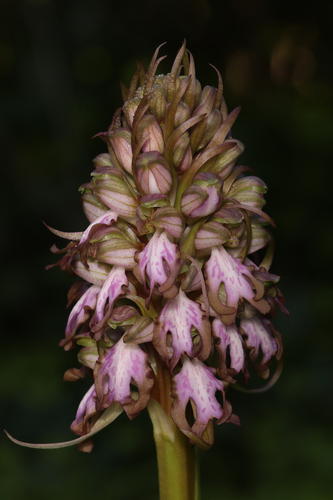
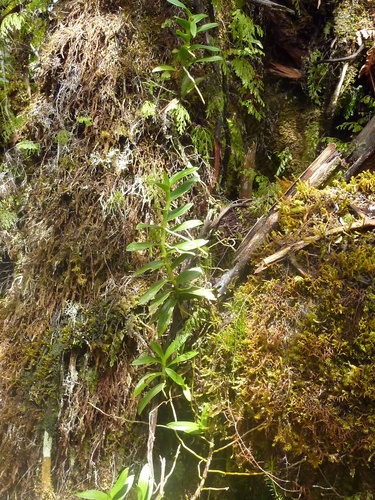
Orchis simia
Lam.
Toramantosiak
iNaturalist· cc-by-nc
(c) Wolfgang Blum, some rights reserved (CC BY-NC), uploaded by Wolfgang Blum
iNaturalist· cc-by
(c) katunchik, some rights reserved (CC BY)
iNaturalist· cc-by
(c) katunchik, some rights reserved (CC BY)
Summary
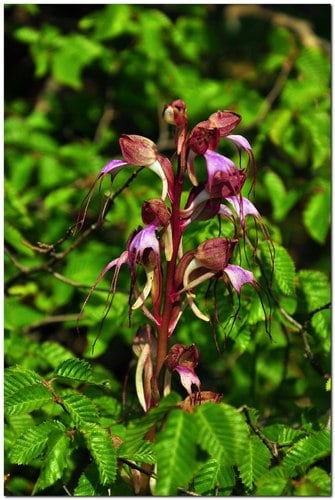
Source: WikipediaOrchis simia, commonly known as the monkey orchid, is a greyish pink to reddish species of the genus Orchis. It gets its common name from its lobed lip which mimics the general shape of a monkey's body. The range of the species is central and southern Europe, including southern England, the Mediterranean, Russia, Asia Minor, Caucasus, northern Iraq, Iran to Turkmenistan and northern Africa where it occurs in grassland, garrigue, scrub and open woodland, chiefly on limestone soils. It is absent from the Balearic Islands, Corsica and Sardinia. On Cyprus the species can be categorized as threatened, and it became a protected species in the UK in 1975 under the Conservation of Wild Creatures and Wild Plants Act.
Description
An orchid in the Orchidaceae family found in Mediterranean regions. The plant produces bulbs containing starch that has been traditionally used as a food ingredient.
Edible Uses
The starch from the bulb is used in dishes and bread.
Traditional Uses
The starch of the bulb is used for dishes and bread.
This uses section is brief — help expand it
Distribution
It is a Mediterranean plant.
Where It Grows
Balkans, Bosnia, Europe, Luxembourg, Mediterranean, Turkey, Türkiye,
Also Known As
Salep puskulu
References (5)
- Ertug, F., 2004, Wild Edible Plants of the Bodrum Area. (Mugla, Turkey). Turk. J. Bot. 28 (2004): 161-174
- Ertug, F, Yenen Bitkiler. Resimli Türkiye Florası -I- Flora of Turkey - Ethnobotany supplement
- Redzic, S. J., 2006, Wild Edible Plants and their Traditional Use in the Human Nutrition in Bosnia-Herzegovina. Ecology of Food and Nutrition, 45:189-232
- Rivera, D. et al, 2006, Gathered Mediterranean Food Plants - Ethnobotanical Investigations and Historical Development, in Heinrich M, Müller WE, Galli C (eds): Local Mediterranean Food Plants and Nutraceuticals. Forum Nutr. Basel, Karger, 2006, vol 59, pp 18–74
- Tekinsen, K. K., and Guner, A., 2010, Chemical composition and physicochemical properties of tubera salep produced from some Orchidaceae species. Food Chemistry 121: 468-1471