Aphanocalyx pteridophyllus
(Harms) Wieringa
iNaturalist· cc-by-nc
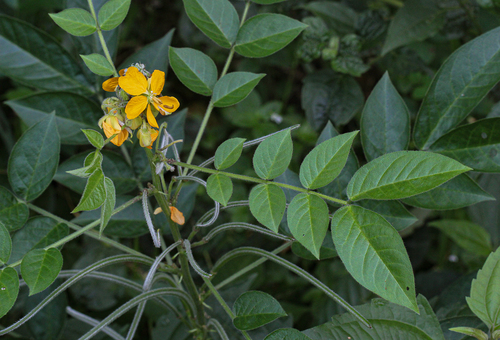
(c) Alex Rebelo, some rights reserved (CC BY-NC), uploaded by Alex Rebelo
iNaturalist· cc-by-nc
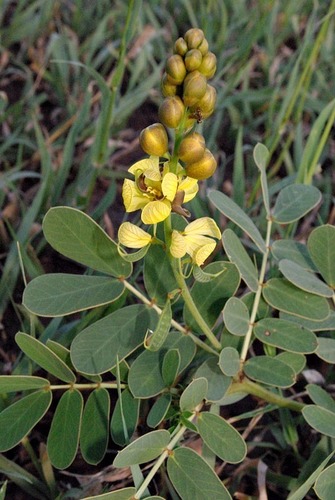
(c) Alex Rebelo, some rights reserved (CC BY-NC), uploaded by Alex Rebelo
iNaturalist· cc-by-nc
(c) Alex Rebelo, some rights reserved (CC BY-NC), uploaded by Alex Rebelo
Description
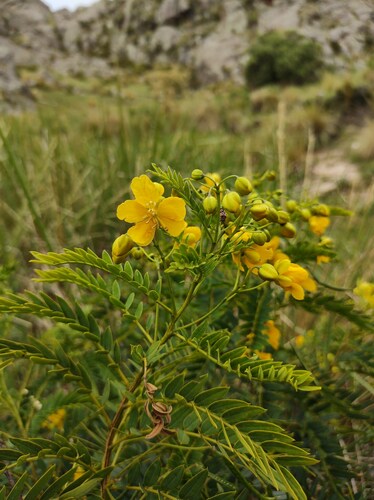
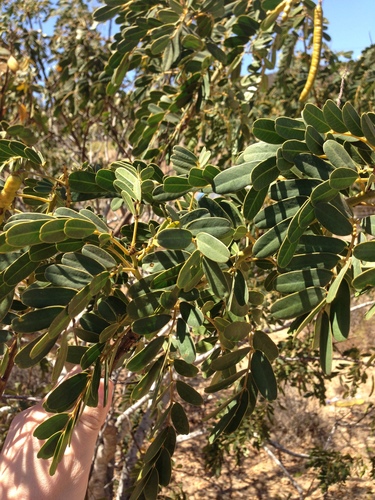
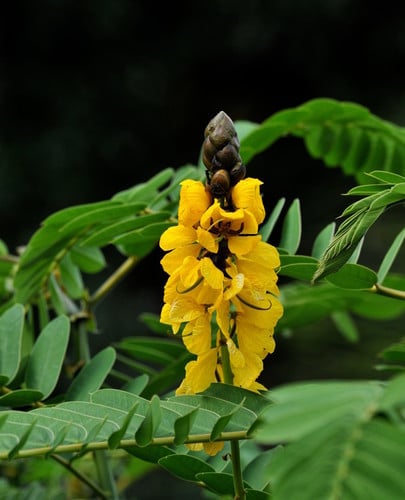
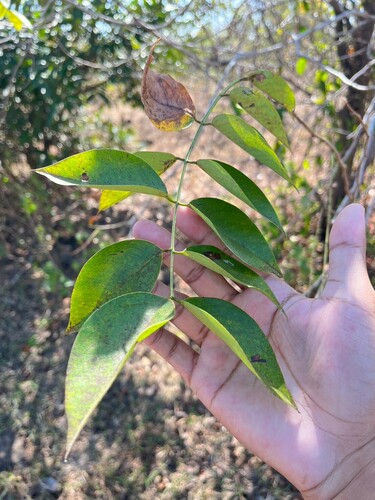
A tree. It grows 30 m tall. The crown can be broad and irregular. The trunk can be 45 cm across. It often overhangs over rivers. The leaves have leaflets in opposite pairs along the stalk. The flowers are small and white. The fruit is a pod 4-7 cm long. It has velvety hairs. There are 1-2 seeds. These are 1.6 cm long by 1.4 cm wide and 0.4 cm thick.
Edible Uses
The seeds are eaten.
Medicinal Uses
The pulverised bark is used as a poultice in the treatment of a subcutaneous parasitic infection known as craw-craw.
Distribution
It is a tropical plant. It grows in forests along rivers. It grows up to 150 m above sea level.
Where It Grows
Africa, Cameroon, Central Africa, Congo DR, Liberia, Sierra Leone, West Africa,
Other Uses
No uses are recorded for the wood this species, but it is said to have good potential. It belongs to a group of timbers collectively known as 'Andoung' - a general description of andoung wood follows:- The heartwood is pink-brown to red-brown; it is not clearly demarcated from the 5 - 15cm wide band of sapwood. The texture is medium; the grain interlocked. The wood is light in weight; soft to moderately hard; not very durable, being susceptible to fungi, dry wood borers and termites. It seasons somewhat slowly, with a high risk of distortion and a slight risk of checking; once dry it is moderately stable in service. It can be worked with ordinary tools, though the presence of interlocked grain can lead to tearing and there is a tendency to woolliness; nailing and screwing are good; gluing is correct. The wood is used in light construction, joinery, flooring, boxes and crates, furniture components; stairs, veneer etc.
Production
In West Africa it fruits in November.
Notes
Also as Caesalpinaceae.
Synonyms
References (5)
- Burkill, H. M., 1995, The useful plants of West Tropical Africa, Volume 3.
- Dalziel, J. M., 1937, The Useful plants of west tropical Africa. Crown Agents for the Colonies London.
- Ferns, Useful Tropical Plants
- ILDIS Legumes of the World http:www;ildis.org/Legume/Web
- World Checklist of Useful Plant Species 2020. Royal Botanic Gardens, Kew