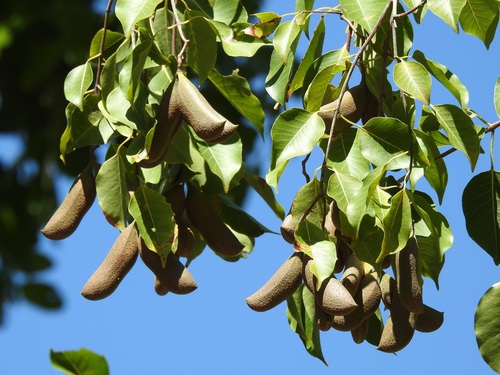
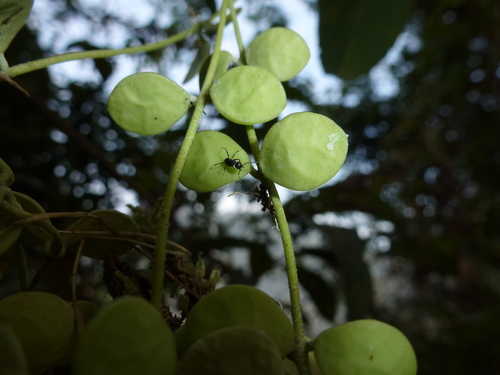
Dregea abyssinica
(Hochst.) K. Schum.
wikimedia· cc0
Wikimedia Commons - Luigi Balugani
Description
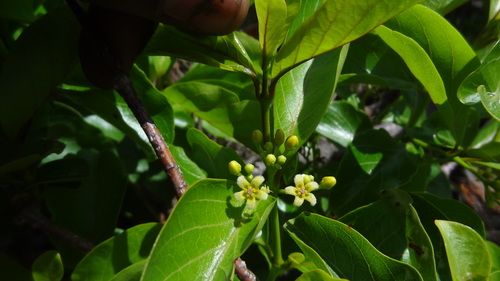
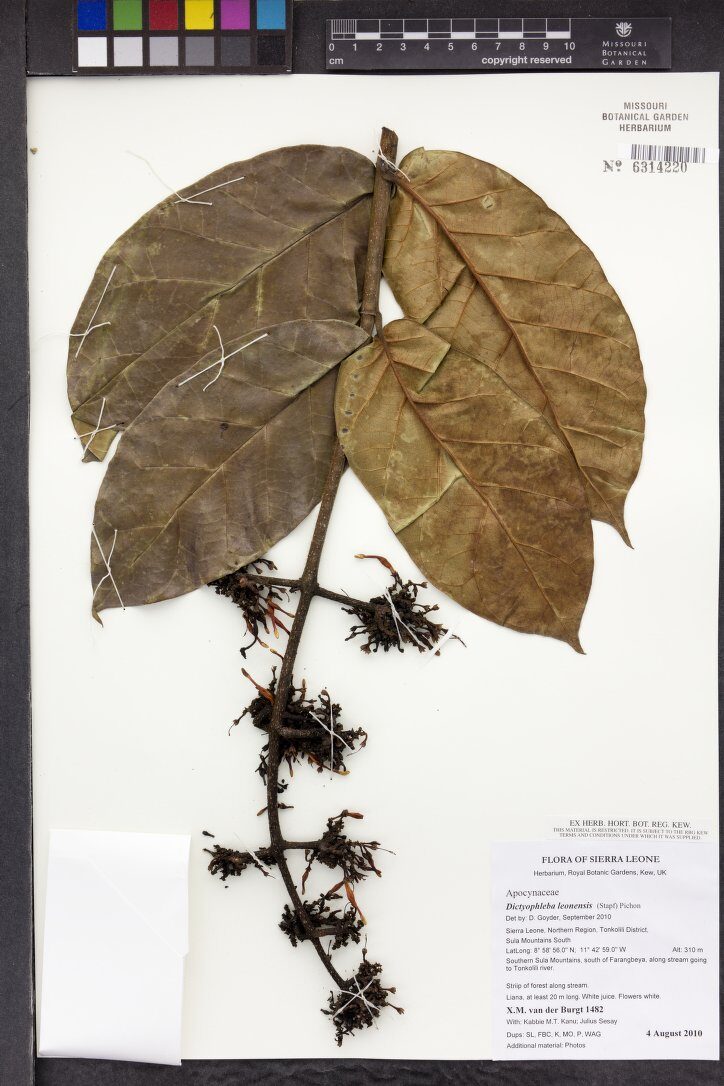
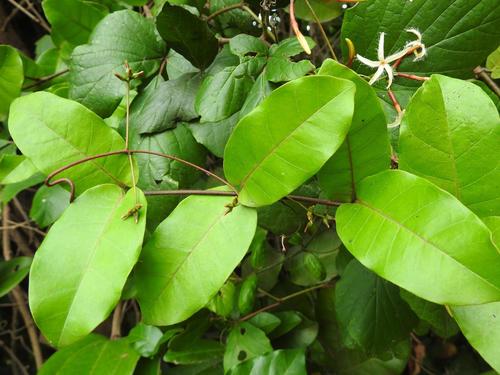
A shrub or woody climber. The twigs are pale grey-brown. The young shoots are bright green. The flowers are white and about 1 cm across. They have a scent.
Edible Uses
The leaves are eaten as a vegetable.
Traditional Uses
The leaves are eaten as a vegetable.
This uses section is brief — help expand it
Medicinal Uses
The latex is used as ear drops to treat otitis. The fruit is cooked in soup and the soup given to children as a strong laxative in case of constipation. A bark infusion is taken to treat diarrhoea. The fresh roots are chewed as an aphrodisiac. The mashed root is applied to snakebites. The seeds contain pregnane-type glycosides drevogenin A and B.
Distribution
It is a tropical plant. It grows in secondary scrub and on the edges of closed forest in West Africa.
Where It Grows
Africa, Burkina Faso, Côte d'Ivoire, East Africa, Ethiopia, Ivory Coast, Kenya, Nigeria, Senegal, Sudan, Tanzania, Uganda, West Africa,
Other Uses
A fibre is obtained from the stems. The strong stems are used as rope when branding cows.
Synonyms
Also Known As
Akuku, Bergu, Ejapo
References (5)
- Burkill, H. M., 1985, The useful plants of west tropical Africa, Vol. 1. Kew.
- Goode, P., 1989, Edible Plants of Uganda. FAO p 30
- Grubben, G. J. H. and Denton, O. A. (eds), 2004, Plant Resources of Tropical Africa 2. Vegetables. PROTA, Wageningen, Netherlands. p 561
- Molla, A., Ethiopian Plant Names. http://www.ethiopic.com/aplants.htm
- World Checklist of Useful Plant Species 2020. Royal Botanic Gardens, Kew (As Marsdenia abyssinica)