Suaeda monoica
Forssk. ex J. F. Gmelin
Koyyalakura
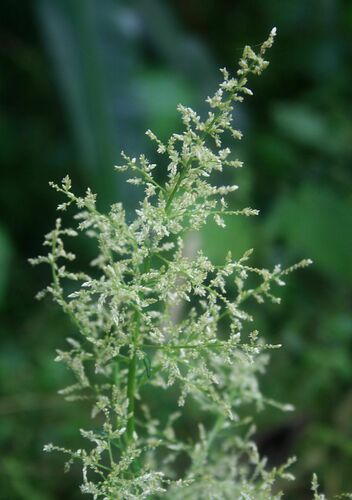
iNaturalist· cc-by-nc
(c) Ron Frumkin, some rights reserved (CC BY-NC)
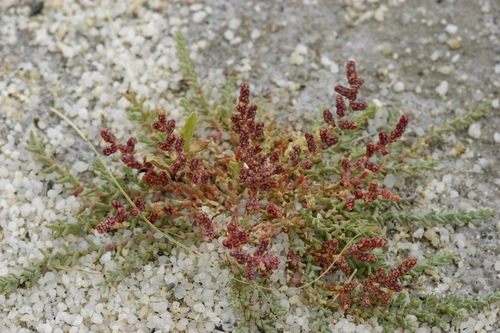
iNaturalist· cc-by-nc
(c) Yonatan Gur, some rights reserved (CC BY-NC)
iNaturalist· cc-by-nc
(c) Yonatan Gur, some rights reserved (CC BY-NC)
Summary
Source: WikipediaSuaeda monoica is a species of flowering plant in the sea-blite genus Suaeda, largely native to the shores of the Indian Ocean from South Africa to Sri Lanka, and salty areas inland. It has been introduced in Argentina. It exhibits phenotypic plasticity, with leaves that are much more succulent when grown under higher salinity conditions. Its leaves are edible, and it is used as an animal fodder plant where it grows.
Description
A shrub or small tree. It grows 3 m high. The stems at the base can be 15 cm across. It develops annual fruiting branches. The leaves are succulent and narrow and 10-20 cm long by 2-3 cm wide. The flowers are in spikes at the ends of side branches.
Edible Uses
The leaves are cooked and used as a vegetable.
Traditional Uses
The leaves are cooked and used as a vegetable.
This uses section is brief — help expand it
Distribution
It can grow in salty clay and along river beds and near the base of cliffs. It can grow in mangrove swamps.
Where It Grows
Africa, Asia, East Africa, India, Iran, Jordan, Mediterranean, Middle East, Mozambique, Pakistan, Palestine, Saudi Arabia, Somalia, Yemen,
Notes
Also put in the family Chenopodiaceae. It has a C4 pathway.
Nutrition
| Part | Moisture | kJ | kcal | Protein | Vit A | Vit C | Iron | Zinc |
|---|---|---|---|---|---|---|---|---|
| Leaves | — | — | — | 48 | — | — | — | — |
Synonyms
Also Known As
Xudhuun
References (3)
- Bhaskarachary, K., et al, 1995, Carotene content of some common and less familiar foods of plant origin. Food Chemistry 54: 189-193
- Rodriguez-Amaya, D. B., 1999, Carotenoides y Prepracion de Alimentos. University Estadual de Campinas, Brasil, Ph.D. thesis. p 19
- World Checklist of Useful Plant Species 2020. Royal Botanic Gardens, Kew