Guilleminea densa
(Roem. & Schult.) Moq.
iNaturalist· cc-by-nc
(c) Tony Benn, some rights reserved (CC BY-NC), uploaded by Tony Benn
iNaturalist· cc-by-nc
(c) Tony Benn, some rights reserved (CC BY-NC)
Description
A herb. It is a woolly plant and forms mats. It lies along the ground. The mats spread about 70 cm across. It has a thickened rootstock and stems branch from the base. The leaves are narrowly oval and smooth on the upper surface but with white woolly hairs underneath. The flowers are dense oval and whitish.
Edible Uses
The leaves are cooked as a vegetable.
Traditional Uses
The leaves are cooked as a vegetable.
This uses section is brief — help expand it
Distribution
It is a tropical plant. It grows in open disturbed sites near roads. It can grow on gravels and sand. It grows between 400-1,600 m altitude. It can grow in arid places. In Argentina it grows from sea level to 3,000 m above sea level.
Where It Grows
Africa, Argentina, Australia, Botswana, Central America, East Africa, Kenya, Malawi, Mozambique, North America, South Africa, Southern Africa, South America, USA, Zambia, Zimbabwe,
Nutrition
| Part | Moisture | kJ | kcal | Protein | Vit A | Vit C | Iron | Zinc |
|---|---|---|---|---|---|---|---|---|
| Leaves | 54 | 342 | 82 | 13 | — | — | — | — |
Synonyms
References (6)
- Checklist of NT Vascular Plant Species. January 2003.
- Royal Botanic Gardens, Kew (1999). Survey of Economic Plants for Arid and Semi-Arid Lands (SEPASAL) database. Published on the Internet; http://www.rbgkew.org.uk/ceb/sepasal/internet [Accessed 25th March 2011]
- Ruiters-Welcome, A. K., 2019, Food plants of southern Africa. Ph.D. thesis. Univ. of Johannesburg p 11
- Singh, A., 2009, Bioactivity of Famine Food Plants from the family: Amaranthaceae. University of Technology, Durban, South Africa. Masters Degree Thesis. p 14
- Welcome, A. K. & Van Wyk, B.-E., 2019, An inventory and analysis of the food plants of southern Africa. South African Journal of Botany 122 (2019) 136–179
Show all 6 references Hide references
- World Checklist of Useful Plant Species 2020. Royal Botanic Gardens, Kew
More from Amaranthaceae
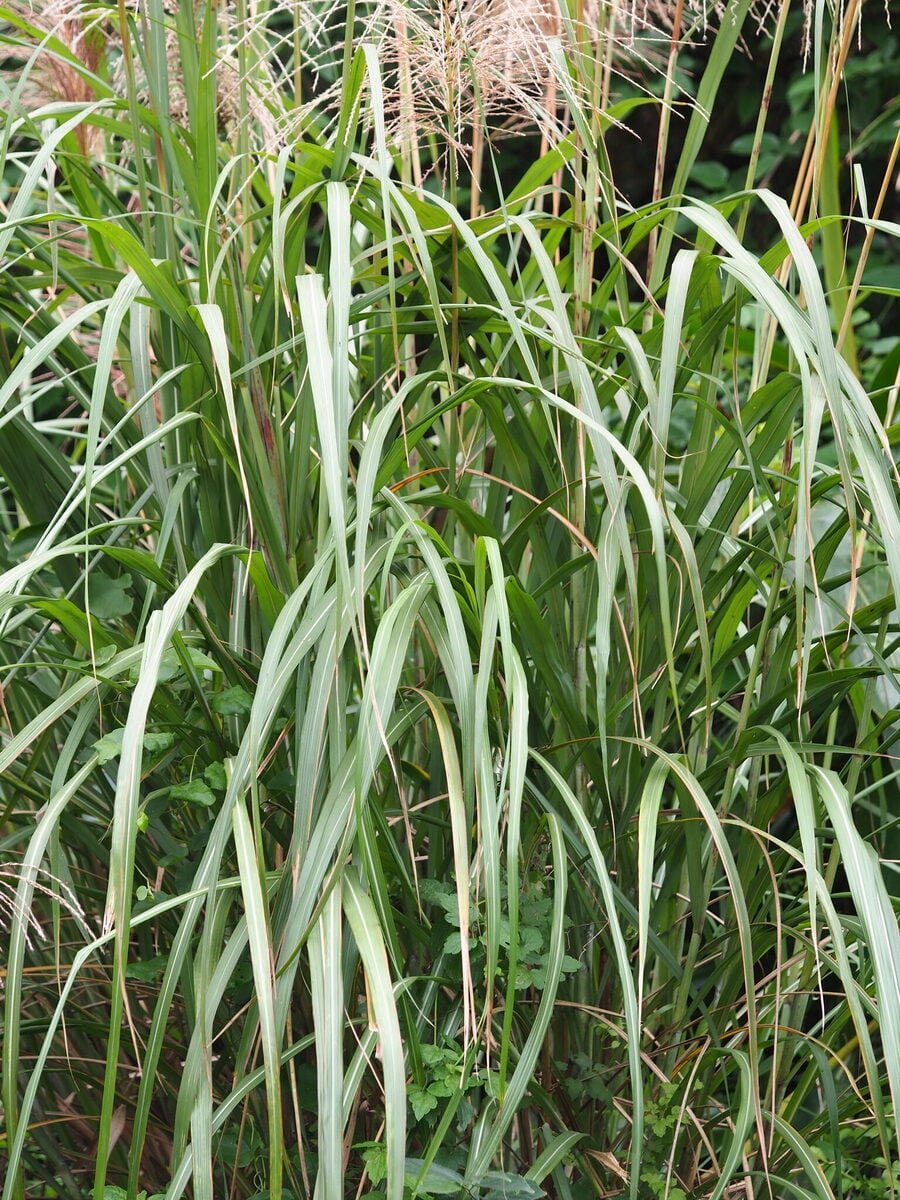
Miscanthus floridulus - (Labill.)Warb.
Pacific Island silvergrass, Giant Eulalia Grass, Giant Chinese Silver Grass
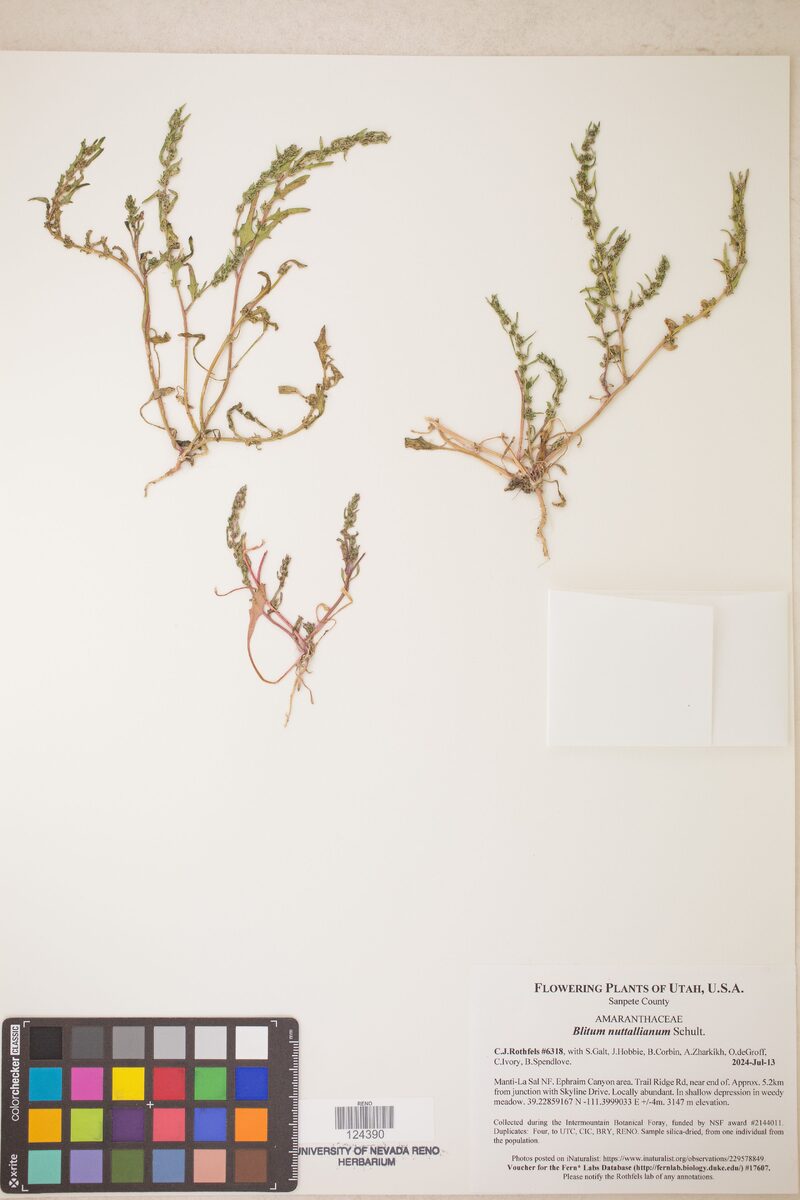
Monolepis nuttalliana - (Schult.)Greene.
Poverty Weed, Nuttall's povertyweed
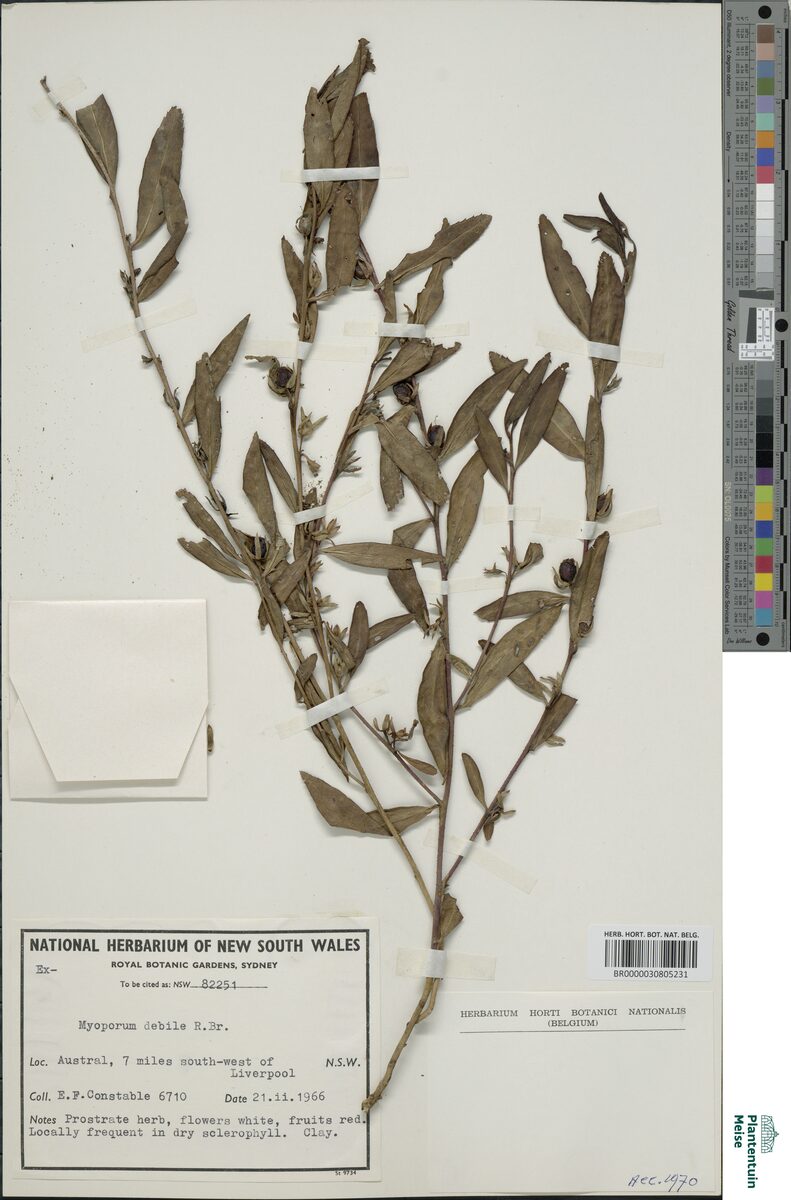
Myoporum debile - (Andrews.)R.Br.
Winter Apple
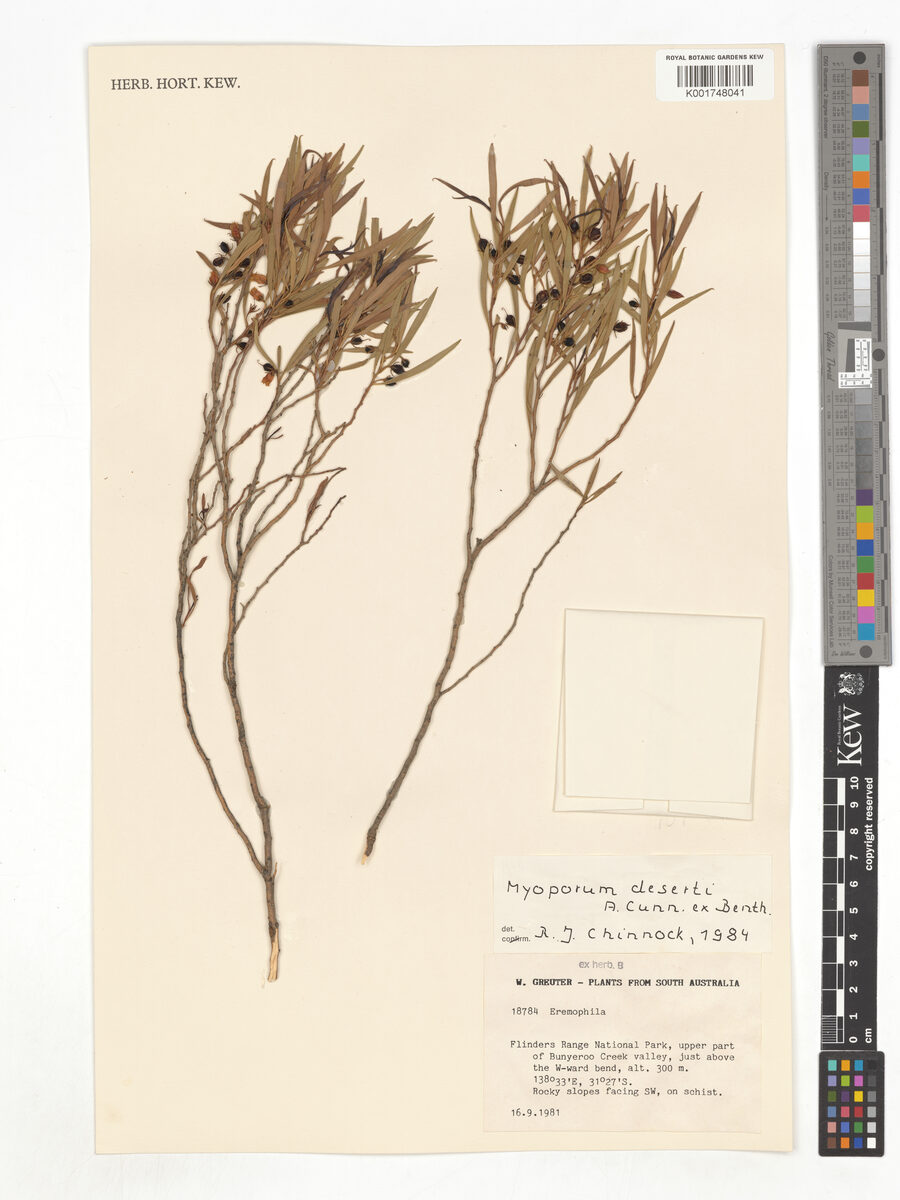
Myoporum deserti
Turkey Bush
Myoporum insulare
Boobyalla
Myoporum laetum
Ngaio, Ngaio tree, Mousehole Tree