Dysphania ambrosioides
(L.) Mosyakin & Clements
Mexican tea, Spanish-tea
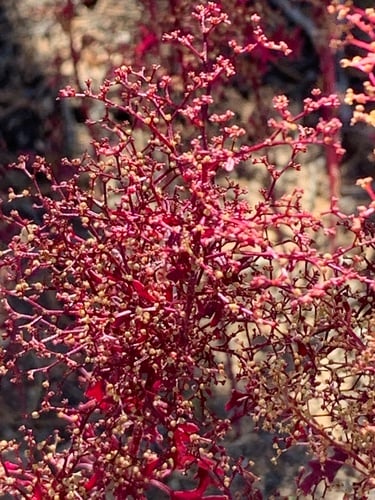
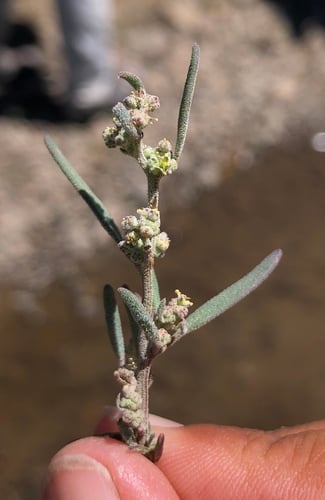
iNaturalist· cc-by-nc
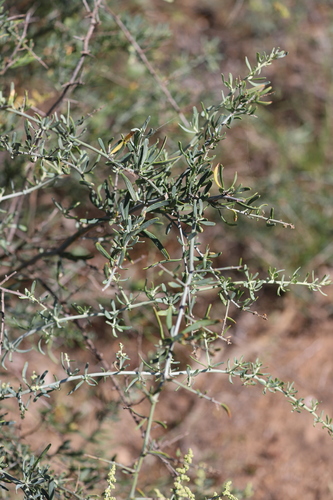
(c) J. Richard Abbott, some rights reserved (CC BY-NC), uploaded by J. Richard Abbott
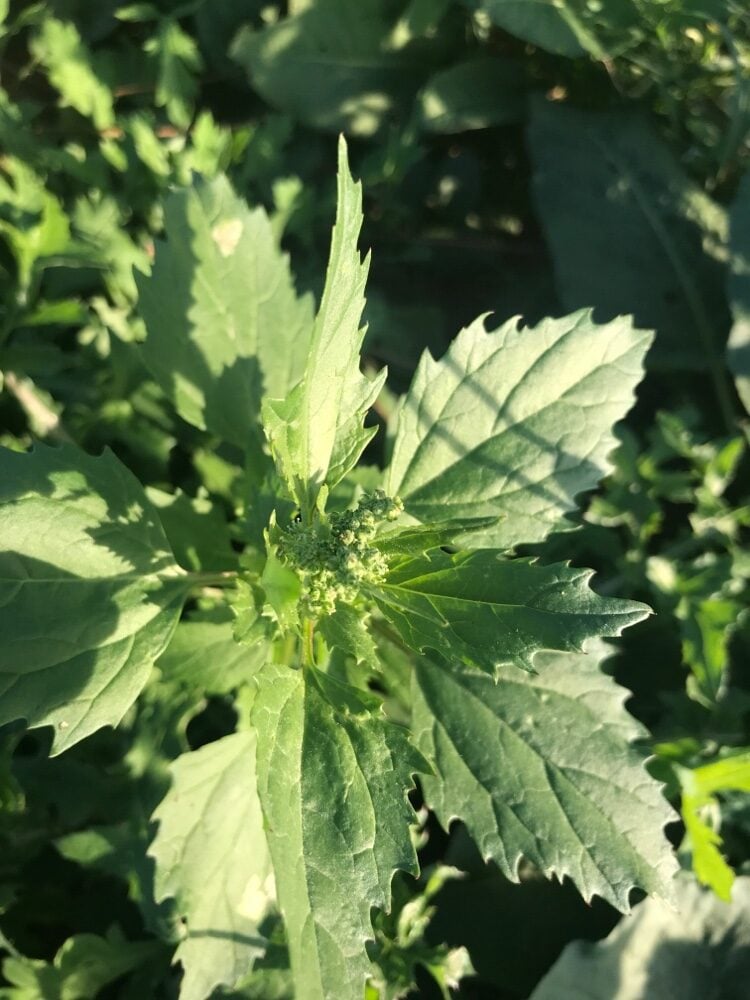
iNaturalist· cc-by-nc
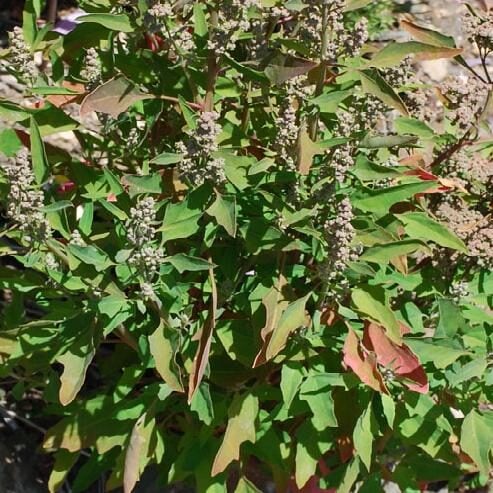
(c) Eric M Powell, some rights reserved (CC BY-NC), uploaded by Eric M Powell
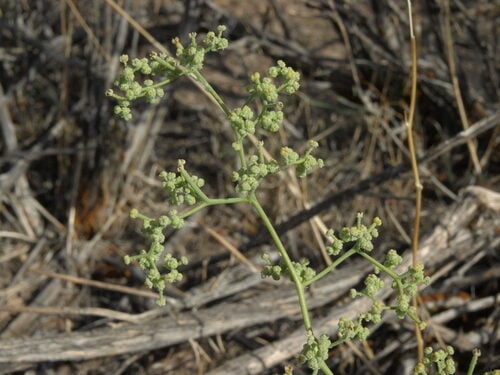
iNaturalist· cc-by
(c) Kevin Thiele, some rights reserved (CC BY)
Summary
Source: WikipediaDysphania ambrosioides, formerly Chenopodium ambrosioides, known as epazote, Jesuit's tea, Mexican tea or wormseed, is an annual or short-lived perennial herb native to the Americas.
Description
An annual or perennial herb or small shrub. It grows up to 1 m high and spreads to 50 cm across. The stem is erect and strongly branched from the base. It has angular ribs towards the tip. It has attractive, toothed leaves. They are oblong and yellowish green. They can be red-green. The undersides of the leaves are marked with small resin particles. The leaves are 1.5-10 cm long by 0.5-3.5 cm wide. The leaves have a bad smell. The flowers are green, and occur as many together, in spikes. The fruit are small green bladder shaped structures with shiny brown black seeds.
Edible Uses
Ideally collected before going to seed, D. ambrosioides is used as a leaf vegetable, herb, and herbal tea, for its strong aroma and flavor. The fragrance of D. ambrosioides is strong and unique. Raw, it has a resinous, medicinal aroma, similar to oregano, anise, fennel, or even tarragon, but stronger. A common analogy is to turpentine or creosote. It has also been compared to citrus, savory, and mint. Although it is traditionally used with black beans for flavor and its antiflatulent properties, it is also sometimes used to flavor other traditional Mexican dishes: it can be used to season quesadillas and sopes (especially those containing huitlacoche), soups, mole de olla, tamales with cheese and chili peppers, chilaquiles, eggs and potatoes, esquites, and enchiladas. It is often cooked into fried white rice, and it is an important ingredient for making the green salsa for chilaquiles. In the Philippines, where it is called pasotes or pasyotes, it is a characteristic herb of Vigan pipian, a chicken porridge distinct from the namesake Mexican pipian. It is also used in the longganisa of Sampaloc, Quezon, and as a stuffing for lechon in Carcar, Cebu.
Traditional Uses
CAUTION: It is probably best not to eat this plant in large quantities. The leaves have been used as a substitute for tea. The leaves are added to beans, and to season soups and other dishes. Leaves can be dried and they retain their flavour. The fresh leaves can be stored for 2-3 days. The seeds can be ground into black flour and mixed with water and eaten. They are also roasted and added to alcoholic drinks. Caution: Alcohol is a cause of cancer.
Medicinal Uses
Mexican tea is a Central American herb that has been used for centuries to expel parasitic worms from the body. The seed, or the essential oil obtained from the seed and flowering stem is used for this, though all parts of the plant are used medicinally. The plant, especially the essential oil, is toxic in larger doses and so should be used with care and preferably under the direction of a skilled practitioner. This remedy should not be prescribed for pregnant women. See also the notes above on toxicity. Until fairly recently, this was one of the most commonly used vermifuges, though it has now been largely replaced by synthetic drugs. The seed, or the essential oil, was used. It is very effective against most parasites, including the amoeba that causes dysentery, but is less effective against tapeworm. Fasting should not precede its use and there have occasionally been cases of poisoning caused by this treatment. The essential oil is used externally to treat athlete's foot and insect bites. This is at its highest concentration in the flowering stems before seed is set, these contain around 0.7% essential oil of which almost 50% is the active vermifuge ascaridol. The essential oil is of similar quality from plants cultivated in warm climates and those in cool climates. The whole plant is analgesic, antiasthmatic, carminative, febrifuge, stomachic and vermifuge. An infusion can be used as a digestive remedy, being taken to settle a wide range of problems such colic, diarrhoea and stomach pains; it is also used to treat conditions such as coughs, fevers and internal haemorrhages. The leaves are added in small quantities as a flavouring for various cooked bean dishes because their carminative activity can reduce flatulence. Externally, it has been used as a wash for haemorrhoids, as a poultice to detoxify snake bites and other poisons and is thought to have wound-healing properties. The macerated leaves and flowers are mixed with a pinch of salt, and used as a poultice for treating persistent sores. The essential oil is high in ascaridol, a nematocidal terpene peroxide which is active against ascaris, worms and ankylostomes.
Known Hazards
Humans have died from overdoses of D. ambrosioides essential oils (attributed to the ascaridole content). Symptoms include severe gastroenteritis with pain, vomiting, and diarrhea, dizziness, headache, temporary deafness, kidney and liver damage, convulsions, paralysis, death.
Distribution
A tropical plant. It will grow under a range of soil and climate conditions. It is drought and frost resistant. It grows in tropical places but also in temperate places. In Papua New Guinea it grows from sea level to 2,000 m altitude. In Nepal it grows between 500 and 3000 m altitude. In Zimbabwe it grows between 1,100-1,600 m above sea level. In Argentina it grows from sea level to 2,000 m above sea level
Where It Grows
Afghanistan, Africa, Albania, Algeria, Amazon, Angola, Argentina, Aruba, Asia, Australia, Austria, Bahamas, Bangladesh, Belgium, Belize, Benin, Bermuda, Bolivia, Botswana, Brazil, Bulgaria, Burundi, Cameroon, Canary Is., Central Africa, Central African Republic, CAR, Central America, Chile, China, Congo DR, Congo R, Costa Rica, Crete, Cuba, Czech Republic, Denmark, Djibouti, Dominican Republic, East Africa, Ecuador, Egypt, El Salvador, Eritrea, Eswatini, Ethiopia, Europe, Fiji, Finland, France, Gabon, Germany, Ghana, Greece, Guatemala, French, Guiana, Guianas, Guyana, Haiti, Hawaii, Himalayas, Honduras, Hungary, India, Indochina, Indonesia, Iran, Iraq, Italy, Ivory Coast, Jamaica, Japan, Kenya, Korea, Laos, Lebanon, Lesotho, Lesser Antilles, Liberia, Libya, Madagascar, Malawi, Mauritania, Mauritius, Mediterranean, Mexico*, Morocco, Mozambique, Myanmar, Namibia, Nepal, New Caledonia, New Zealand, Nicaragua, Niger, Nigeria, Norfolk Island, North Africa, North America, Northeastern India, Pacific, Pakistan, Palestine, Panama, Papua New Guinea, PNG, Paraguay, Peru, Philippines, Poland, Portugal, Puerto Rico, Reunion, Romania, Rwanda, Sahel, Sao Tome and Principe, Saudi Arabia, SE Asia, Senegal, Sierra Leone, Sinai, South Africa, Southern Africa, South America, Spain, Sri Lanka, St Helena, Suriname, Swaziland, Sweden, Syria, Taiwan, Tanzania, Tasmania, Thailand, Tibet, Togo, Trinidad-Tobago, Tunisia, Turkey, Türkiye, Uganda, Ukraine, Uruguay, USA, Venezuela, Vietnam, West Africa, West Indies, Yemen, Yugoslavia, Zambia, Zimbabwe,
Cultivation
Plants are grown from seed.
Propagation
Seed - whilst it can be sown in situ, if seed is scarce then we have had better results by sowing the seed in pots. Put a few seeds in each pot, germination should only take a few days and most seed should germinate. Thin to the best plants as soon as they are large enough to handle and plant out when around 15cm tall.
Other Uses
The plant is used as a fumigant against mosquitoes and is also added to fertilizers to inhibit insect larvae. Gold/green dyes can be obtained from the whole plant.
Other Information
It is not known if it is used in Papua New Guinea. It is popular in cooking in the Yucatan peninsula in Mexico. It is a cultivated food plant. It is sold in local markets.
Notes
It contains poisonous substances once used to treat worms. It reduces the gases produced from eating beans. The plant is used for medicine. There are about 100-150-250 Chenopodium species. They are mostly in temperate regions. Also put in the family Chenopodiaceae.
Synonyms
Also Known As
Akatasavola, American epazote, American Wormseed, Amush, Babre nagdi, Bathoo, Bathu, Bathwa, Caa re, Care, Dau giun, Desi bathoo, Epasote, Epazote, Fragrant Tiger Bones, Goosefoot, Huauzontle, Ihkgna, Jangli battoon, Jerusalem-tea, Jilmil sak, Kanyuku, Katu ayamoddakam, Kwinifi, Mbosia, Mbozya, Nkhinza, Munhuhwenhuhwe, Nkasa kindongo, Paico, Paico macho, Paicu, Paiku, Pasare bethe, Payco, Payqu, Pazote, Rato latte, Say-myu, Tetrolokoloko, Teya, Tho kinggioi, Tu jing jie, Wormseed
References (104)
- Altschul, S.V.R., 1973, Drugs and Foods from Little-known Plants. Notes in Harvard University Herbaria. Harvard Univ. Press. Massachusetts. no. 871 (As Chenopodium ambrosioides)
- Ambasta, S.P. (Ed.), 2000, The Useful Plants of India. CSIR India. p 119 (As Chenopodium ambrosioides)
- Arellanes, Y., et al, 2013, Influence of traditional markets on plant management in the Tehuacan Valley. Journal of Ethnobiology and Ethnomedicine 9:38 (As Chenopodium ambrosioides)
- Astrada, E., et al, 2007, Ethnobotany in the Cumbres de Monterrey National Park, Nuevo Leon, Mexico. Journal of Ethnobiology and Ethnomedicine 3:8 (As Teloxys ambrosioides)
- Baro, D., Baruah, S. and Borthukar, S. K. 2015, Documentation on wild vegetables of Baksa district, BTAD (Assam). Scholars Research Library. Archives of Applied Science Research, 2015, 7 (9):19-27 (As Chenopodium ambrosioides)
Show all 104 references Hide references
- Batawila, K., et al, 2007, Diversite et gestion des legumes de cueillete au Togo. African Journal of Food, Agriculture, Nutrition and Development 7( 3& 4): 65 (As Chenopodium ambrosioides)
- Beckstrom-Sternberg, Stephen M., and James A. Duke. "The Foodplant Database." http://probe.nalusda.gov:8300/cgi-bin/browse/foodplantdb.(ACEDB version 4.0 - data version July 1994) (As Chenopodium ambrosioides)
- Bentley, J., Nina, S & Perez, S., 2001, Ethnobotany of Weeds in Cochabamba.
- Bodkin, F., 1991, Encyclopedia Botanica. Cornstalk publishing, p 249 (As Chenopodium ambrosioides)
- Bonet, M. A. & Valles, J., 2002, Use of non-crop food vascular plants in Montseny biosphere reserve (Catalonia, Iberian Peninsula). International Journal of Food Sciences and Nutrition (2002) 53, 225–248 (As Chenopodium ambrosioides)
- Bremness, L., 1994, Herbs. Collins Eyewitness Handbooks. Harper Collins. p 240 (As Chenopodium ambrosioides)
- Brown, D., 2002, The Royal Horticultural Society encyclopedia of Herbs and their uses. DK Books. p 164 (As Chenopodium ambrosioides)
- Burkill, H. M., 1985, The useful plants of west tropical Africa, Vol. 1. Kew. (As Chenopodium ambrosioides)
- Burkill, I.H., 1966, A Dictionary of the Economic Products of the Malay Peninsula. Ministry of Agriculture and Cooperatives, Kuala Lumpur, Malaysia. Vol 1 (A-H) p 529 (As Chenopodium ambrosioides)
- Caballero-Serrano, V., et al, 2019, Traditional ecological knowledge and medicinal plant diversity in Ecuadorian Amazon home gardens. Global Ecology and Conservation 17 (2019) e00524 p 7 (As Chenopodium ambrosioides)
- Carretero, A. L., 2005, Useful Plants and traditional knowledge in the Tucumano-Boliviano Forest. M. Sc. Thesis Institute of Biological Science University of Aarhus, Denmark p 53 (As Chenopodium ambrosioides)
- Casas, A., et al, 1996, Plant Management Among the Nahua and the Mixtec in the Balsas River Basin, Mexico: An Ethnobotanical Approach to the Study of Plant Domestication. Human Ecology, Vol. 24, No. 4 pp. 455-478 (As Chenopodium ambrosioides)
- Creasey, R., 2000, Edible Mexican Garden. Periplus. p 35 (As Chenopodium ambrosioides)
- Dangol, D. R. et al, 2017, Wild Edible Plants in Nepal. Proceedings of 2nd National Workshop on CUAOGR, 2017. (As Chenopodium ambrosioides)
- Dansi, A., et al, 2008, Traditional leafy vegetables and their use in the Benin Republic. Genet Resour Crop Evol (2008) 55:1239–1256 (As Chenopodium ambrosioides)
- Diaz-Betancourt, M., et al, 1999, Weeds as a future source for human consumption. Rev. Biol. Trop. 47(3):329-338) (As Chenopodium ambrosioides)
- Duke, J.A., 1992, Handbook of Edible Weeds. CRC Press. p 69 (As Chenopodium ambrosioides)
- Dutta, U., 2012, Wild Vegetables collected by the local communities from the Churang reserve of BTD, Assam. International Journal of Science and Advanced Technology. Vol. 2(4) p 119 (As Chenopodium ambrosioides)
- Ekman Herbarium records Haiti (As Chenopodium ambrosioides)
- Esperanca, M. J., 1988. Surviving in the wild. A glance at the wild plants and their uses. Vol. 1. p 40 (As Chenopodium ambrosioides)
- Estrada-Castillon, E., et al, 2014, Ethnobotany in Rayones, Nuevo Leon, Mexico. Journal of Ethnobiology and Ethnomedicine, 10:62 (As Chenopodium ambrosioides)
- Facciola, S., 1998, Cornucopia 2: a Source Book of Edible Plants. Kampong Publications, p 76 (As Chenopodium ambrosioides)
- Farfan, B., et al, 2007, Mazahua Ethnobotany and Subsistence in the Monarch Butterfly Biosphere Reserve, Mexico. Economic Botany 61(2) 2007, pp 173-191 (As Chenopodium ambrosioides)
- Flora of Australia, Volume 4, Phytolaccaceae to Chenopodiaceae, Australian Government Publishing Service, Canberra (1984) p 147 (As Chenopodium ambrosioides)
- Flora of Australia Volume 49, Oceanic Islands 1, Australian Government Publishing Service, Canberra. (1994) p 83 (As Chenopodium ambrosioides)
- Fowler, D. G., 2007, Zambian Plants: Their Vernacular Names and Uses. Kew. p 18 (As Chenopodium ambrosioides)
- Gangwar, A. K. & Ramakrishnan, P. S., 1990, Ethnobotanical Notes on Some Tribes of Arunachal Pradesh, Northeastern India. Economic Botany, Vol. 44, No. 1 pp. 94-105 (As Chenopodium ambrosioides)
- Gautam, R. S., et al, 2022, Ethnobotanical Review of Wild Edible Plants of Nepal. Journal of Natural History Museum Volume 32, 2021-22 p 101 (As Chenopodium ambrosioides)
- Ghanimi, R., et al, 2022, Ethnobotanical study on wild edible plants traditionally used by Messiwa people, Morocco. Journal of Ethnobiology and Ethnomedicine. 18:16
- Ghorbani, A., et al, 2012, A comparison of the wild food plant use knowledge of ethnic minorities in Naban River Watershed Nature Reserve, Yunnan, SW China. Journal of Ethnobiology and Ethnomedicine; 8:17 (As Chenopodium ambrosioides)
- Gohre, A., et al, 2016, Plants from disturbed savannah vegetation and their usage by Bakongo tribes in Uíge, Northern Angola. Journal of Ethnobiology and Ethnomedicine (2016) 12:42
- Gonzalez, J. A., et al, 2011, The consumption of wild and semi-domesticated edible plants in the Arribes del Duero (Salamanca-Zamora, Spain): an analysis of traditional knowledge. Genetic. Resour Crop Evolution 58:991-1006 (As Chenopodium ambrosioides)
- Hedrick, U.P., 1919, (Ed.), Sturtevant's edible plants of the world. p 184 (As Chenopodium ambrosioides)
- Hemphill, I, 2002, Spice Notes Macmillan. p 173 (As Chenopodium ambrosioides)
- Hensen, I., 1992, La Flora de la Comunidad Chorojo, Su uso, taxonomía científica y vernacular. Agroecología Universidad Cochabamba p 23 (As Chenopodium ambrosioides)
- Hermandez Bermejo, J.E., and Leon, J. (Eds.), 1994, Neglected Crops. 1492 from a different perspective. FAO Plant Production and Protection Series No 26. FAO, Rome. p 12 (As Chenopodium ambrosioides)
- Henty, E.E., 1980, Harmful Plants in Papua New Guinea. Botany Bulletin No 12. Division Botany, Lae, Papua New Guinea. p 32, 31 (As Chenopodium ambrosioides)
- Hibbert, M., 2002, The Aussie Plant Finder 2002, Florilegium. p 66 (As Chenopodium ambrosioides)
- Hussey, B.M.J., Keighery, G.J., Cousens, R.D., Dodd, J., Lloyd, S.G., 1997, Western Weeds. A guide to the weeds of Western Australia. Plant Protection Society of Western Australia. p 134 (As Chenopodium ambrosioides)
- Jackes, B.R., 2001, Plants of the Tropics. Rainforest to Heath. An Identification Guide. James Cook University. p 46 (As Chenopodium ambrosioides)
- Joshi, N., et al, 2007, Traditional neglected vegetables of Nepal: Their sustainable utilization for meeting human needs. Tropentag 2007. Conference on International Agricultural Research for Development. (As Chenopodium ambrosioides)
- Joshi, N. & Siwakoti, M., 2012, Wild Vegetables Used by Local Community of Makawanpur District and Their Contribution to Food Security and Income Generation. Nepal Journal of Science and Technology Vol. 13, No. 1 (2012) 59-66 (As Chenopodium ambrosioides)
- Joyal, E., 1987, Ethnobotanical Field Notes from Ecuador: Camp, Prieto, Jorgensen, and Giler. Economic Botany 41(2): 163-189 (As Chenopodium ambrosioides)
- Kanis, A., in Henty, E.E., (Ed.), 1981, Handbooks of the Flora of Papua New Guinea, Melbourne University Press, p 21 (As Chenopodium ambrosioides)
- Kew Plants of the World Online
- Kinupp, V. F., 2007, Plantas alimenticias nao-convencionais da regiao metropolitana de Porto Alegre, RS, Brazil p 58
- Kiple, K.F. & Ornelas, K.C., (eds), 2000, The Cambridge World History of Food. CUP p 1750, 1772 (As Chenopodium ambrosioides)
- Kuo, W. H. J., (Ed.) Taiwan's Ethnobotanical Database (1900-2000), http://tk.agron.ntu.edu.tw/ethnobot/DB1.htm (As Chenopodium ambrosioides)
- Lamp, C & Collet F., 1989, Field Guide to Weeds in Australia. Inkata Press. p 69 (As Chenopodium ambrosioides)
- Latham, P., 2004, Useful Plants of Bas-Congo province. Salvation Army & DFID p 75 (As Chenopodium ambrosioides)
- Lazarides, M. & Hince, B., 1993, Handbook of Economic Plants of Australia, CSIRO. p 56 (As Chenopodium ambrosioides)
- Leon-Lobos, P., et al, 2022, Patterns of Traditional and Modern Uses of Wild Edible Native Plants of Chile: Challenges and Future Perspectives. Plants (Basel) v 11 (6) Table S1
- Long, C., 2005, Swaziland's Flora - siSwati names and Uses http://www.sntc.org.sz/flora/ (As Chenopodium ambrosioides)
- Malezas Comestibles del Cono Sur, INTA, 2009, Buernos Aires (As Chenopodium ambrosioides)
- Manandhar, N.P., 2002, Plants and People of Nepal. Timber Press. Portland, Oregon. p 148 (As Chenopodium ambrosioides)
- Manzanero-Medina, G. I., et al, 2020, Ethnobotany of food plants (quelites) sold in two traditional markets of Oaxaca, Mexico. South African Journal of Botany. 130 (2020) 215-223
- Martin, F.W. & Ruberte, R.M., 1979, Edible Leaves of the Tropics. Antillian College Press, Mayaguez, Puerto Rico. p 79, 182 (As Chenopodium ambrosioides)
- Molla, A., Ethiopian Plant Names. http://www.ethiopic.com/aplants.htm (As Chenopodium ambrosioides)
- Mot So Rau Dai an Duoc O Vietnam. Wild edible Vegetables. Ha Noi 1994, p 264 (As Chenopodium ambrosioides)
- Murtem, G. & Chaudhrey, P., 2016, An ethnobotanical note on wild edible plants of Upper Eastern Himalaya, India. Brazilian Journal of Biological Sciences, 2016, v. 3, no. 5, p. 63-81 (As Chenopodium ambrosioides)
- Paczkowska, G. & Chapman, A.R., 2000, The Western Australian Flora. A Descriptive Catalogue. Western Australian Herbarium. p 201 (As Chenopodium ambrosioides)
- Pascual-Mendoza, S. et al, 2021, Traditional knowledge of edible plants in an indigenous community in the Sierra Norte of Oaxaca, Mexico. Plant Biosystems - An International Journal Dealing with all Aspects of Plant Biology
- Patiri, B. & Borah, A., 2007, Wild Edible Plants of Assam. Geethaki Publishers. p 111 (As Chenopodium ambrosioides)
- Pegu, R., et al, 2013, Ethnobotanical study of Wild Edible Plants in Poba Reserved Forest, Assam, India. Research Journal of Agriculture and Forestry Sciences 1(3):1-10 (As Chenopodium ambrosioides)
- Pham-Hoang Ho, 1999, An Illustrated Flora of Vietnam. Nha Xuat Ban Tre. p 724 (As Chenopodium ambrosioides)
- Piedra-Malagón, E. M. et al, 2022, Edible native plants of the Gulf of Mexico Province. Biodiversity Data Journal 10: e80565 p 9
- Plants for a Future database, The Field, Penpol, Lostwithiel, Cornwall, PL22 0NG, UK. http://www.scs.leeds.ac.uk/pfaf/ (As Chenopodium ambrosioides)
- Plants of Haiti Smithsonian Institute http://botany.si.edu (As Chenopodium ambrosioides)
- PROSEA handbook Volume 13 Spices. p 275 (As Chenopodium ambrosioides)
- Purseglove, J.W., 1968, Tropical Crops Dicotyledons, Longmans. p 632 (As Chenopodium ambrosioides)
- Rangel-Landa, S., et al, 2017, Sociocultural and ecological factors influencing management of edible and non-edible plants: the case of Ixcatlan, Mexico. Journal of Ethnobiology and Ethnomedicine. 13:59
- Recher, P, 2001, Fruit Spirit Botanical Gardens Plant Index. www.nrg.com.au/~recher/ seedlist.html p 5 (As Chenopodium ambrosioides)
- Rodin, R.J., The Ethnobotany of the Kwanyama Ovambos, Missouri Botanical Garden. p 146 (As Chenopodium ambrosioides)
- Rodriguez-Amaya, D. B., 1999, Carotenoides y Prepracion de Alimentos. University Estadual de Campinas, Brasil, Ph.D. thesis. p 25 (As Chenopodium ambrosioides)
- Ruiters-Welcome, A. K., 2019, Food plants of southern Africa. Ph.D. thesis. Univ. of Johannesburg p 42
- Seidemann J., 2005, World Spice Plants. Economic Usage, Botany, Taxonomy. Springer. p 95 (As Chenopodium ambrosioides)
- Smith, A.C., 1981, Flora Vitiensis Nova, Lawaii, Kuai, Hawaii, Volume 2 p 295 (As Chenopodium ambrosioides)
- Sp. pl. 1:219. 1753 (As Chenopodium ambrosioides)
- Staples, G.W. and Herbst, D.R., 2005, A tropical Garden Flora. Bishop Museum Press, Honolulu, Hawaii. p 234 (As Chenopodium ambrosioides)
- Stern, G., 1986, Australian Weeds. A Source of Food and Medicine. Harper & Row. p 128 (As Chenopodium ambrosioides)
- Swaziland's Flora Database http://www.sntc.org.sz/flora (As Chenopodium ambrosioides)
- Tardio, J., et al, 2006, Ethnobotanical review of wild edible plants in Spain. Botanical J. Linnean Soc. 152, 27-71 (As Chenopodium ambrosioides)
- Tbatou, M, et al, 2016, Wild Edible Plants traditionally used in the countryside of El Jadida, Coastal Area in the Center of Morocco. Life Sciences Leaflets 75:28-48 (As Chenopodium ambrosioides)
- Torre, de la L., et al, 2008, Enciclopedia de las Plantas Útiles del Ecuador. Herbario QCA. Pontificia Universidad Católica del Ecuador. p 157 (As Chenopodium ambrosioides)
- Tozer, F., 2007, The Uses of Wild Plants. Green Man Publishing. p 65 (As Chenopodium ambrosoides)
- Turreira-Garcia, N., et al, 2015, Wild edible plant knowledge, distribution and transmission: a case study of the Achi Mayans of Guatemala. Journal of Ethnobiology and Ethnomedicine. 11:52
- Vael, L., 2015, Ethnobotanical study of the plant use in the natural landscape of two mestizo communities in the Ucayali region of the Peruvian Amazon. Universiteit Gent. (As Chenopodium ambrosioides)
- van Wyk, B., 2005, Food Plants of the World. An illustrated guide. Timber press. p 129 (As Chenopodium ambrosioides)
- Vazquez-Garcia, V., et al, 2004, Uncultivated Foods in Southern Veracruz, Mexico: Establishing the Links between Ecosystem Health, Food Availability, and Human Nutrition. EcoHealth 1, 131-143 (As Teloxys ambrosoides)
- Vazquez-Garcia. V., 2008, Gender, ethnicity, and economic status in plant management: Uncultivated edible plants among the Nahuas and Popolucas of veracruz, Mexico. Agriculture and Human Values 25: 65-77 (As Teloxys ambrosoides) (As Chenopodium ambrosioides)
- Welcome, A. K. & Van Wyk, B.-E., 2019, An inventory and analysis of the food plants of southern Africa. South African Journal of Botany 122 (2019) 136–179
- Wiersema, J. H. & Leon, B., 2013, World Economic Plants. A Standard Reference CRC Press. 2nd Ed. p 260
- www.zimbabweflora.co.zw 2011 (As Chenopodium ambrosioides)
- Williamson, J., 2005, Useful Plants of Malawi. 3rd. Edition. Mdadzi Book Trust. p 63 (As Chenopodium ambrosioides)
- World Checklist of Useful Plant Species 2020. Royal Botanic Gardens, Kew
- www.chileflora.com (As Chenopodium ambrosioides)
- www.eFloras.org Flora of China
- Yetman, D., 2002, The Guarijios of the Sierra Madre: Hidden People of Northwestern Mexico. University of New Mexico Press. p 190 (As Chenopodium ambrosioides)
- Zhu Gelin (Chu Ge-ling); Steven E. Clemants, CHENOPODIACEAE [Draft], Flora of China (As Chenopodium ambrosioides)