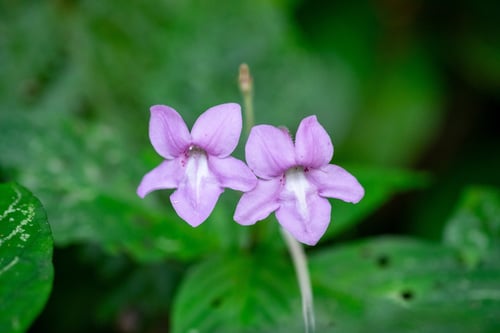
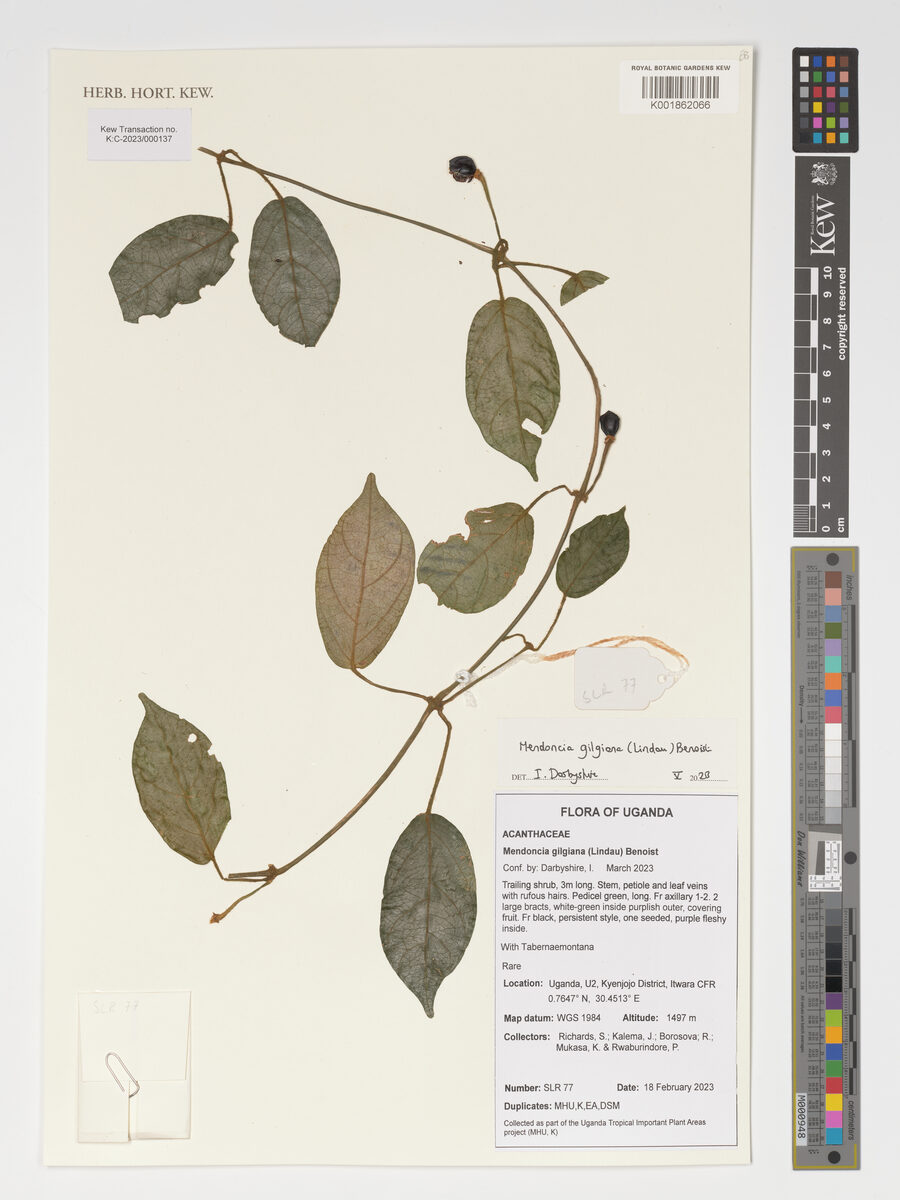
Trichanthera gigantea
(Humb. & Bonpl.) Nees
Giant trichanthera
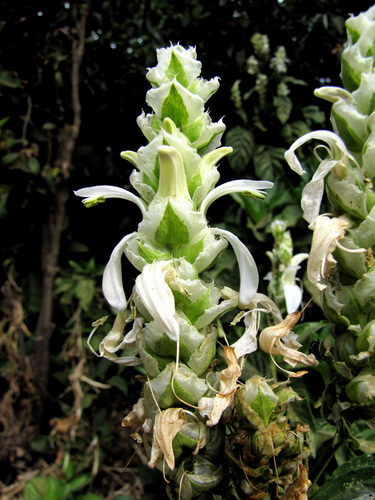
iNaturalist· cc-by-nc
(c) Diego Amaya, some rights reserved (CC BY-NC), uploaded by Diego Amaya
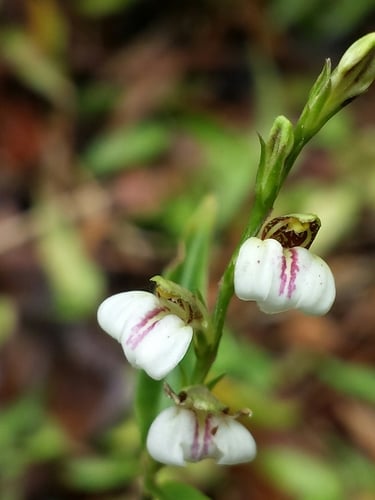
iNaturalist· cc-by-nc
(c) Bruno Santos, some rights reserved (CC BY-NC)
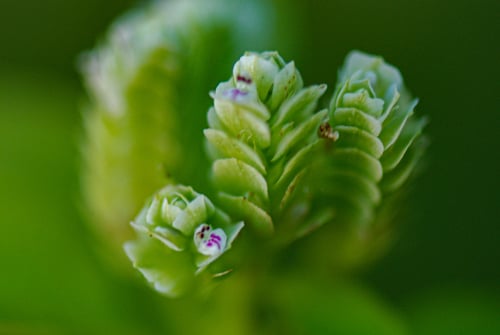
iNaturalist· cc-by-nc
(c) Bruno Santos, some rights reserved (CC BY-NC)
Summary
Source: WikipediaTrichanthera gigantea is a species of flowering plant in the acanthus family, Acanthaceae. It is native to Central America and northern South America. It has also been introduced to other tropical regions such as Vietnam, Cambodia, and the Philippines.
Description
A tree. It grows 5-25 m tall. The branches are 4 angled. The tips have a brown coating. The leaf stalk is 1-5 cm long and has a channel along it and is slightly hairy. The leaf blade is oval and 13-26 cm long by 6-14 cm wide. It is slightly hairy underneath. The flowers are in a loosely branched group at the ends of branches. This is 3-8 cm long by 2-3 cm wide. The fruit capsule is 17-20 mm long by 6-7 mm wide. It has silky hairs. The seeds are 3-4 mm across.
Edible Uses
Young sprouts are eaten in maize porridge. This almost certainly refers to the young shoots, as the seed is extremely difficult to germinate.
Medicinal Uses
The plant is used as a blood tonic and galactagogue. It treats nephritis and promotes milk flow in nursing mothers. It is also given to domestic animals: used to treat colic and hernia in horses, and retained placenta in cows.
Distribution
It is a tropical plant.
Where It Grows
Andes, Bolivia, Brazil, Central America, Colombia, Costa Rica, Ecuador, French Guiana, Guianas, Guyana, Panama, Peru, South America, Suriname, Venezuela,
Cultivation
A plant of the humid, lowland tropics, where it is found at elevations up to 400 metres. It grows best in areas where annual daytime temperatures are within the range 27 - 33°c, but can tolerate 20 - 38°c. The plant can survive temperatures down to about -1°c. The plant does not tolerate frost. It prefers a mean annual rainfall in the range 1,500 - 3,000mm, but tolerates 1,000 - 5,000mm. Growing well in full sun, the plant also has considerable shade tolerance. It is well adapted to acid infertile soils. Although commonly found on stream banks, the plant requires well-drained soils. Prefers a pH in the range 5 - 6.5, tolerating 4.5 - 7. A fast-growing plant. The vigorous regrowth of the plant under heavy cutting regimes has led to speculation that nitrogen fixation may occur through the action of mycorrhiza or other organisms
Propagation
Sow seed as soon as it is ripe in a partially shaded nursery seedbed. Germination rates are very poor, generally 0–2%, with sprouting occurring within 25–35 days. Seedlings are usually ready to plant out around 6 months after germination. Stem cuttings root readily in full sun or light shade; cuttings 2.2–2.8mm in diameter, 20cm long, and with at least 2 leaf buds achieve the best results, with a 92% success rate. Larger cuttings over 1 metre long and 2cm in diameter can be used to quickly establish a living fence. Stems that contact the ground through bending or breakage will root at the nodes to form new plants.
Other Uses
Trichanthera gigantea is used as a hedge or living fence, as a shade tree in coffee plantations, and for preventing stream bank erosion. Its shade tolerance allows it to grow alongside a range of overstorey agroforestry species, including bananas, Leucaena, and Gliricidia. As a fast-growing plant, it can serve as a pioneer species in woodland restoration. The wood is cream-coloured or pale brown with no sharp distinction between sapwood and heartwood. It has a slightly foetid odour, no distinctive taste, and is straight- or wavy-grained, coarse-textured, light in weight, and rather soft, though strong for its weight. It requires a sharp knife to cut cleanly across the grain and stains readily during drying. Of low quality, it is suitable only for light packing boxes or similar unfinished products. The wood is used for fuel and charcoal. The plant is cultivated as animal fodder and fed to ducks, pigs, and rabbits; its leaves are relatively rich in protein.
Also Known As
Aro, Asedera, Barriga, Beque, Cafeto, Cafeto maderagua, Cajeto, Cenicero, Fune, Madreagua, Manebokoro, Nacedero, Naranjilla, Palo de agua, Pau-santo, Quiebra barriga, Quiabrabarrigo, Suiban, Tuno, Yatago, Zanca de arana
References (3)
- Grandtner, M. M., 2008, World Dictionary of Trees. Wood and Forest Science Department. Laval University, Quebec, Qc Canada. (Internet database http://www.wdt.qc.ca)
- Grandtner, M. M. & Chevrette, J., 2013, Dictionary of Trees, Volume 2: South America: Nomenclature, Taxonomy and Ecology. Academic Press p 673
- Leterme, P., et al, 2006, Mineral content of tropical fruits and unconventional foods of the Andes an the rain forest of Colombia. Food Chemistry 95: 644-652