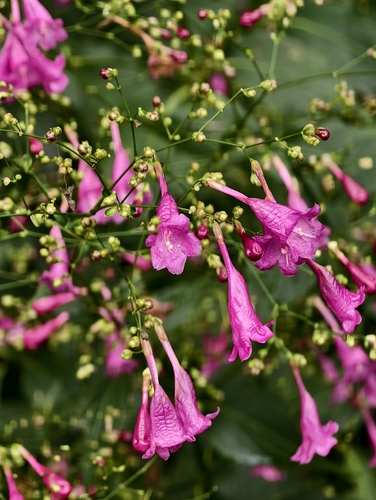
Hygrophila erecta
(Burm. f.) Hochr.
iNaturalist· cc-by
(c) Pranav Chandra Bose, some rights reserved (CC BY), uploaded by Pranav Chandra Bose
iNaturalist· cc-by
(c) Pranav Chandra Bose, some rights reserved (CC BY), uploaded by Pranav Chandra Bose
Description
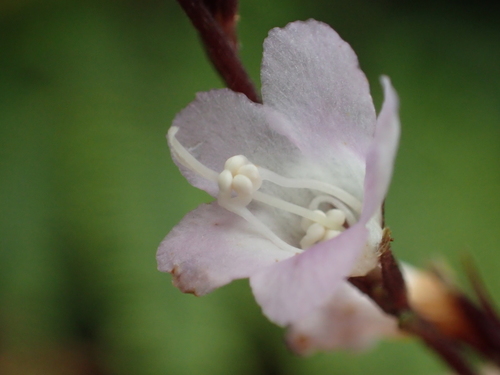
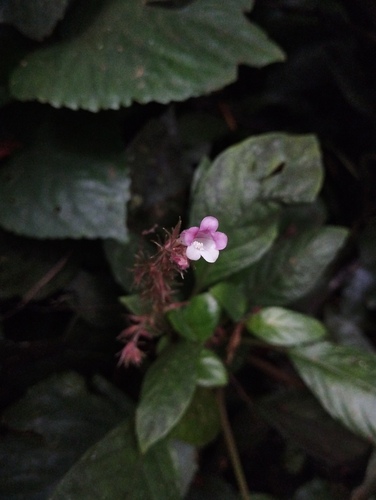
A herb. It keeps growing from year to year. It grows 1 m tall. The stems are erect and 4 angled. The leaves are oval and 2-9 cm long by 1-3 cm wide. The edges can be slightly wavy. The flowers are in clusters in the axils of leaves. They are purplish-blue.
Edible Uses
The young leaves are used as a vegetable, and both leaves and flowers are edible portions.
Traditional Uses
The young leaves are used as a vegetable.
This uses section is brief — help expand it
Distribution
A tropical plant. It grows in wet places below 1,000 m above sea level in southern China. In Yunnan. It grows in rice fields.
Where It Grows
Asia, China, Guianas, India*, Indochina, Laos, Malaysia, Myanmar, SE Asia, South America, Suriname, Thailand, Vietnam,
Cultivation
It can be grown from cuttings planted into wet ground.
Notes
There are about 80 Hygrophila species. They grow in the tropics.
Synonyms
References (4)
- Dobriyal, M. J. R. & Dobriyal, R., 2014, Non Wood Forest Produce an Option for Ethnic Food and Nutritional Security in India. Int. J. of Usuf. Mngt. 15(1):17-37
- Garcia, G. S. C., 2006, The mother-child nexus. Knowledge and valuation of wild food plants in Wayanad, Western Ghats, India. Journal of Ethnobiology and Ethnomedicine, 2:39
- Ramachandran, V.S., 1987, Further Notes on the Ethnobotany of Cannanore District, Kerala. J. Econ. Tax. Bot. Vol. 11 No. 1 pp 47-
- Romanowski, N., 2007, Edible Water Gardens. Hyland House. p 107 (As Hygrophila quadrivalvis)