Brassica tournefortii
Gouan
Wild Turnip, Mediterranean Turnip, Asian mustard
iNaturalist· cc-by-nc
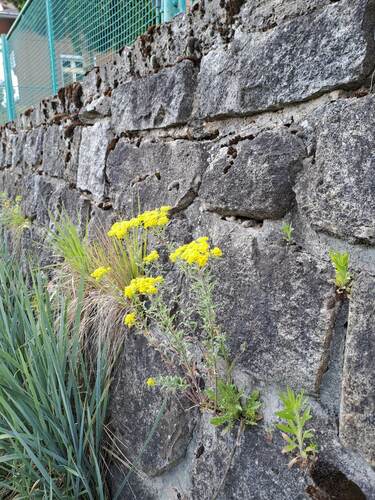
(c) Neil O. Frakes, some rights reserved (CC BY-NC), uploaded by Neil O. Frakes
iNaturalist· cc-by-sa
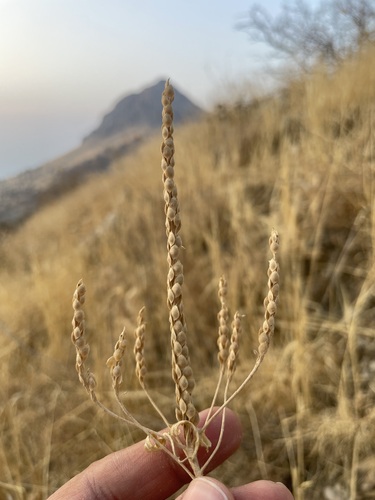
(c) Tony Rebelo, some rights reserved (CC BY-SA), uploaded by Tony Rebelo
iNaturalist· cc-by-nc
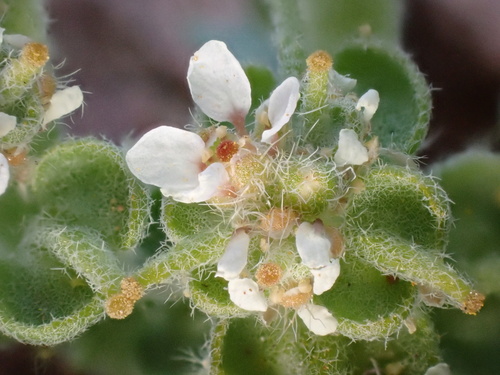
(c) juliamarkey, some rights reserved (CC BY-NC), uploaded by juliamarkey
Summary
Source: WikipediaAn annual mustard growing to 0.6 m tall by 1 m wide at a fast rate, hardy to UK zone 8. Hermaphrodite and insect-pollinated. Requires light sandy or medium loamy well-drained soil; suitable for mildly acid to mildly alkaline pH. Must have full sun and prefers moist soil. Germinates following autumn or early winter rains, forming rosettes in winter to early spring, flowering January to May, with seed maturation March to June.
Description
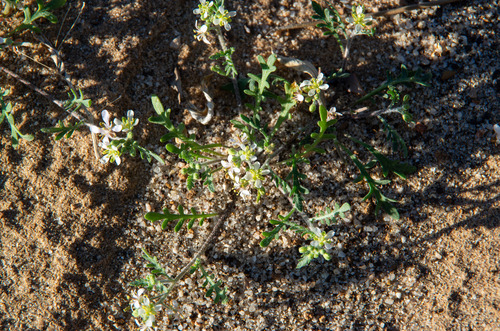
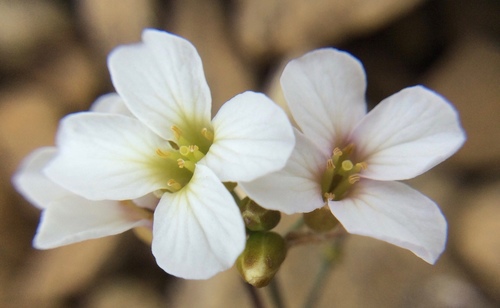
A cabbage family herb. It is an annual herb. The leaves are bristly and divided along the stalk. They have 7 or 8 side lobes. They lie flat on the ground. The flower petals are light yellow. There are 4 petals and there can be a violet tint near their base. The pollen is cream coloured. The dry pod is 6.5 cm long and swollen over the seeds. They end in a cone shaped beak. This usually contains one seed.
Edible Uses
Oil. Leaves and young shoots - cooked. An edible oil is obtained from the seed. Edible Uses & Rating: All major parts—leaves, roots, and seeds—are edible, though their suitability varies by age and preparation. Young leaves: best in early winter as tender rosettes; edible raw or cooked. Roots: when young, juicy and mild; when old, woody and fibrous. Seeds: edible raw, toasted, or ground; mildly spicy, like mustard seed. As a whole, B. tournefortii is a 4/5 survival resource for its abundance, caloric potential, and long availability, though the texture and flavor of mature leaves limit its culinary versatility. Taste, Processing & Kitchen Notes: Leaves taste mildly mustard-like when young, becoming increasingly sharp, hot, or even “fire-breathing” with age. Dense hairs give a raspy texture that softens with boiling. Even after cooking, some coarseness may persist. They’re best treated as potherbs—blanched or boiled and added to soups or beans. Roots, when fresh after winter rains, are thick, white, and mildly sweet with a crisp, turnip-like texture. They can be sliced, boiled, or roasted for a pleasant vegetable dish. Seeds can be toasted and ground to make a pungent mustard paste or seasoning. The flavor is rich and spicy without bitterness. However, seed quality declines rapidly once molds set in later in spring; only fresh, clean seedpods should be used. Culinary Tip: Young rosettes (less than 15 cm across) have the best flavor and least hairiness. Older plants can be stripped of outer leaves and boiled twice to reduce heat and texture. Seasonality (Phenology): Germination follows autumn or early winter rains (November–January). Rosette stage: winter to early spring. Flowering: January to May, depending on rainfall and temperature. Seed maturation: March–June; seedpods may persist nearly year-round on dried plants. Dormancy: during hot, dry summers, plants die back but leave seed banks that germinate next season. In frost-free desert zones, plants can remain green year-round following periodic rain. Look-Alikes & Confusion Risks: Easily mistaken for other wild mustards (Sinapis arvensis, Eruca vesicaria, Raphanus sativus), but Sahara mustard is distinguished by its raspy leaves, dense desert growth, and short-beaked siliques. The flowers resemble those of wild radish but lack the purple or pink veining. Traditional/Indigenous Use Summary: Desert dwellers and indigenous peoples of North Africa and the Middle East have long utilized B. tournefortii as a winter green and seed crop. In North America, foragers—both Native and settler—collected the young rosettes for cooking greens and ground seeds into pastes. Today, survivalists value it as one of the most dependable edible weeds of the Sonoran Desert. Overall Plant Summary: Sahara mustard is an invasive menace from an ecological standpoint but an edible boon for those who understand its timing and preparation. With mild roots, spicy greens, and abundant seeds, it is arguably the most productive wild edible of the American desert winter. Harvesting it responsibly—removing entire plants before seed set—both yields food and aids in controlling its spread.
Traditional Uses
The leaves and young shoots are eaten cooked. The seeds are a source of edible oil.
This uses section is brief — help expand it
Medicinal Uses
None known
Known Hazards
Raspy hairs can irritate sensitive mouths or throats if eaten raw. Boiling or blanching mitigates this.
Distribution
It grows in warm temperate places. It grows on rocky and sandy places. It is resistant to frost but sensitive to drought. Tasmania Herbarium.
Where It Grows
Africa, Asia, Australia, Egypt, Europe*, France, Greece, India, Italy, Libya, Mediterranean, North Africa, North America, Pakistan, Portugal, Saudi Arabia, Sicily, Spain, Tasmania, Tunisia, USA,
Cultivation
Identification & Habit: A coarse, aromatic annual herb in the mustard family (Brassicaceae). Plants begin as dense leafy rosettes with pinnately divided basal leaves covered in short, stiff, raspy hairs. As the season progresses, the plant sends up tall, branching flowering stems bearing bright yellow, four-petaled flowers typical of the mustard family. Leaves toward the top of the plant are smaller, less divided, and sometimes sessile (attached directly to the stem). The seedpods (siliques) are 25–65 mm long, cylindrical, hairless, and end in a short conical beak that does not contain seeds. Each pod holds a single row of tiny, round, yellowish-brown seeds. Stems and leaves are rough to the touch due to stiff, unbranched hairs. Mature plants become straw-colored and brittle, often forming dense, tumbleweed-like clusters. Growing Conditions: Thrives in sandy, disturbed soils with good drainage, full sun, and occasional moisture. It prefers arid to semi-arid climates with mild winters. Tolerates alkaline and saline soils, extreme heat, and drought once established. Optimal growth follows winter rainfall, when soil moisture is high and temperatures range 10–25°C. Habitat & Range: Native to North Africa and the Middle East, Brassica tournefortii has naturalized throughout the American Southwest, where it dominates sandy washes, dunes, and roadsides. It is now found from southern California and Arizona to Texas, and northward into Nevada and Utah. It is one of the most conspicuous invasive species in the Sonoran and Mojave deserts, forming vast monocultures that suppress native wildflowers. Size & Landscape Performance: In favorable conditions, rosettes can reach 1 m across before flowering. Flowering stems may reach up to 90 cm tall, producing hundreds of pods. The plant’s high seed yield ensures persistence even in poor soils. In cultivation, it performs aggressively and is not recommended outside controlled environments. Cultivation (Horticulture): Because it is invasive, cultivation is discouraged except for educational or research purposes. However, in controlled conditions it behaves like other cool-season mustards: sow in autumn in sandy soil, keep moist until established, and harvest leaves when young. It reseeds prolifically and should be harvested before flowering to prevent spread. Pests & Problems: Generally disease- and pest-free in the wild. The main issue for human use is fungal infection in seeds late in the season, indicated by gray mold or blackened seeds. These are unsafe to consume and should be discarded. Leaf miners and aphids may appear in dense stands but are rarely consequential.
Propagation
Sow seed in spring directly in situ.
Other Uses
Edible oil obtained from seed. Dense stands alter wildflower composition and reduce habitat quality, though provide early nectar for desert pollinators and occasional forage for livestock when young.
Notes
There are about 30 Brassica species and many cultivated varieties.
Synonyms
Also Known As
Lebsen, Musuluchi, Wana wana
References (30)
- Al-Sodany, Y. M., et al, 2013, Medicinal Plants in Saudi Arabia: I. Sarrwat Mountains at Taif, KSA. Academic Journal of Plant Sciences 6 (4): 134-145
- Bidak, L. M., et al, 2015, Goods and services provided by native plants in desert ecosystems: Examples from the northwestern coastal desert of Egypt. Global Ecology and Conservation 3 (2015) 433–447
- Blamey, M and Grey-Wilson, C., 2005, Wild flowers of the Mediterranean. A & C Black London. p 68
- Bodkin, F., 1991, Encyclopedia Botanica. Cornstalk publishing, p 169
- Dashorst, G.R.M., and Jessop, J.P., 1998, Plants of the Adelaide Plains & Hills. Botanic Gardens of Adelaide and State Herbarium. p 68
Show all 30 references Hide references
- Dop, M. C., et al, 2019, Identification and frequency of consumption of wild edible plants over a year in central Tunisia: a mixed-methods approach. Public Health Nutrition: 23(5), 782–794
- Duke, J.A., 1992, Handbook of Edible Weeds. CRC Press. p 51
- Facciola, S., 1998, Cornucopia 2: a Source Book of Edible Plants. Kampong Publications, p 57
- Flora of Australia, Volume 8, Lecythidales to Batales, Australian Government Publishing Service, Canberra (1982) p 241
- Geraci, A., et al, 2018, The wild taxa utilized as vegetables in Sicily (Italy): a traditional component of the Mediterranean diet. Journal of Ethnobiology and Ethnomedicine (2018) 14:14
- Hall, N. et al, 1972, The Use of Trees and Shrubs in the Dry Country of Australia, AGPS, Canberra. p 264
- https://www.fireflyforest.com/flowers/category/edible-plants/ Edible Plants – Southeastern Arizona Wildflowers and Plants
- Hussey, B.M.J., Keighery, G.J., Cousens, R.D., Dodd, J., Lloyd, S.G., 1997, Western Weeds. A guide to the weeds of Western Australia. Plant Protection Society of Western Australia. p 115
- Ill. observ. bot. 44, t. 20a. 1773
- Jardin, C., 1970, List of Foods Used In Africa, FAO Nutrition Information Document Series No 2.p 61
- Kunkel,
- Lamp, C & Collet F., 1989, Field Guide to Weeds in Australia. Inkata Press. p 40
- Lazarides, M. & Hince, B., 1993, Handbook of Economic Plants of Australia, CSIRO. p 38
- Low, T., 1991, Wild Herbs of Australia and New Zealand. Angus & Robertson. p 51 (Drawing)
- Mahklouf, M. H., 2019, Ethnobotanical Study of Edible Wild Plants in Libya. European Journal of Ecology. 5(2): 30-40
- Martin, F.W. & Ruberte, R.M., 1979, Edible Leaves of the Tropics. Antillian College Press, Mayaguez, Puerto Rico. p 187
- Paczkowska, G. & Chapman, A.R., 2000, The Western Australian Flora. A Descriptive Catalogue. Western Australian Herbarium. p 185
- Pasta, S., et al, 2020, An Updated Checklist of the Sicilian Native Edible Plants: Preserving the Traditional Ecological Knowledge of Century-Old Agro-Pastoral Landscapes. Frontiers in Plant Science. Volume 11|Article 388
- Plants for a Future database, The Field, Penpol, Lostwithiel, Cornwall, PL22 0NG, UK. http://www.scs.leeds.ac.uk/pfaf/
- Rivera, D. et al, 2006, Gathered Mediterranean Food Plants - Ethnobotanical Investigations and Historical Development, in Heinrich M, Müller WE, Galli C (eds): Local Mediterranean Food Plants and Nutraceuticals. Forum Nutr. Basel, Karger, 2006, vol 59, pp 18–74
- Smith, N. M., 1991, Ethnobotanical Field Notes from the Northern Territory, Australia, J. Adelaide Bot. Gard. 14(1): 1-65
- Tanaka,
- Tasmanian Herbarium Vascular Plants list p 16
- Terra, G.J.A., 1973, Tropical Vegetables. Communication 54e Royal Tropical Institute, Amsterdam, p 31
- Wiersema, J. H. & Leon, B., 2013, World Economic Plants. A Standard Reference CRC Press. 2nd Ed. p 117