Eugenia cerasiflora
Miq.
Cherry-of-the-Rio-Grande
iNaturalist· cc-by
(c) Lucas Kaminski, some rights reserved (CC BY), uploaded by Lucas Kaminski
iNaturalist· cc-by
(c) Lucas Kaminski, some rights reserved (CC BY)
Description
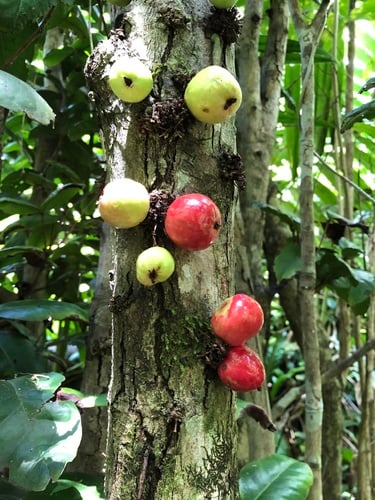
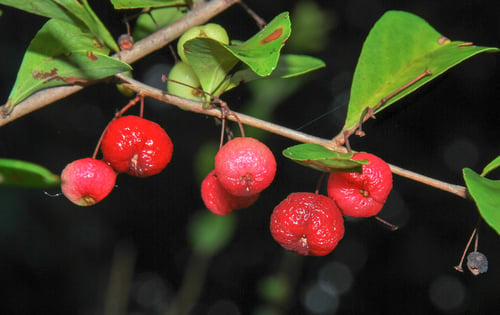
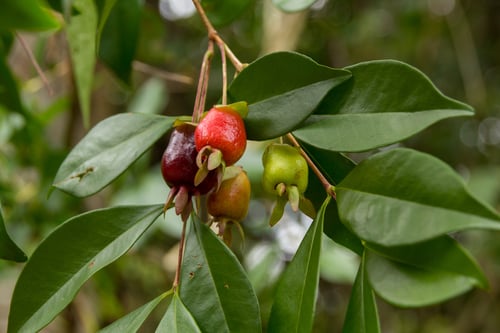
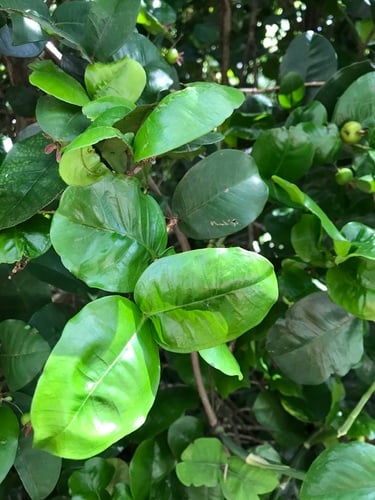
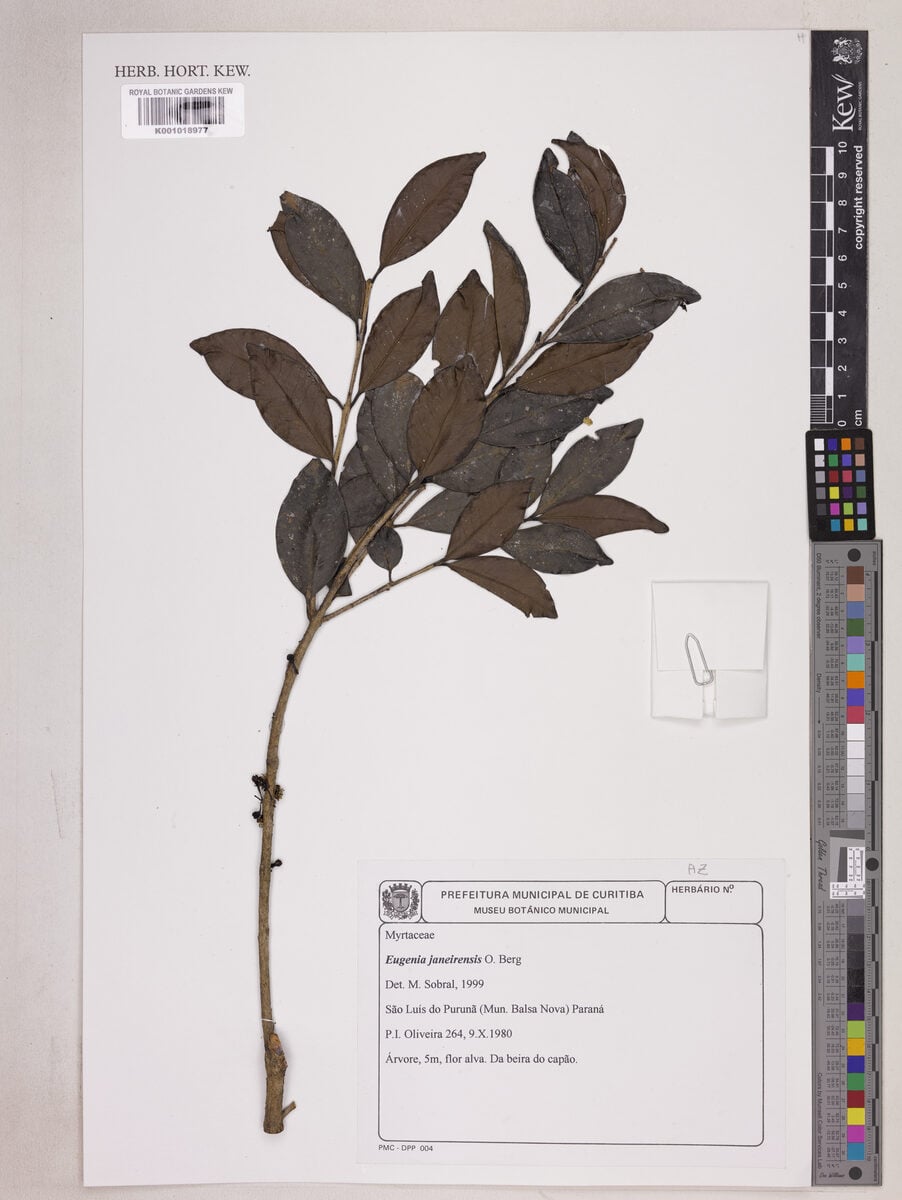
A small evergreen tree. It often has many branches. It grows to 6-8 m tall. With increasing age the bark peels off leaving a smooth trunk. It has dark green glossy waxy leaves. The leaves are 5-8 cm long. They are somewhat folded down the centre. Flowers are white and showy. Fruit are 2-3 cm long and dark red to purple.
Edible Uses
The fruit is eaten fresh, or processed into jams and jellies. Fruit can be frozen or dried for storage.
Traditional Uses
The fruit are eaten fresh. They are also used in jams and jellies. The fruit can be frozen or dried and stored. Caution: The seeds should not be eaten as they cause diarrhoea.
Known Hazards
The seeds cause diarrhoea and should not be eaten.
Distribution
A tropical plant. They grow on a variety of soils but prefer a slightly acid soils. Trees cannot tolerate salt spray. They can tolerate frosts once mature. They can tolerate sun or shade. They need plenty of water at flowering and fruiting. Plants can tolerate drought. The soils need to be well drained.
Where It Grows
Asia, Australia, Brazil*, Mayaguez, North America, Pacific, Philippines, SE Asia, South Africa, South America, USA,
Cultivation
Trees are normally grown from seed. Seedlings take 4-5 years to produce. They can be grafted. Cross pollination improves the fruit set.
Propagation
Seed - it has a short viability and is best sown as soon as it is ripe. Sow in a semi-shaded position in a nursery seedbed. A germination rate of around 70% can be expected, with the seeds sprouting within 60 - 70 days. Grafting
Other Uses
The wood is of medium texture, irregular grain, moderately heavy, hard, with a low susceptibility to wood eating organisms. It is only used for lower quality items such as tool handles and boards. The wood is used for fuel. A fast-growing plant, tolerant of full sun and providing food for humans and the native fauna, it can be used as a pioneer when restoring native woodland and also when establishing a woodland garden.
Production
Seedling trees take 4-5 years before fruiting. The fruit are ready 4-8 weeks after flowering.
Notes
There are about 550 Eugenia species. They are mostly in tropical and subtropical South America.
Synonyms
Also Known As
Carajeiro
References (14)
- Bodkin, F., 1991, Encyclopedia Botanica. Cornstalk publishing, p 457
- Coronel, R.E., 1982, Fruit Collections in the Philippines. IBPGR Newsletter p 9
- Enum. Myrt. bras. 162. 1893 (non Baker 1887)
- Facciola, S., 1998, Cornucopia 2: a Source Book of Edible Plants. Kampong Publications, p 157
- Grandtner, M. M. & Chevrette, J., 2013, Dictionary of Trees, Volume 2: South America: Nomenclature, Taxonomy and Ecology. Academic Press p 236
Show all 14 references Hide references
- GRIN
- Hedrick, U.P., 1919, (Ed.), Sturtevant's edible plants of the world. p 297 (As Eugenia itacolumensis)
- Hibbert, M., 2002, The Aussie Plant Finder 2002, Florilegium. p 98
- Kermath, B. M., et al, 2014, Food Plants in the Americas: A survey of the domesticated, cultivated and wild plants used for Human food in North, Central and South America and the Caribbean. On line draft. p 354 (As Eugenia itacolumensis)
- Lyle, S., 2006, Discovering fruit and nuts. Land Links. p 196
- Mabberley, D. J., 1990, The plant-book: a portable dictionary of the higher plants. Cambridge University Press. NY. (As Eugenia aggregata)
- Martin, F.W., C.W. Campbell and R.M. Ruberté, 1987, Perennial edible fruits of the tropics - An inventory. United States Department of Agriculture, Agricultural Research Service, Agriculture Handbook No. 642. Washington, D.C., USA (As Eugenia itacolumensis and also as Eugenia aggregata)
- Recher, P, 2001, Fruit Spirit Botanical Gardens Plant Index. www.nrg.com.au/~recher/ seedlist.html p 2
- www.tradewindsfruit.com (As aggregata)