Dendropanax arboreus
(L.) Planch. & Decne
Angelica tree dendropanax
iNaturalist· cc-by
(c) Neptalí Ramírez Marcial, some rights reserved (CC BY), uploaded by Neptalí Ramírez Marcial
iNaturalist· cc-by-nc
(c) Pablo Carrillo-Reyes, some rights reserved (CC BY-NC), uploaded by Pablo Carrillo-Reyes
iNaturalist· cc-by
(c) Neptalí Ramírez Marcial, some rights reserved (CC BY), uploaded by Neptalí Ramírez Marcial
Description
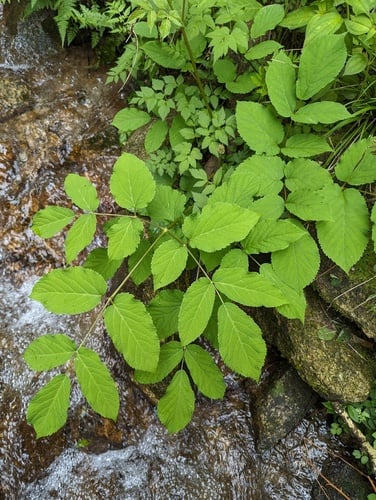
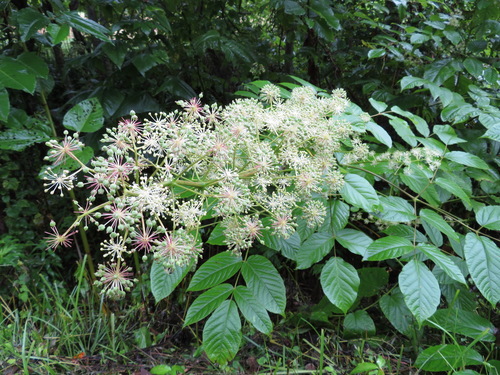
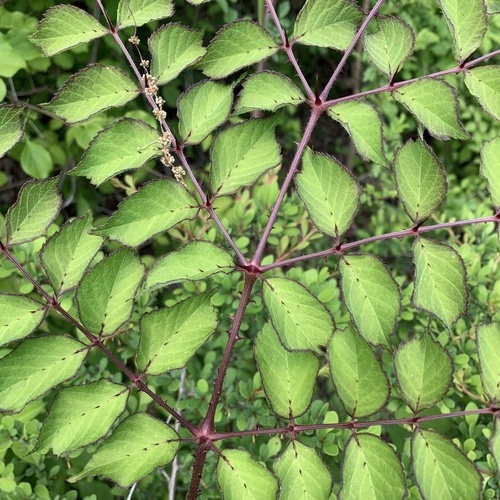
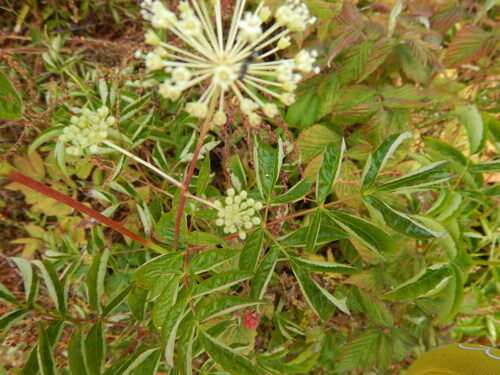
A tall tree. Large trees can have small buttresses. The leaves are alternate and bunched at the ends of branches. The leaves can have fine teeth and the leaves are shiny above and thick. The leaf stalks vary in length. The young leaves have 3 lobes. The flowers are small and yellow to green. They are in flat topped clusters.
Medicinal Uses
Has anticancer properties.
Distribution
It is a tropical plant.
Where It Grows
Asia, Belize, Bolivia, Brazil, Central America, Colombia, Costa Rica, Cuba, Dominican Republic, El Salvador, Guatemala, Guyana, Haiti, Honduras, Mexico, Nicaragua, North America, Panama, Peru, Puerto Rico, South America, Venezuela, West Indies,
Cultivation
A plant of low to medium elevations in the tropics, it grows in regions where there is an average annual temperature of 26°c, with a maximum temperature of 36.7°c and a minimum of 14.9°c. Average annual precipitation is approximately 1,288mm, ranging from between 900 - 1,800mm. The tree grows naturally from sea level to 1,700 metres. The tree grows in calcareous soils with outcropping rocks in the wild. The tree begins to yield flowers and fruits between 4 and 5 years of age. It can then flower and fruit nearly all year round. A very variable tree, both in foliage and inflorescence.
Propagation
Seed - under humid conditions, the fresh seeds germinate at 70% without pre-treatment. A heterogeneous sample of seeds germinated approximately 18 days after sowing. The ripe fruits are collected by climbing the trees and using poles with metal hooks to remove them. The pulp is removed from the pulpy fruits by hand inside a bucket of water. Resulting impurities float and are gathered with a strainer. Good pyrenes sink. Subsequently, seeds are dried in the sun in ventilated areas for 1 or 2 hours, depending on lighting conditions. The seeds within the pyrenes remain viable for approximately 15 months when stored under ambient conditions. With longer storage their viability quickly diminishes.
Other Uses
The heartwood is white or yellowish grey with dark streaks; it is not differentiated from the sapwood. The texture is medium and uniform; grain is straight; lustre low to medium; seasoned wood is without distinctive odour or taste. The wood is moderately light in weight, moderately soft, strong, flexible but not durable, being very susceptible to attack by decay fungi and insects. It air-dries rapidly without developing degrade due to checking or warping. The wood is easy to work, but tends to develop fuzzy grain during planing; it is poor for turnery, but easy to cut into veneer. It is used locally for general carpentry, boxes and crates, interior construction, utility furniture etc. In recent years, the species has been in high demand for the manufacturing of veneer, particle boards, tongue depressors, toothpicks, matches, and pulp for paper. The wood is used for fuel. The tree is frequently planted to provide shade in coffee plantations and to fulfil agroforestry needs.
Notes
It has anticancer properties.
Synonyms
Also Known As
Banco, Branco, Cajeta, Carne de pescado, Cocorromo, Cuajada, Cucharo, Chagane, Chonte, Garumo macho, Hoja, Junquillo, Lengua de vaca, Mano de danta, Mamo de leon, Mano de mico, Matapalo, Mazorco, Nagua blacna, Pacobillo, Palo de agua, Palomo, Palo santo, Pama, Pan blanco, Quesito, Ramon de costa, Vanquero, Vidrioso
References (6)
- Condit, R., et al, 2011, Trees of Panama and Costa Rica. PrincetonField Guides. p 76
- Grandtner, M. M., 2008, World Dictionary of Trees. Wood and Forest Science Department. Laval University, Quebec, Qc Canada. (Internet database http://www.WDT.QC.ca)
- Grandtner, M. M. & Chevrette, J., 2013, Dictionary of Trees, Volume 2: South America: Nomenclature, Taxonomy and Ecology. Academic Press p 196
- Kintzios, S. E., 2006, Terrestrial Plant-Derived Anticancer Agents and Plant Species Used in Anticancer research Critical Reviews in Plant Sciences. 25: pp 79-113
- Piedra-Malagón, E. M. et al, 2022, Edible native plants of the Gulf of Mexico Province. Biodiversity Data Journal 10: e80565 p 11
Show all 6 references Hide references
- Plants of Haiti Smithsonian Institute http://botany.si.edu