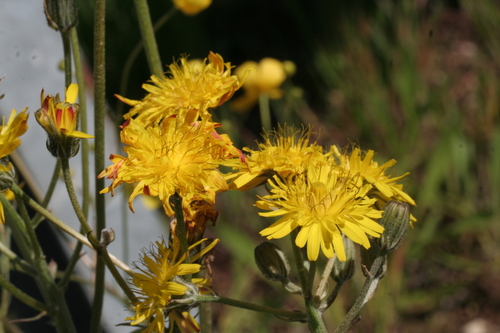
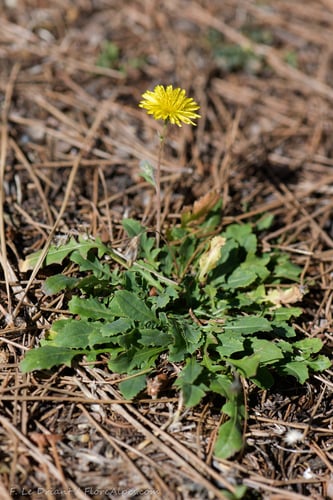
Agoseris glauca
(Pursh.) Raf.
False dandelion, Pale agoseris, Short-beaked agoseris
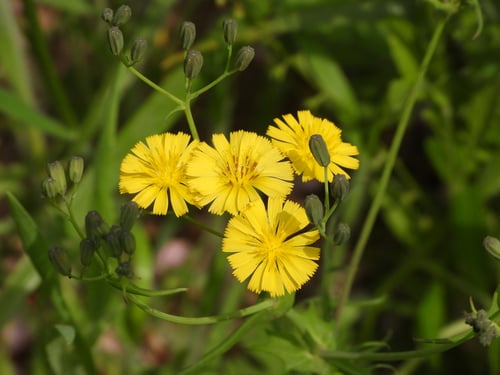
iNaturalist· cc-by-nc
(c) Lena Dietz Chiasson, some rights reserved (CC BY-NC), uploaded by Lena Dietz Chiasson
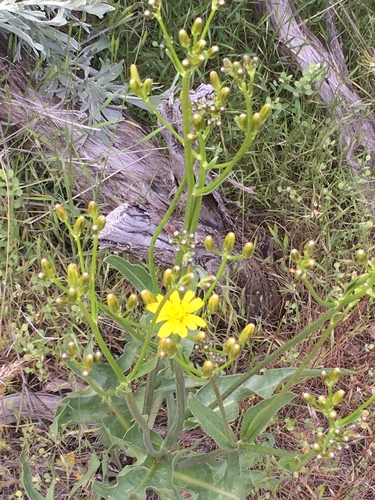
iNaturalist· cc-by-nc
(c) Lena Dietz Chiasson, some rights reserved (CC BY-NC), uploaded by Lena Dietz Chiasson
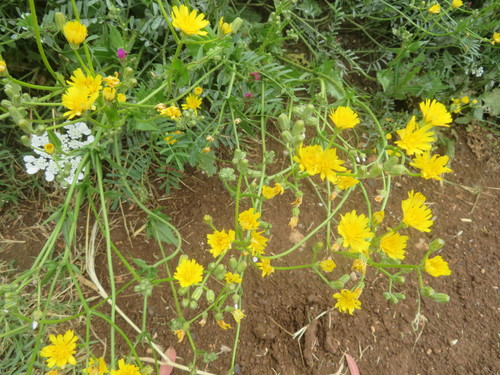
iNaturalist· cc-by-nc
(c) Jesse E. D. Miller, some rights reserved (CC BY-NC), uploaded by Jesse E. D. Miller
Summary
Source: WikipediaAgoseris glauca is a species of flowering plant in the family Asteraceae known by the common names false dandelion, pale agoseris, prairie agoseris, and short-beaked agoseris. It is native to western North America.
Description
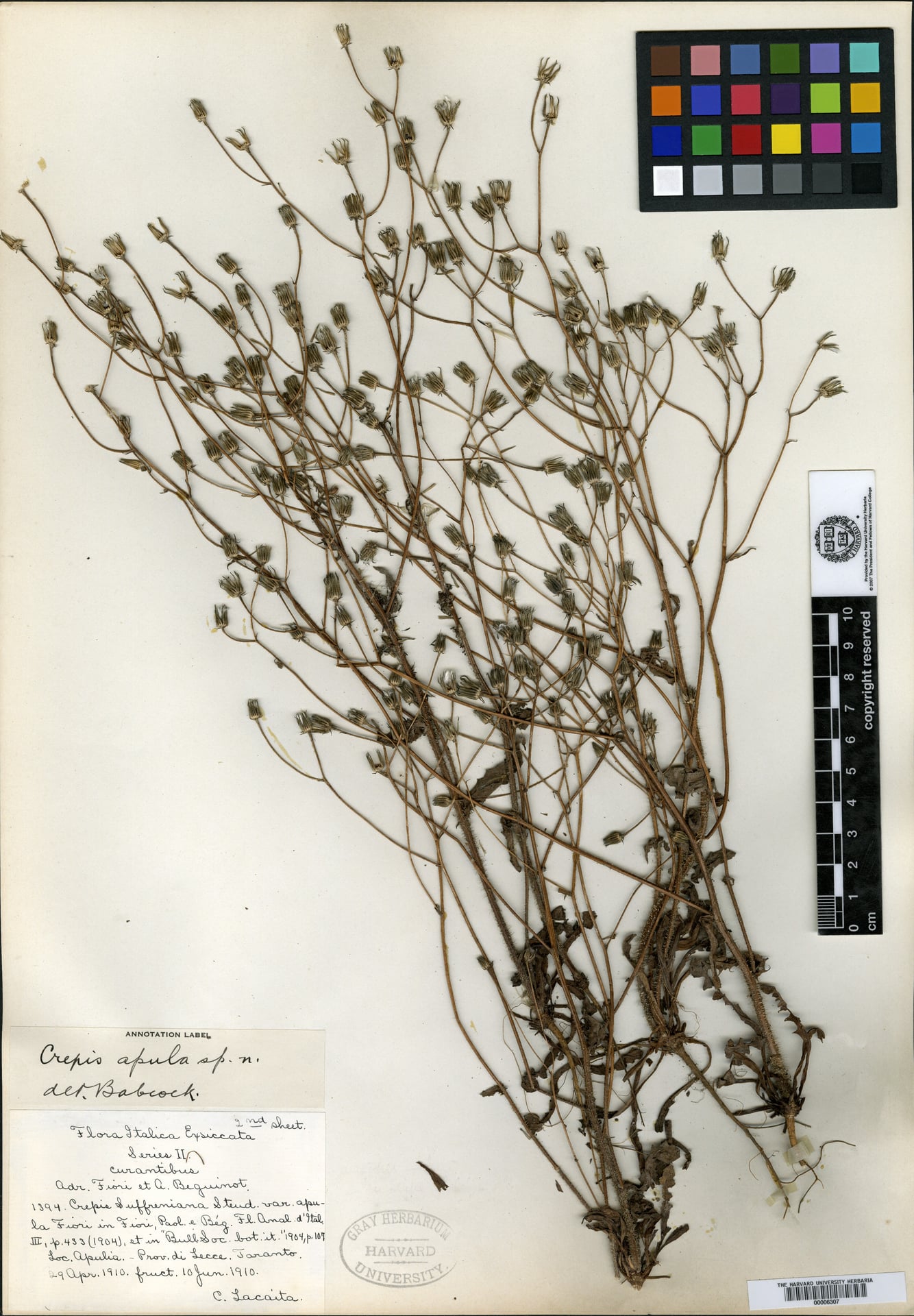
A herb. It grows 30 cm tall. It has milky sap. The flowers are yellow. The dry fruit (achenes) have ribbed beaks less than half as long as the body.
Edible Uses
The solidified latex of the stem is chewed as a gum.
Traditional Uses
The leaves are chewed or crushed to release the latex and the latex is chewed.
This uses section is brief — help expand it
Medicinal Uses
The following reports refer to the subspecies A. glauca dasycephala (Torr. & Gray.) Jepson. An infusion of the entire plant is used as a wash for sores and rashes. The milky latex is applied to warts to remove them, requiring repeated applications over a period of weeks to be effective. A poultice made from the latex is applied to sores. An infusion of the root is used as a laxative.
Distribution
It is a temperate plant. It grows in open grassy foothills.
Where It Grows
Canada, North America, USA,
Propagation
Sow seed in spring in a greenhouse; germination typically occurs within 2–6 weeks at 15°C. Once seedlings are large enough to handle, prick them out into individual pots and plant out in summer or the following late spring. Divide with care in spring, noting that the plants dislike root disturbance — pot up divisions and keep them in a cold frame or greenhouse until established.
Other Uses
The latex in the plant contains rubber, but not in sufficient quantities to be commercially valuable.
References (3)
- http://www.stoller-eser.com/Flora/ethnobotany_table.htm
- MacKinnon, A., et al, 2009, Edible & Medicinal Plants of Canada. Lone Pine. p 336
- Turner, N., 1997, Food Plants of Interior First Peoples. Royal BC Museum Handbook p 96