Protium panamense
(Rose) I. M. Johnston
Alcanfor
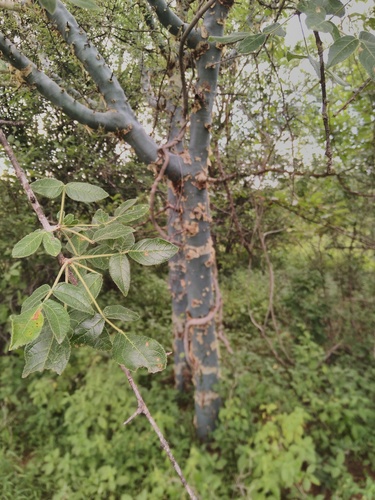
iNaturalist· cc-by-nc
(c) Riley Fortier, some rights reserved (CC BY-NC), uploaded by Riley Fortier
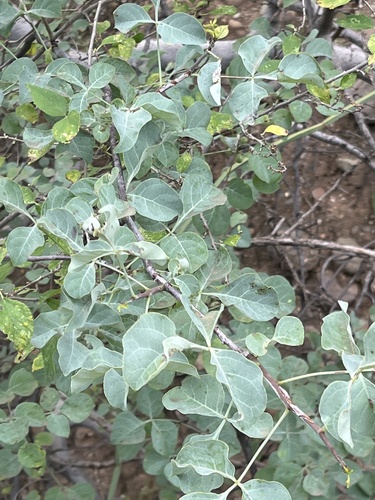
iNaturalist· cc-by-nc
(c) Riley Fortier, some rights reserved (CC BY-NC)
Summary
Source: WikipediaProtium panamense is a species of plant in the Burseraceae family. It is found in Costa Rica and Panama. It is becoming rare due to habitat loss.
Description
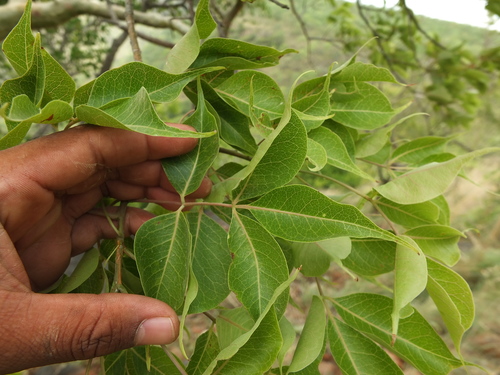
A shrub or tree. It grows 3-40 m high. It has stilt roots. The leaves are 23-60 cm long. The leaves have an odd number of leaflets. There are 3-7 leaflets 11-36 cm long and 4-12 cm wide. The flowers are in compact panicles in the axils of leaves. The flowers are yellow. The fruit are oval and yellow but become red when ripe. They are 2-3 cm long. They open by 2-4 valves.
Edible Uses
The aril (fleshy layer around the seeds) is edible.
Traditional Uses
The aril or fleshy layer around the seeds is edible.
This uses section is brief — help expand it
Medicinal Uses
A resin obtained from the trunk is used to treat sores.
Distribution
It is a tropical plant. It grows in wet or moist forests.
Where It Grows
Central America, Colombia, Costa Rica, Panama, South America,
Cultivation
A dioecious species, both male and female forms need to be grown if fruit and seed are required.
Propagation
Seed - best sown as soon as it is ripe. The seed usually germinates within two weeks.
Other Uses
A clear resin is obtained from the incised bark. It has medicinal applications and is used as an incense in churches. The heartwood is brown; the rather thick band of sapwood is light brown. The wood is straight and close-grained; relatively soft and heavy; not strong. It is easily worked and takes a very good polish. It is little used. This tree is renown for its flammability: even the green wood ignites readily due to the highly combustible nature of its hydrocarbon-based sap. The flammable nature of the sap makes the green wood and bark of this species useful as kindling for starting campfires and the like.
Synonyms
Also Known As
Chutra, Copal, Judra tain, Mimonkawe, Witakewe
References (4)
- Castaneda, H., & Stepp, J. R., 2007, Ecosystems as Sources of Useful Plants for the Guaymi People of Costa Rica. Ethnobotany Journal. 5:249-257
- Langlois, H. C., 2004, Ethnobotanical analysis of different successional stages as sources of wild edible plants for the Guaymi people in Costa Rica. M. Sc. thesis University of Florida.
- Roa, J. A. G. & Boada, D. S. G., 2018, Fundación para el Fortalecimiento de la Fruticultura y Plantas Alimenticias no Convencionales en Colombia.
- Torre, de la, L., et al, 2008, Enciclopedia de las Plantas Útiles del Ecuador. Herbario QCA. Pontificia Universidad Católica del Ecuador. p 265