Rhoicissus digitata
(L. f.) Gilg & Brandt
South African grape, Baboon grape
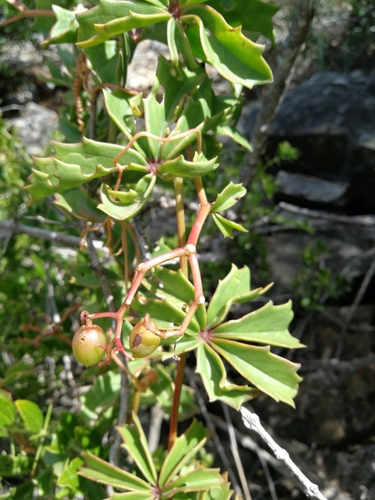
iNaturalist· cc-by-sa
(c) Andrew Gillespie, some rights reserved (CC BY-SA), uploaded by Andrew Gillespie
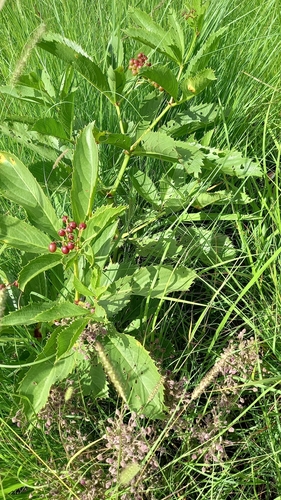
iNaturalist· cc-by-nc
(c) Sally Adam, some rights reserved (CC BY-NC), uploaded by Sally Adam
iNaturalist· cc-by-nc
(c) Sandra Falanga, some rights reserved (CC BY-NC), uploaded by Sandra Falanga
Summary
Source: WikipediaRhoicissus digitata (the baboon grape or the dune grape) is a vigorous, evergreen vine that is indigenous to southern Africa. It is increasingly popular as an ornamental creeper in gardens, and it has a wide range of uses in traditional medicine.
Description
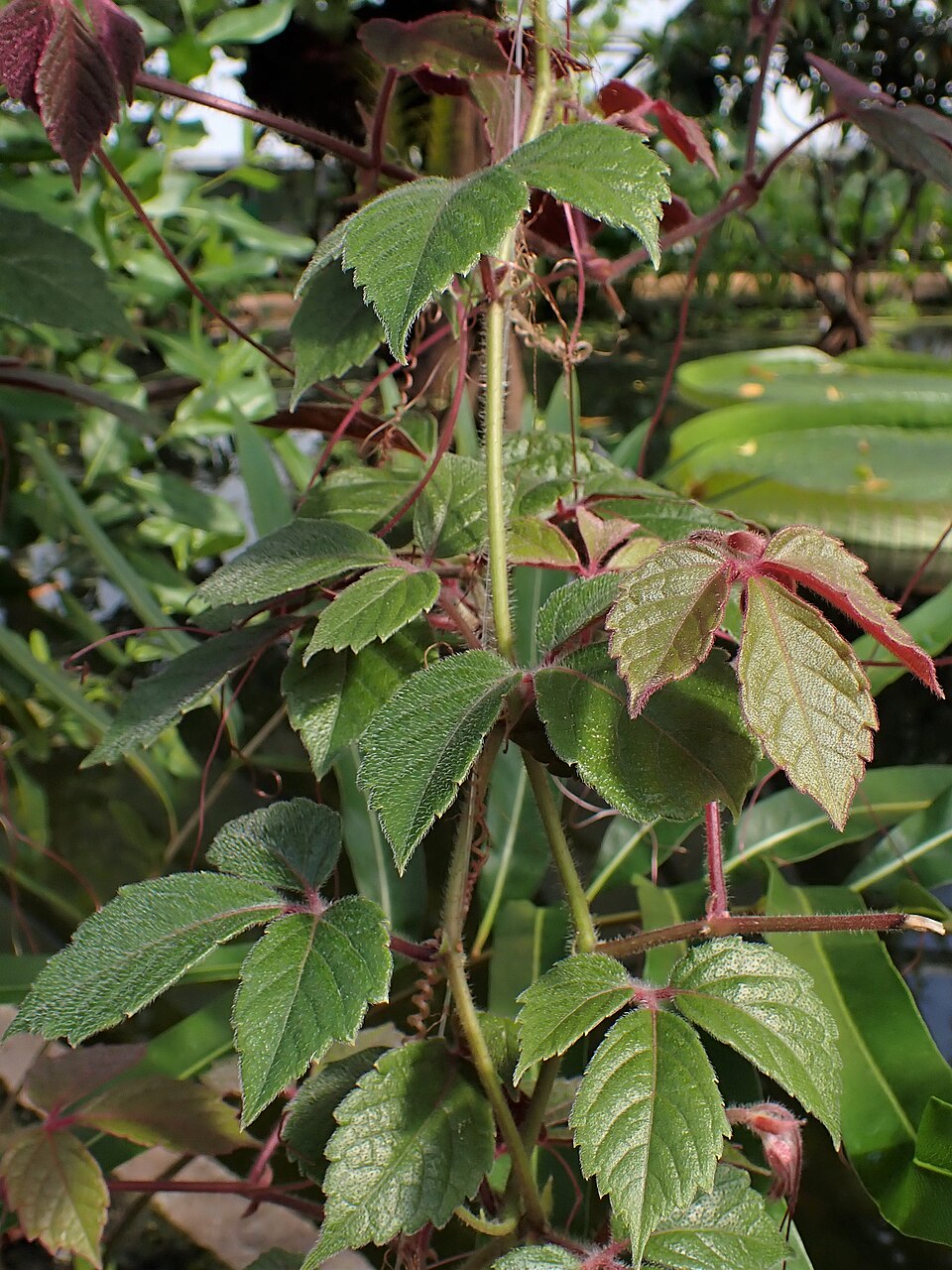
A climber or scrambler. The stems are thin with swollen joints. The leaf stalk is slender and 1.5 cm long. There are 3 leaflets. The middle one is narrow and tapers to the base. It is 5 cm long by 1.5 cm wide. The side leaflets have unequal sides. There are only a few flowers in a small cluster.
Edible Uses
The fruit is used to make jam, jelly, and vinegar, and is also eaten fresh as a snack.
Traditional Uses
Caution: The roots are poisonous. The fruit are used for jam, jelly and vinegar. They are also eaten as a snack.
This uses section is brief — help expand it
Known Hazards
The roots are poisonous.
Distribution
It is a subtropical plant.
Where It Grows
Africa, East Africa, Eswatini, Malawi, Mozambique, South Africa, Southern Africa, Swaziland,
Nutrition
| Part | Moisture | kJ | kcal | Protein | Vit A | Vit C | Iron | Zinc |
|---|---|---|---|---|---|---|---|---|
| Fruit | 81.5 | 251 | 60 | 0.9 | — | 17 | 0.9 | 0.4 |
References (9)
- Cunningham, 1985,
- Long, C., 2005, Swaziland's Flora - siSwati names and Uses http://www.sntc.org.sz/flora/
- Peters, C. R., O'Brien, E. M., and Drummond, R.B., 1992, Edible Wild plants of Sub-saharan Africa. Kew. p 203
- Ruiters-Welcome, A. K., 2019, Food plants of southern Africa. Ph.D. thesis. Univ. of Johannesburg p 108
- Swaziland's Flora Database http://www.sntc.org.sz/flora
Show all 9 references Hide references
- van Wyk, Be., & Gericke, N., 2007, People's plants. A Guide to Useful Plants of Southern Africa. Briza. p 54
- Wehmeyer, A. S, 1986, Edible Wild Plants of Southern Africa. Data on the Nutrient Contents of over 300 species
- Welcome, A. K. & Van Wyk, B.-E., 2019, An inventory and analysis of the food plants of southern Africa. South African Journal of Botany 122 (2019) 136–179
- World Checklist of Useful Plant Species 2020. Royal Botanic Gardens, Kew