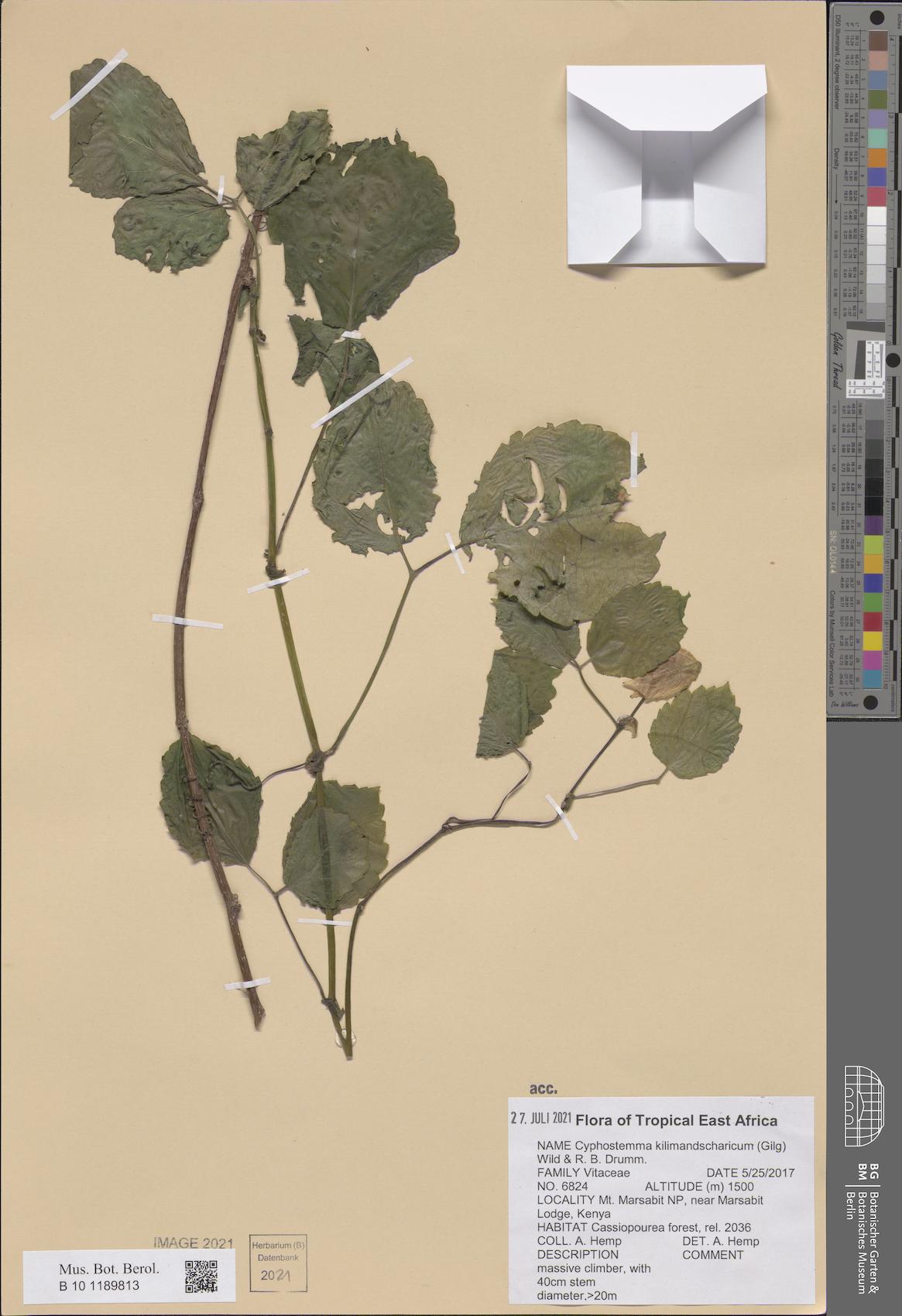
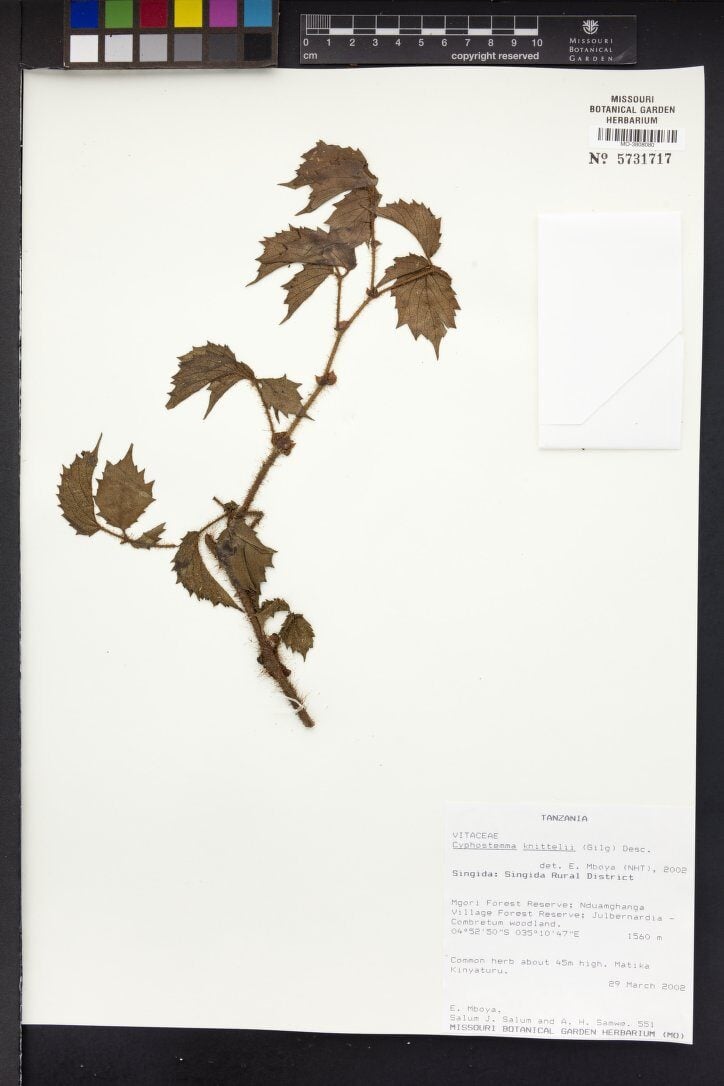
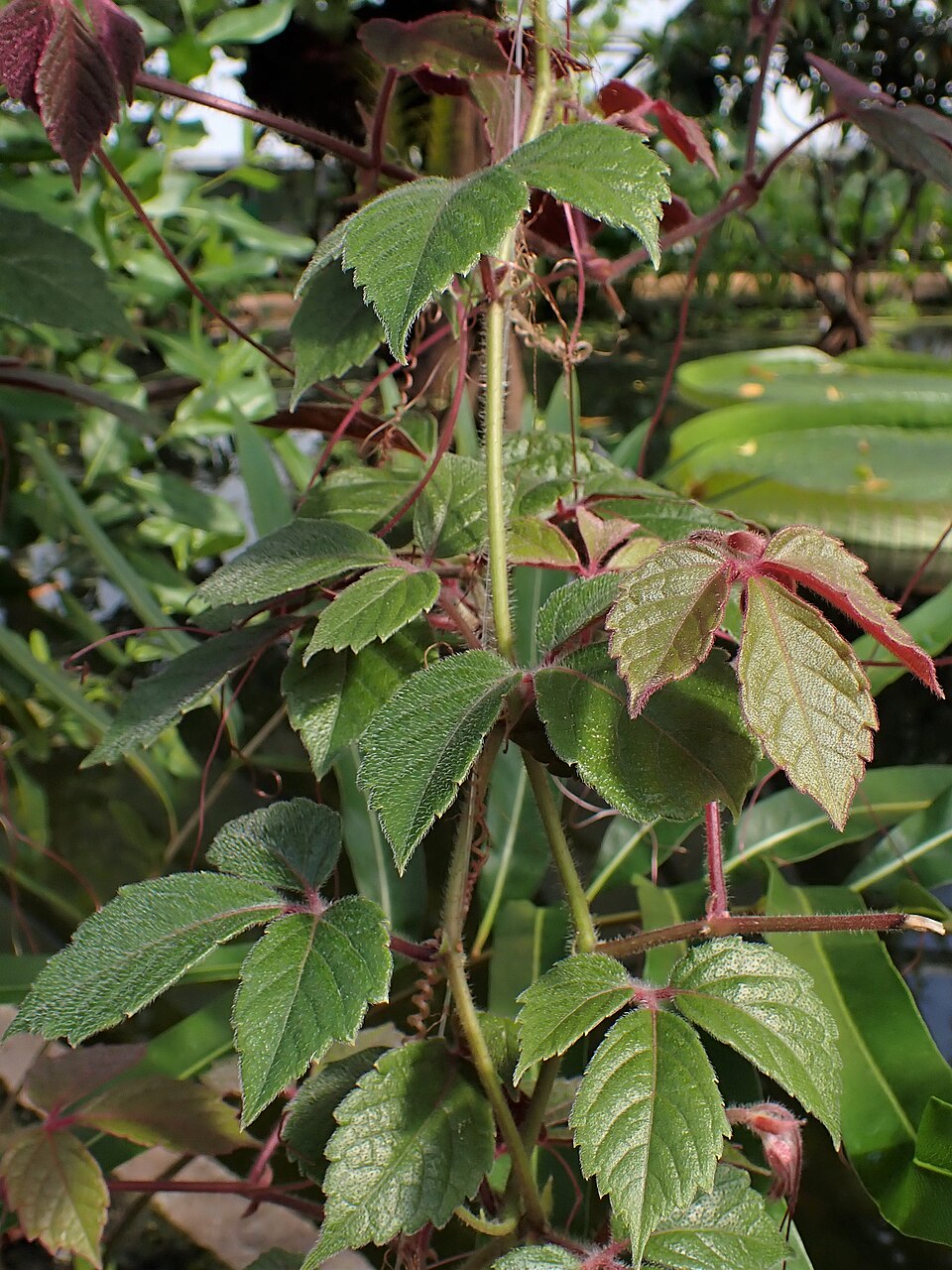
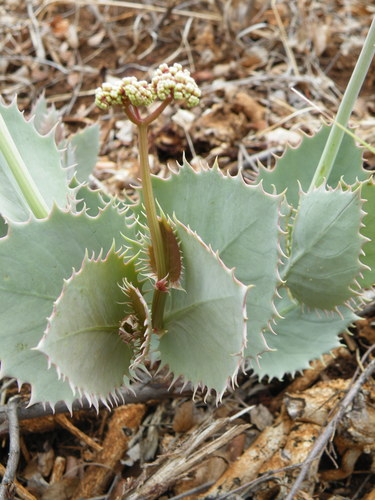
Cyphostemma sandersonii
(Harvey) Descoings
gbif· cc-by
Royal Botanic Gardens, Kew
gbif· cc-by-nc-sa
MBG
gbif· cc-by-nc
OBI - Robert F. Hoover Herbarium, Cal Poly State University (OBI-OBI)
Description
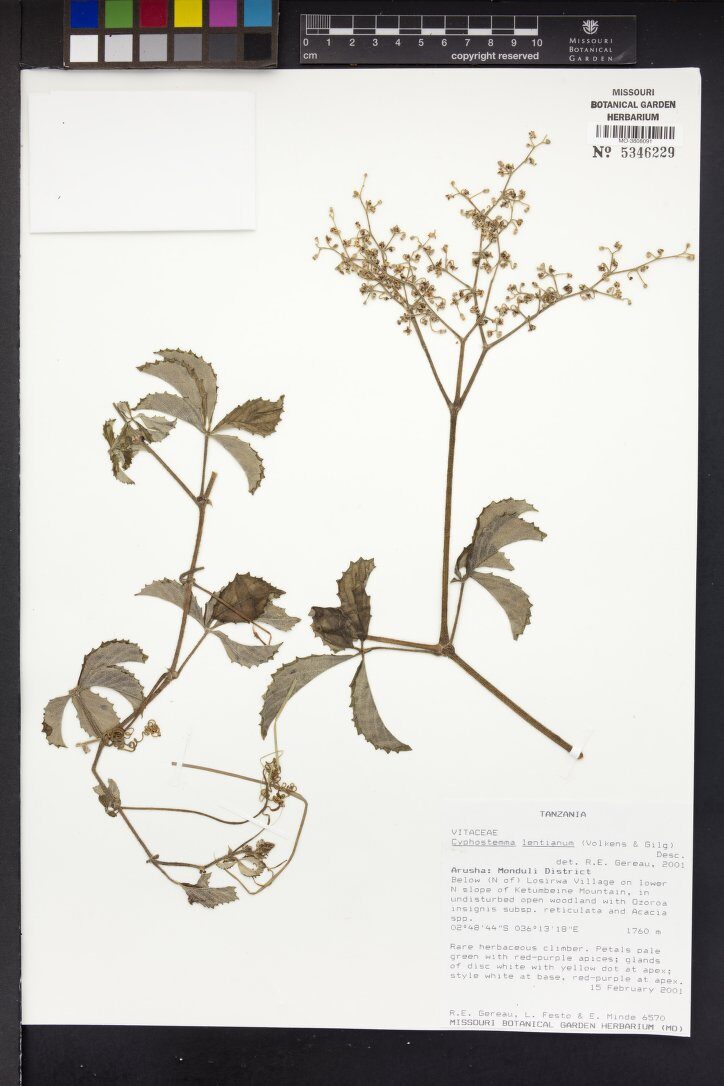
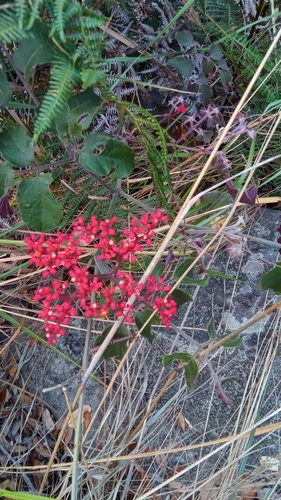
A herb. It lies along the ground or can be climbing. It keeps growing from year to year. The stems are reddish with tendrils at the nodes. The leaves are compound with 3-5 leaflets spread out like fingers on a hand. The fruit are in groups and turn red to black when ripe. They are slightly pointed. They contain a large seed.
Edible Uses
The ripe fruits are eaten raw.
Traditional Uses
The fruit are eaten raw.
This uses section is brief — help expand it
Distribution
It is a subtropical plant. It grows in hot arid places. It grows between 1,200-1,400 m above sea level. It can grow in arid places.
Where It Grows
Africa, Namibia, South Africa, Southern Africa,
Nutrition
| Part | Moisture | kJ | kcal | Protein | Vit A | Vit C | Iron | Zinc |
|---|---|---|---|---|---|---|---|---|
| Fruit | 90.4 | 139 | 33 | 0.4 | — | 29 | 0.1 | 0.1 |
Also Known As
Omunyangashe
References (7)
- INFOODS:FAO/INFOODS Databases
- Peters, C. R., O'Brien, E. M., and Drummond, R.B., 1992, Edible Wild plants of Sub-saharan Africa. Kew. p 202
- Rodin, 1985,
- Royal Botanic Gardens, Kew (1999). Survey of Economic Plants for Arid and Semi-Arid Lands (SEPASAL) database. Published on the Internet; http://www.rbgkew.org.uk/ceb/sepasal/internet [Accessed 13th June 2011]
- Ruiters-Welcome, A. K., 2019, Food plants of southern Africa. Ph.D. thesis. Univ. of Johannesburg p 107
Show all 7 references Hide references
- Wehmeyer, A. S, 1986, Edible Wild Plants of Southern Africa. Data on the Nutrient Contents of over 300 species
- Welcome, A. K. & Van Wyk, B.-E., 2019, An inventory and analysis of the food plants of southern Africa. South African Journal of Botany 122 (2019) 136–179