Premna resinosa
(Hochst.) Schauer
iNaturalist· cc-by-nc-sa
(c) Ateah Alfakih, some rights reserved (CC BY-NC-SA), uploaded by Ateah Alfakih
iNaturalist· cc-by-nc-sa
(c) Ateah Alfakih, some rights reserved (CC BY-NC-SA)
Description
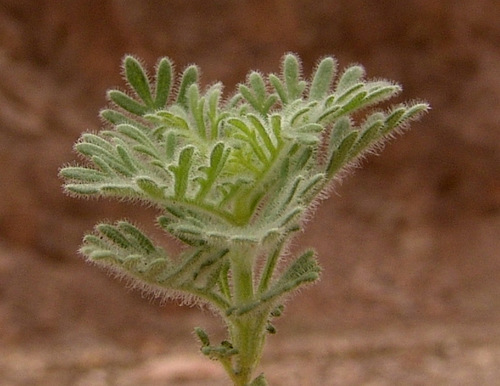
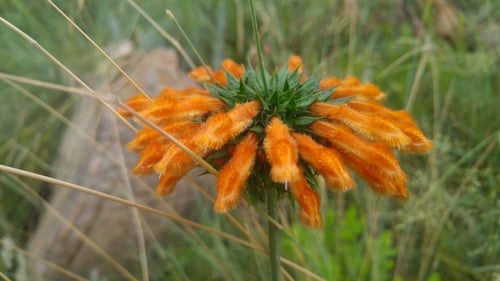
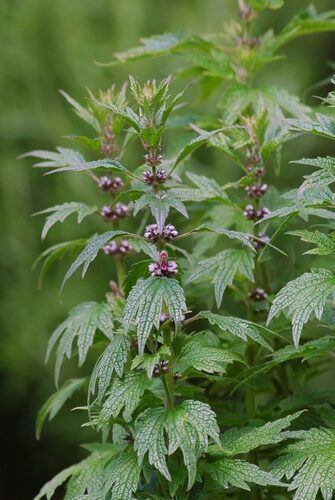
A shrub. It grows 2-4 m tall. The branches are slender and white. The bark is thin and light brown and peels off in strips. The leaves have a smell. The leaves are 1-3 cm long. They are opposite and in groups of 4. Two are larger and two are smaller. The flowers are greenish-white. They are very small and in small groups. The fruit is black and fleshy. It is oval and 4-7 mm across.
Edible Uses
The ripe fruit are eaten raw, and the seeds are also eaten. The aromatic leaves are used to flavour tea.
Traditional Uses
The ripe fruit are eaten. The seeds are eaten. The leaves are used to flavour tea.
This uses section is brief — help expand it
Distribution
It is a tropical to Mediterranean plant. It grows in lowland shrub and grassland. It grows between sea level and 1,000 m altitude. It can grow in arid places.
Where It Grows
Africa, Djibouti, East Africa, Eritrea, Ethiopia, Kenya, Middle East, Oman, Somalia, Sudan, Tanzania, Uganda,
Cultivation
Plants can be grown from seeds. Sometimes the seeds need to have the hard seed coat nicked to allow germination.
Production
There are 700-1,000 seeds per kg.
Notes
Also put in the family Verbenaceae.
Synonyms
Also Known As
Boba'o, Dodoatteta, Kabout, Lomonera, Mermer, Mu-karakara, Saat, Sekeb, Tetwen, Urgecha, Urgesa
References (15)
- Addis, G., Asfaw, Z & Woldu, Z., 2013, Ethnobotany of Wild and Semi-wild Edible Plants of Konso Ethnic Community, South Ethiopia. Ethnobotany Research and Applications. 11:121-141
- Addis, G., et al, 2013, The Role of Wild and Semi-wild Edible Plants in Household Food Sovereignty in Hamer and Konso Communities, South Ethiopia. Ethnobotany Research & Applications. 11:251-271
- Bahru, T., et al, 2013, Wild Edible Plants: Sustainable Use and Management by Indigenous Communities in and the Buffer Area of Awah National Park, Ethiopia. Ethiop. J. Sci., 36(2): 93-108
- Dale, I. R. and Greenway, P. J., 1961, Kenya Trees and Shrubs. Nairobi. p 592
- East African Herbarium records, 1981,
Show all 15 references Hide references
- Feyssa, D. H., et al, 2011, Seasonal availability an consumption of wild edible plants in semiarid Ethiopia; Implications to food security and climate change adaptation. Journal of Horticulture and Forestry 3(5): 138-149
- Flora Somalia Vol. 1, 1993, http://plants.jstor.org
- Ichikawa, M., 1980, The Utilization of Wild Food Plants by the Suiei Dorobo in Northern Kenya. J. Anthrop. Soc. Nippon. 88(1): 25-48
- Lulekal, E., et al, 2011, Wild edible plants in Ethiopia: a review on their potential to combat food insecurity. Afrika Focus - Vol. 24, No 2. pp 71-121
- Miller, A. G., Morris, M. & Stuart-Smith, S., 1988, Plants of Dhofar. The Southern Region of Oman, Traditional, Economic and Medicinal Uses. Sultanate of Oman. p 284
- Mutie, F. G., 2020, Conservation of Wild Food Plants and Their Potential for Combatting Food Insecurity in Kenya as Exemplified by the Drylands of Kitui County. Plants 2020, 9, 1017
- Mutie, F. M., et al, 2023, Important Medicinal and Food Taxa (Orders and Families) in Kenya, Based on Three Quantitative Approaches. Plants 2023, 12, 1145
- Peters, C. R., O'Brien, E. M., and Drummond, R.B., 1992, Edible Wild plants of Sub-saharan Africa. Kew. p 198
- Royal Botanic Gardens, Kew (1999). Survey of Economic Plants for Arid and Semi-Arid Lands (SEPASAL) database. Published on the Internet; http://www.rbgkew.org.uk/ceb/sepasal/internet [Accessed 19th April 2011]
- World Checklist of Useful Plant Species 2020. Royal Botanic Gardens, Kew