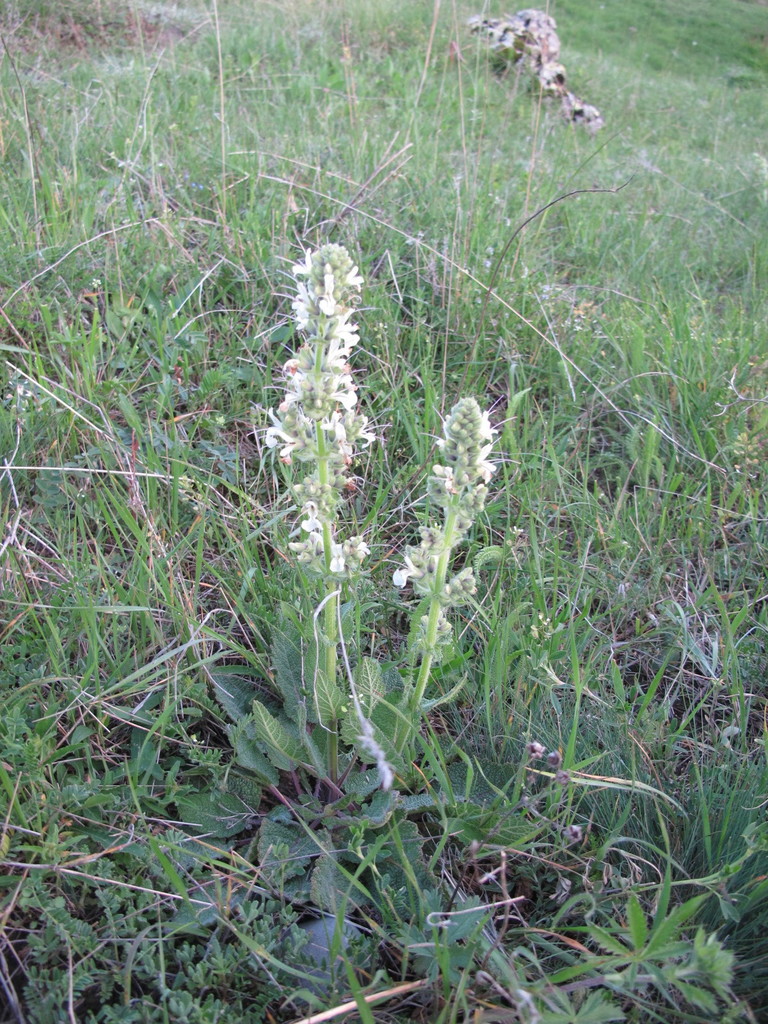
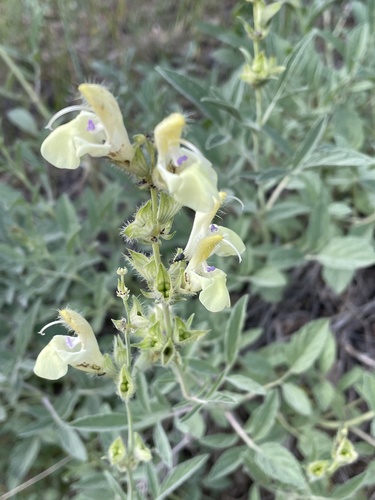
Lavandula stoechas
L.
French lavender, Italian lavender, Spanish lavender
iNaturalist· cc-by
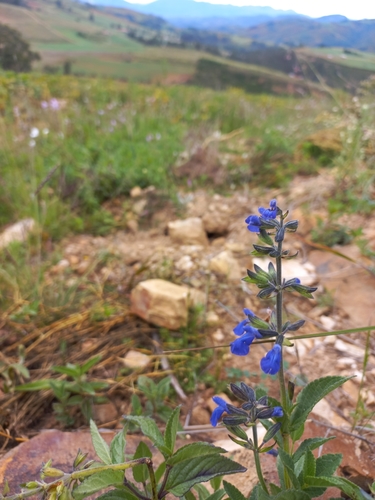
(c) Davide Puddu, some rights reserved (CC BY), uploaded by Davide Puddu
iNaturalist· cc-by-nc
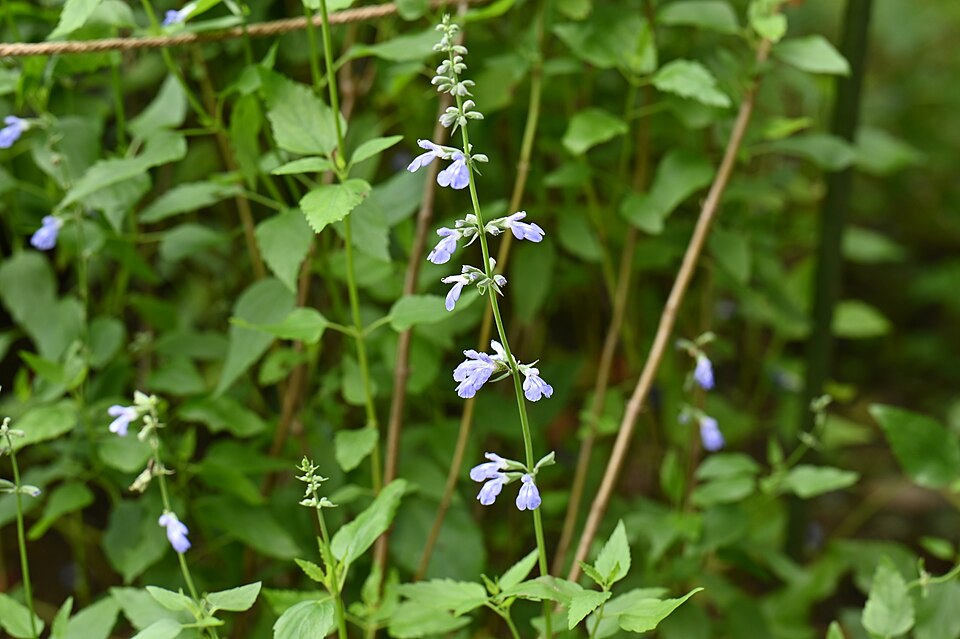
(c) GandG, some rights reserved (CC BY-NC), uploaded by GandG
iNaturalist· cc-by-nc
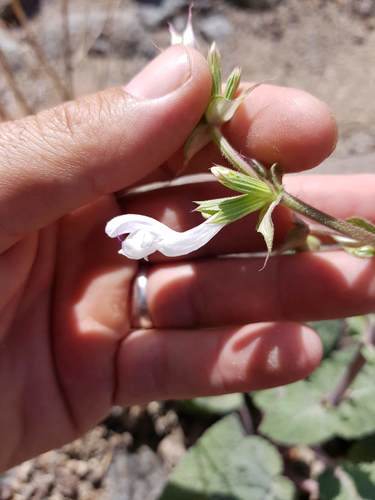
(c) GandG, some rights reserved (CC BY-NC), uploaded by GandG
Summary
Source: WikipediaLavandula stoechas, the Spanish lavender or topped lavender (U.S.) or French lavender (U.K.), is a species of lavender native to the Mediterranean Basin.
Description
A shrub. It grows 0.6 m high. The stems are much branched. The leaves are greyish green. They are narrow or sword shaped and do not have teeth. The flowers are small. They are dark purple and 6-8 mm long. There are deep purple bracts at the end of the flower. These are 10-50 cm long.
Edible Uses
No edible uses are known for this plant.
Traditional Uses
The plant produces a dark golden honey. The flowers are used as flavouring. The leaves are used to flavour snails and rabbit in cooking. They are also used for a herbal tea.
Medicinal Uses
French lavender shares similar medicinal properties to common lavender (L. angustifolia) and yields more essential oil than that species, though of inferior quality. The flowers and their essential oil are antiasthmatic, antiseptic, antispasmodic, digestive, and expectorant. Taken internally, the plant helps alleviate nausea. Used externally, the essential oil serves as an antiseptic wash for wounds, ulcers, and sores, and can also be used as a relaxing massage oil.
Distribution
It is a warm temperate plant. It grows in rocky places and open pine forests. It is drought tolerant. It suits hardiness zones 8-11. Kyneton Botanical Gardens. Hobart Botanical Gardens 1
Where It Grows
Africa, Asia, Australia, Europe, France, Italy, Mediterranean, Morocco, Myanmar, New Zealand, North Africa, North America, Portugal, SE Asia, Sicily, South Africa, Southern Africa, South America, Spain, Tasmania, Turkey, Türkiye, USA,
Cultivation
Succeeds in almost any soil so long as it is well-drained and not too acid. Prefers a sunny position in a neutral to alkaline soil, growing well on chalk. When grown in rich soils the plants tend to produce more leaves but less essential oils. Grows well in a hot dry position. Established plants are drought tolerant. When growing for maximum essential oil content, the plant must be given a very warm sunny position and will do best in a light sandy soil, the fragrance being especially pronounced in a chalky soil. Hardy to between -5 and -10°c, it is often killed in severe winters in Britain. Plants are not very long-lived and soon become straggly unless pruned. Any trimming of the plant is best done in spring and should not be done in the autumn since this can encourage new growth that will not be very cold-hardy. Polymorphic. A good bee plant, also attracting butterflies and moths. The flowering spike has showy infertile flowers to attract insects at the top of the stem and small fertile flowers beneath. A good companion for most plants, growing well with cabbages. Lavender is typically harvested in mid to late summer when the flowers are in full bloom. Lavender flowers in late spring to summer, depending on the species and growing conditions. Lavender is a moderate grower, typically reaching maturity within 2 to 3 years. Plants usually grow to a height of about 1 to 3 feet (30 to 90 cm), depending on the species and growing conditions.
Propagation
Sow seed in spring in a greenhouse, barely covering it. Germination usually takes 1–3 months at 15°C. Prick seedlings into individual pots when large enough to handle, and overwinter them in a greenhouse or cold frame before planting out in late spring after the last expected frosts. Take half-ripe cuttings of 7–10cm with a heel in July or August and root in a frame — most will root within a few weeks. Overwinter in a greenhouse before planting out the following late spring. Cuttings of 7cm with a heel can also succeed at almost any time of year. Layering is also possible.
Other Uses
Lavender is valuable for attracting pollinators and beneficial insects, and works well as ground cover, hedging, or an ornamental plant. Its essential oils have pest-repellent properties, making it useful in organic farming. An essential oil extracted from the flowers is used in soap making, perfumery, and medicine. Flowering stems are best harvested for oil as soon as the flowers fade. The aromatic leaves and flowers are used in potpourri and as an insect repellent in linen cupboards, and also as a strewing herb in churches. Once stripped of flowers, the flowering stems can be bundled and burned as incense sticks. Lavender flowers are rich in nectar and pollen, attracting bees, butterflies, and other beneficial insects. The plant's dense woody stems and leaf litter provide shelter and overwintering sites for invertebrates. Its strong scent acts as a natural pest deterrent, confusing and repelling moths, mosquitoes, and flies.
Notes
They are used in medicine. There are about 28 Lavandula species. It can be invasive.
Synonyms
Also Known As
Arabian lavender, Bofarull, Cantueso, Cap diase, Khzama, Karabas, Karabus otu, Karahan, Topped lavender
References (24)
- Blamey, M and Grey-Wilson, C., 2005, Wild flowers of the Mediterranean. A & C Black London. p 400
- Bonet, M. A. & Valles, J., 2002, Use of non-crop food vascular plants in Montseny biosphere reserve (Catalonia, Iberian Peninsula). International Journal of Food Sciences and Nutrition (2002) 53, 225–248
- Brown, D., 2002, The Royal Horticultural Society encyclopedia of Herbs and their uses. DK Books. p 256
- Cundall, P., (ed.), 2004, Gardening Australia: flora: the gardener's bible. ABC Books. p 802
- Etherington, K., & Imwold, D., (Eds), 2001, Botanica's Trees & Shrubs. The illustrated A-Z of over 8500 trees and shrubs. Random House, Australia. p 427
Show all 24 references Hide references
- Ertug, F, Yenen Bitkiler. Resimli Türkiye Florası -I- Flora of Turkey - Ethnobotany supplement
- Facciola, S., 1998, Cornucopia 2: a Source Book of Edible Plants. Kampong Publications, p 127
- Ghanimi, R., et al, 2022, Ethnobotanical study on wild edible plants traditionally used by Messiwa people, Morocco. Journal of Ethnobiology and Ethnomedicine. 18:16
- Gurdal, B. & Kultur, S., 2014, The edible and miscellaneous useful plants in Marmaris (Southwest Turkey). İstanbul Ecz. Fak. Derg. / J. Fac. Pharm. Istanbul 44(1) 2014 pp.69-78
- Hancer, C. K., et al, 2020, Traditional Knowledge of Wild Edible Plants of Biga (Çanakkale), Turkey. Acta Societatis Botanicorum Poloniae / 2020 / Volume 89 / Issue 1 / Article 8914
- Hibbert, M., 2002, The Aussie Plant Finder 2002, Florilegium. p 180
- Kayabasi, N. P., et al, 2018, Wild edible plants and their traditional use in the human nutrition in Manyas (Turkey). Indian Journal of Traditional Knowledge. Vol. 17(2), April 2018, pp 299-306
- Lawton, B.P., 2002, Mints. A Family of Herbs and Ornamentals. Timber Press, Portland, Oregon. p 140
- Marinelli, J. (Ed), 2004, Plant. DK. p 459
- Morley, B. & Everard, B., 1970, Wild Flowers of the World. Ebury press. Plate 37
- Nassif, F., & Tanji, A., 2013, Gathered food plants in Morocco: The long forgotten species in Ethnobotanical Research. Life Science Leaflets 3:17-54
- Pardo-de-Santayana, M., et al, 2007, Traditional knowledge of wild edible plants used in the northwest of the Iberian Peninsula (Spain and Portugal): a comparative study. Journal of Ethnobiology and Ethnomedicine 2007, 3:27
- Pasta, S., et al, 2020, An Updated Checklist of the Sicilian Native Edible Plants: Preserving the Traditional Ecological Knowledge of Century-Old Agro-Pastoral Landscapes. Frontiers in Plant Science. Volume 11|Article 388
- PROSEA handbook Volume 13 Spices. p 277
- Seidemann J., 2005, World Spice Plants. Economic Usage, Botany, Taxonomy. Springer. p 200
- Sp. pl. 2:573. 1753
- Tardio, J., et al, Ethnobotanical review of wild edible plants in Spain. Botanical J. Linnean Soc. 152 (2006), 27-71
- Wiersema, J. H. & Leon, B., 2013, World Economic Plants. A Standard Reference CRC Press. 2nd Ed. p 393
- World Checklist of Useful Plant Species 2020. Royal Botanic Gardens, Kew