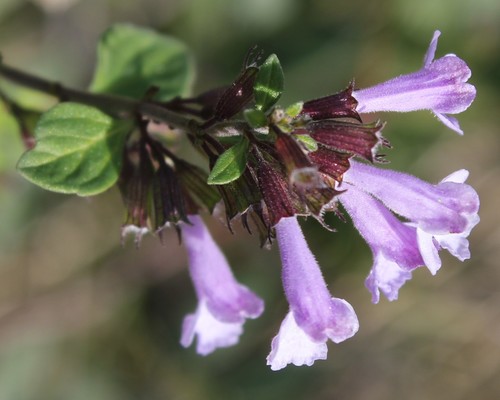
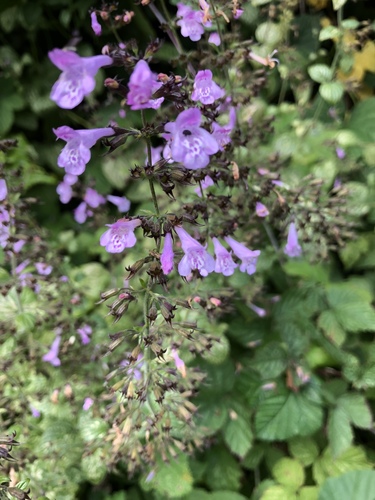
Lavandula x intermedia
Emeric. ex Loisel
Lavandin
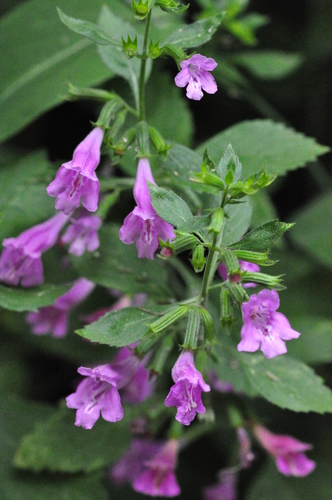
iNaturalist· cc-by
(c) Duarte Frade, some rights reserved (CC BY)
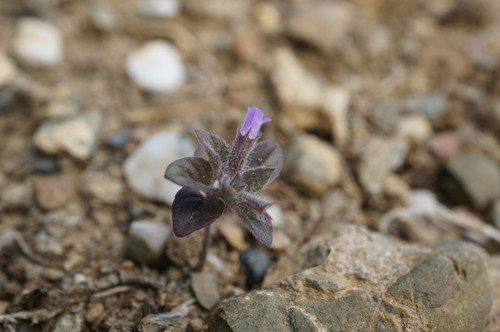
iNaturalist· cc-by-nc
(c) fmunoz, some rights reserved (CC BY-NC)
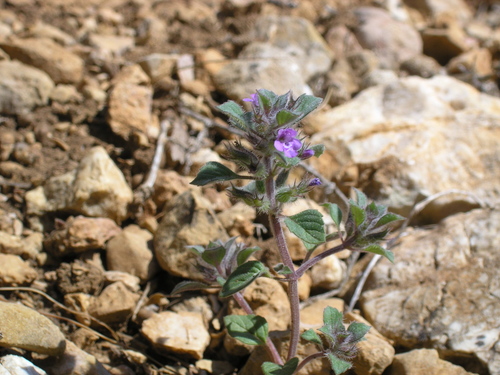
iNaturalist· cc-by-nc
(c) fmunoz, some rights reserved (CC BY-NC)
Summary
Source: WikipediaEvergreen shrub growing 1.2 m tall by 1 m wide at slow rate. Hardy to UK zone 5, in leaf year-round, flowering July to September with seeds ripening August to October. Hermaphroditic and self-fertile, pollinated by bees and butterflies. Suits light sandy, medium loamy, and heavy clay soils preferring well-drained conditions. Tolerates mildly acid, neutral, basic, very alkaline, and saline pH. Requires full sun, handles both dry and moist soils with excellent drought tolerance, and tolerates maritime exposure.
Description
Evergreen shrub growing 1.2 m tall by 1 m wide at slow rate. Hardy to UK zone 5, in leaf year-round, flowering July to September with seeds ripening August to October. Hermaphroditic and self-fertile, pollinated by bees and butterflies. Suits light sandy, medium loamy, and heavy clay soils preferring well-drained conditions. Tolerates mildly acid, neutral, basic, very alkaline, and saline pH. Requires full sun, handles both dry and moist soils with excellent drought tolerance, and tolerates maritime exposure.
Edible Uses
Leaves, petals, and flowering tips can be eaten raw and used as a condiment in salads, soups, and stews. The flavour is strongly aromatic, so only small amounts are suitable. Fresh or dried flowers make a pleasant tea. Fresh flowers can also be crystallised or added to jams, ice creams, and vinegars as a flavouring. An essential oil extracted from the flowers is used as a food flavouring. Note: these uses are established for L. angustifolia and are considered applicable to this hybrid.
Traditional Uses
The flowers are used to produce an essential oil used to flavour drinks, ice cream, candy, puddings, baked goods and vinegar. The fresh flowers are crystallized or added to jams and vinegars.
Medicinal Uses
Lavender is a widely used household herbal remedy. The essential oil obtained from the flowers is antihalitosis, antiseptic, antispasmodic, aromatic, carminative, cholagogue, diuretic, nervine, sedative, stimulant, stomachic, and tonic. It is not often used internally, though it functions as a useful carminative and nervine. Externally, it is an excellent restorative and tonic — rubbed into the temples it can relieve nervous headaches, and it makes a pleasant addition to bathwater. Its antiseptic properties make it effective for treating burns, sunburn, scalds, bites, vaginal discharge, and anal fissure, while also soothing the affected area and helping to prevent permanent scar tissue. The essential oil is used in aromatherapy, where its keyword is 'Immune system'. These uses are established for L. angustifolia and are considered applicable to this hybrid.
Distribution
It is a warm temperate plant. It suits hardiness zones 7-10.
Where It Grows
Asia, Australia, Britain, Europe, France, Slovenia, Switzerland,
Cultivation
It succeeds in almost any soil so long as it is well-drained and not too acidic. Prefers a sunny position in neutral to alkaline soil. Prefers light, warm, dry soil. When grown in rich soils, the plants tend to produce more leaves but less essential oils. Established plants are drought-tolerant. Very tolerant of salt wind exposure. When growing for maximum essential oil content, the plant must be given a very warm sunny position and will do best in a light sandy soil, the fragrance being especially pronounced in a chalky soil. Plants are hardy to between -10 and -15°c. Lavender is a very ornamental plant that is often grown in the herb garden and is also grown commercially for its essential oil. This species is a very variable hybrid between the two main species of lavender, L. angustifolia and L. latifolia, There are several named varieties. Not a very long-lived plant, it can be trimmed to keep it tidy but is probably best replaced every 10 years. Any trimming is best done in spring and should not be done in the autumn since this can encourage new growth that will not be very cold-hardy. A good bee plant, also attracting butterflies and moths. Lavender makes a good companion for most plants, growing especially well with cabbages. Lavender is typically harvested in mid to late summer when the flowers bloom. Lavender flowers in late spring to summer, depending on the species and growing conditions. It is a moderate grower, typically reaching maturity within 2 to 3 years. Plants usually grow to about 1 to 3 feet (30 to 90 cm).
Propagation
Sow seed in spring in a greenhouse, barely covering it. Germination usually takes 1–3 months at 15°C. Prick seedlings into individual pots when large enough to handle and overwinter in a greenhouse or cold frame before planting out in late spring after the last expected frosts. As a hybrid, this plant will not come true from seed. Take half-ripe cuttings of 7–10cm with a heel in July or August and root in a frame — most will root within a few weeks. Overwinter in a greenhouse before planting out the following late spring. Cuttings of 7cm with a heel can also succeed at almost any time of year. Layering is also possible.
Other Uses
Lavender is excellent for attracting pollinators and beneficial insects, and suits ground cover, hedging, container planting, rock gardens, and coastal settings. The essential oil from the flowers is exquisitely scented and widely used in soap making, high-quality perfumery including Eau de Cologne, detergents, cleaning agents, food flavouring, and insect repellents. Oil yields of 0.8–1% are obtained from the flowers. Stems are best harvested for oil once the flowers have faded. The aromatic leaves and flowers are used in potpourri and as an insect repellent in linen cupboards; they are also said to repel mice. Stripped flower stems can be bundled and burned as incense sticks. The plant can be grown as a low hedge and responds well to trimming. Lavender flowers are rich in nectar and pollen, attracting bees, butterflies, and other pollinators. The dense woody stems and leaf litter offer shelter and overwintering sites for invertebrates. The strong scent repels pests including moths, mosquitoes, and flies. These uses are established for L. angustifolia and are considered applicable to this hybrid.
Notes
There are about 28 Lavandula species.
Synonyms
References (6)
- Brown, D., 2002, The Royal Horticultural Society encyclopedia of Herbs and their uses. DK Books. p 255
- Cundall, P., (ed.), 2004, Gardening Australia: flora: the gardener's bible. ABC Books. p 802
- Facciola, S., 1998, Cornucopia 2: a Source Book of Edible Plants. Kampong Publications, p 126
- Fl. gall. ed. 2, 2:19. 1828
- http://www.botanic-gardens-ljubljana.com/en/plants
Show all 6 references Hide references
- PROSEA handbook Volume 13 Spices. p 277