Brassica oleracea var. acephala
L.; (DC) Schubler & Martens
Kale, Collards
gbif· cc-by-nc
SR Min
gbif· cc-by-nc
Wayne Fidler
gbif· cc-by-nc
Wayne Fidler
Summary
Source: WikipediaBrassica oleracea, also known as wild cabbage in its uncultivated form, is a plant of the family Brassicaceae. The species originated from feral populations of related plants in the Eastern Mediterranean, where it was most likely first cultivated. It has many common cultivars that are used as culinary vegetables, including cabbage, broccoli, cauliflower, romanesco, kale, Brussels sprout, collard, Savoy cabbage, kohlrabi, and gai lan.
Description
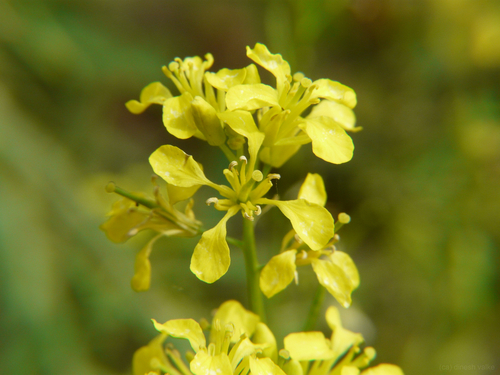
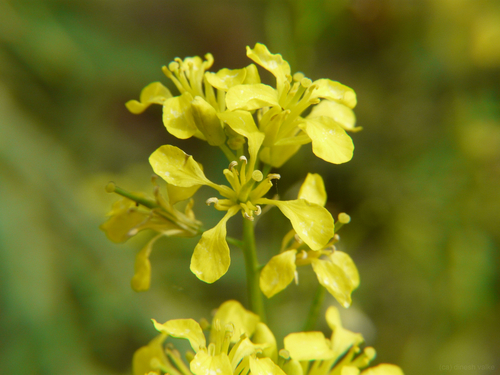
A cabbage plant. The leaves are ruffled or crinkled but some are more smooth than normal kales. The leaf shape and colour varies considerably. The flowers are yellow or white.
Edible Uses
The leaves are eaten boiled, steamed, or in soups and stews, and are used for sarma in Turkey, rolled around a filling of rice or minced meat. The unopened flower buds are used like broccoli.
Traditional Uses
The leaves are eaten boiled. They can also be steamed and used in soups and stews. The leaves are used for sarma in Turkey. They are rolled around a filling of rice or minced meat. The unopened flower buds are used like broccoli.
Distribution
It is a warm temperate to subtropical plant. The leaves grow best in cool weather. It suits hardiness zones 8-11.
Where It Grows
Africa, Andorra, Angola, Asia, Australia, Austria, Cambodia, Canada, Central Africa, China, Congo DR, Cuba, East Africa, Europe, Fiji, France, Hawaii, India, Indochina, Ireland, Kenya, Malawi, Mediterranean, Mexico, Netherlands, North America, Pacific, Papua New Guinea, PNG, Portugal, SE Asia, Serbia, South Africa, Southern Africa, South America, South Sudan, Spain, Switzerland, Tasmania, Timor-Leste, Turkey, Türkiye, Tuvalu, USA, West Africa, West Indies, Zimbabwe,
Other Information
It is a commercially cultivated vegetable. The leaves are often more sweet after frost.
Notes
There are about 30 Brassica species and many cultivated varieties.
Nutrition
| Part | Moisture | kJ | kcal | Protein | Vit A | Vit C | Iron | Zinc |
|---|---|---|---|---|---|---|---|---|
| Leaves - raw | 84 | 210 | 50 | 3.3 | 70 | 120 | 1.7 | 0.3 |
| Leaves - boiled | 91.7 | 109 | 26 | 2.1 | 313 | 18 | 0.5 | 0.4 |
| Flowers | — | — | — | — | — | — | — | — |
Also Known As
Berza, Blue kale, Boerenkool, Boerkool, Borecole, Bretones, Col, Couve, Curly kale, Flowering kale, Karalahana, Karam sag, Marrow stem, Salad savoury
References (33)
- Arellanes, Y., et al, 2013, Influence of traditional markets on plant management in the Tehuacan Valley. Journal of Ethnobiology and Ethnomedicine 9:38
- Bianchini, F., Corbetta, F., and Pistoia, M., 1975, Fruits of the Earth. Cassell. p 64
- Brouk, B., 1975, Plants Consumed by Man. Academic Press, London. p 110
- Cheifetz, A., (ed), 1999, 500 popular vegetables, herbs, fruits and nuts for Australian Gardeners. Random House p 42
- Cundall, P., (ed.), 2004, Gardening Australia: flora: the gardener's bible. ABC Books. p 255
Show all 33 references Hide references
- Dogan, Y., et al, 2015, Of the importance of a leaf: the ethnobotany of sarma in Turkey and the Balkans. Journal of Ethnobiology and Ethnomedicine, 11:56
- Facciola, S., 1998, Cornucopia 2: a Source Book of Edible Plants. Kampong Publications, p 54
- Grubben, G. J. H. and Denton, O. A. (eds), 2004, Plant Resources of Tropical Africa 2. Vegetables. PROTA, Wageningen, Netherlands. p 130
- Hadfield, J., 2001, The A-Z of Vegetable Gardening in South Africa. Struik p 107
- Hedrick, U.P., 1919, (Ed.), Sturtevant's edible plants of the world. p 121
- Jardin, C., 1970, List of Foods Used In Africa, FAO Nutrition Information Document Series No 2.p 61
- Kays, S. J., and Dias, J. C. S., 1995, Common Names of Commercially Cultivated Vegetables of the World in 15 languages. Economic Botany, Vol. 49, No. 2, pp. 115-152
- Kiple, K.F. & Ornelas, K.C., (eds), 2000, The Cambridge World History of Food. CUP p 1761, 1795
- Kizilarslan, C. & Ozhatay, N., 2012, An ethnobotanical study of the useful and edible plants of İzmit. Marmara Pharmaceutical Journal 16: 134-140, 2012.
- Latham, P., 2004, Useful Plants of Bas-Congo province. Latham & DFID p 56
- Lazarides, M. & Hince, B., 1993, Handbook of Economic Plants of Australia, CSIRO. p 38
- Macmillan, H.F. (Revised Barlow, H.S., et al), 1991, Tropical Planting and Gardening. Sixth edition. Malayan Nature Society. Kuala Lumpur. p 361
- Miguel, E., et al, 1989, A checklist of the cultivated plants of Cuba. Kulturpflanze 37. 1989, 211-357
- Mvere, B. & van der Werff, M., 2004. Brassica oleracea L. (leaf cabbage) [Internet] Record from Protabase. Grubben, G.J.H. & Denton, O.A. (Editors). PROTA (Plant Resources of Tropical Africa), Wageningen, Netherlands. < http://database.prota.org/search.htm>. Accessed 14 October 2009.
- Ochse, J.J. et al, 1931, Vegetables of the Dutch East Indies. Asher reprint. p 169
- Purseglove, J.W., 1968, Tropical Crops Dicotyledons, Longmans. p 94
- Schneider, E., 2001, Vegetables from Amaranth to Zucchini: The essential reference. HarperCollins. p 241, 335
- Sharma, B.B., 2005, Growing fruits and vegetables. Publications Division. Ministry of Information and broadcasting. India. p 197
- Staples, G.W. and Herbst, D.R., 2005, A tropical Garden Flora. Bishop Museum Press, Honolulu, Hawaii. p 201
- Termote, C., et al, 2014, Assessing the potential of wild foods to reduce the cost of a nutritionally adequate diet: An example from eastern Baringo District, Kenya. Food and Nutrition Bulletin, vol. 35, no. 4
- Terra, G.J.A., 1973, Tropical Vegetables. Communication 54e Royal Tropical Institute, Amsterdam, p 31
- Thaman, R. R, 2016, The flora of Tuvalu. Atoll Research Bulletin No. 611. Smithsonian Institute p 74
- Tindall, H.D., 1983, Vegetables in the tropics. Macmillan p. 116
- Tronickova, E. & Krejcova, Z., 1987, Ortaggi, Instituto Geografico de Agostini, Cecoslovacchia. p 22, 24
- Ulian, T., et al, 2020, Unlocking plant resources to support food security and promote sustainable agriculture. Plants, People, Planet. 2020;2:421–445.
- van Wyk, B., 2005, Food Plants of the World. An illustrated guide. Timber press. p 99
- Williamson, J., 2005, Useful Plants of Malawi. 3rd. Edition. Mdadzi Book Trust. p 46
- Zhou Taiyan, Lu Lianli, Yang Guang, Ihsan A. Al-Shehbaz, BRASSICACEAE (CRUCIFERAE), Flora of China.
More from Brassicaceae
Brassica juncea strumata
Large Petiole Mustard
Brassica juncea tsatsai multiceps
Green In The Snow
Brassica juncea tsatsai tumida
Swollen-Stem Mustard
Brassica juncea tumida
Swollen-Stem Mustard
Brassica juncea var. capitata
Capitata mustard
Brassica juncea var. crassicaulis
Bamboo shoot mustard