Sarcocephalus latifolius
(Smith) E. A. Bruce
African peach, Guinea peach
iNaturalist· cc-by-nc
(c) ONG OeBenin, some rights reserved (CC BY-NC)
iNaturalist· cc-by
(c) Agnes, some rights reserved (CC BY)
iNaturalist· cc-by-nc
(c) AMADOU BAHLEMAN FARID, some rights reserved (CC BY-NC)
Description
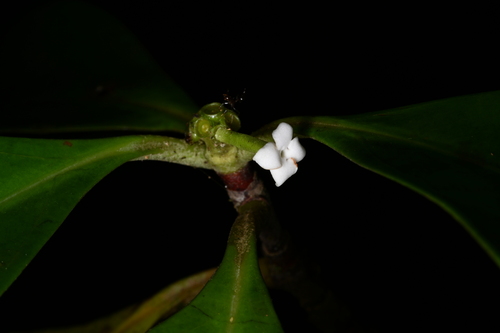
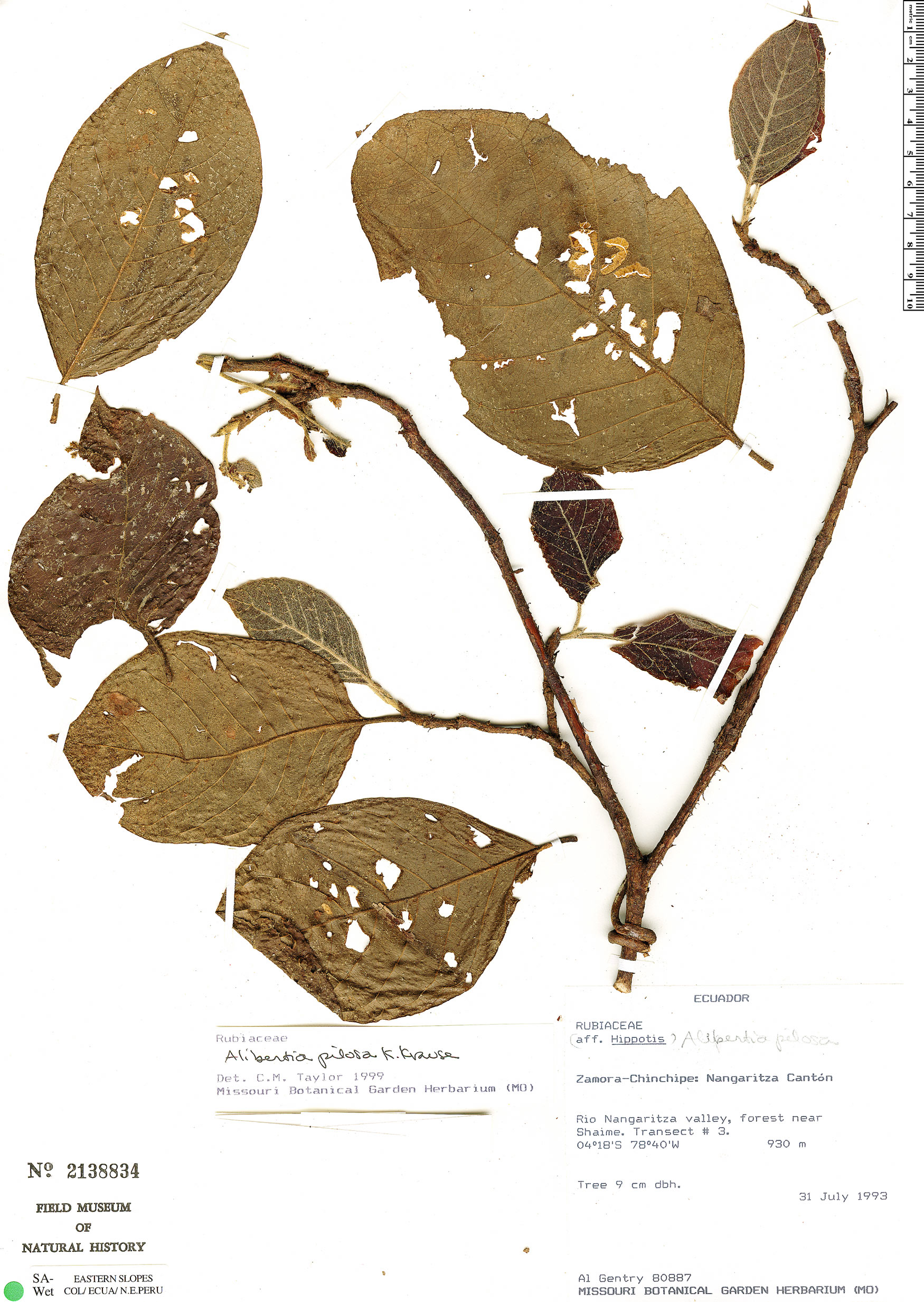
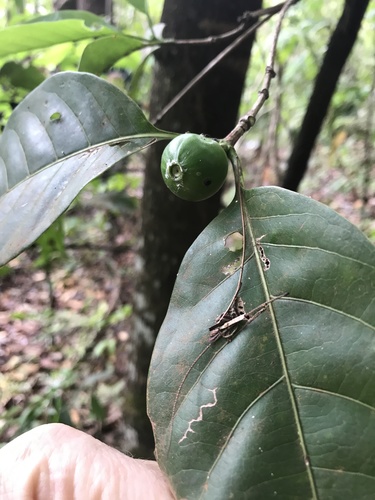
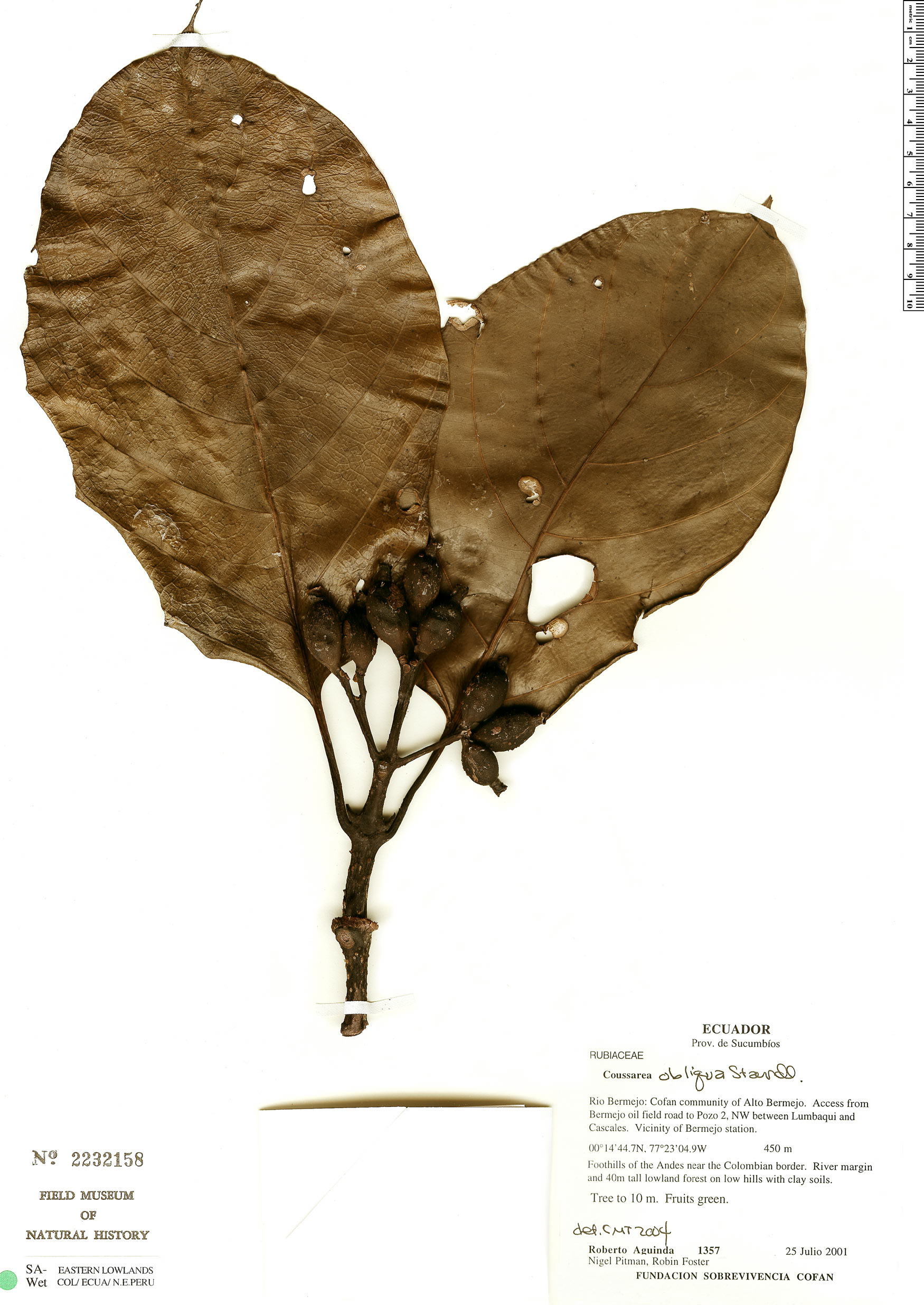
A small tree or shrub that loses its leaves. It has many stems and grows 2-9 m tall. It can grow a large tree in forest. The trunk is crooked and can be 30 cm across. It can have several stems. The branches are thick and drooping. The bark is dark grey and very fibrous. It is deeply cracked. The leaves are shiny green but darker on top and paler underneath. They are a wide oval shape and 10-21 cm long. The tip is pointed and the base is rounded. The leaves are thick with deep veins. The leaf stalk is red-purple. It is about 2 cm long. The flowers are white-yellow and have a strong smell. They occur in single rounded heads about 4-5 cm across. The flowers are in a rounded "pin cushion" like head. The individual flowers have slender tubes. The flower stalk is 1-2 cm long. The fruit is a compound fruit. It is red or pinkish with a rough appearance and the flesh is deep red and watery. The fruit is pitted like a golf ball. It is a round ball about 5-8 cm across. The surface of the fruit is rough with 5 sided pits. They contain many small seeds. The seeds are very small, about 1 mm across. They lie in the flesh around the solid core. The flesh is edible.
Edible Uses
The fruit and inflorescences are reportedly edible by humans. The fresh leaves are fed to cattle. N. lamarckia is grown as an ornamental, and for low-grade timber and paper. The timber is used for plywood, light construction, pulp and paper, boxes and crates, dug-out canoes, and furniture components. Kadamba yields a pulp of satisfactory brightness and performance as a hand sheet. The wood can be easily impregnated with synthetic resins to increase its density and compressive strength. The wood has a density of 290–560 kg/cu m at 15% moisture content, a fine to medium texture; straight grain; low luster and has no characteristic odor or taste. It is easy to work, with hand and machine tools, cuts cleanly, gives a very good surface and is easy to nail. The timber air dries rapidly with little or no degrade. Kadamba wood is very easy to preserve using either open tank or pressure-vacuum systems. Kadamba is one of the most frequently planted trees in the tropics. The tree is grown along avenues, roadsides and villages for shade. Kadamba are suitable for reforestation programs. It sheds large amounts of leaf and non-leaf litter which on decomposition improves some physical and chemical properties of soil under its canopy. This reflects an increase in the level of soil organic carbon, cation-exchange capacity, available plant nutrients and exchangeable bases. A yellow dye is obtained from the root bark. Kadamba flowers are an important raw material in the production of ‘attar’, which is Indian perfume with sandalwood (Santalum spp.) base in which one of the essences is absorbed through hydro-distillation. An extract of the leaves serves as a mouth gargle. The bulbous fruit (bearing flowers) is edible and is consumed raw in Northern India. It is fragrant, sweet and little tangy in taste and is widely enjoyed as relish. The leaf extract has recently been used to produce silver nanoparticles for surface-enhanced Raman spectroscopy.
Traditional Uses
The ripe fruit are eaten raw and also used in soups. The fruit can be dried for later use. It is the pulp of the fruit that is eaten. A drink is prepared from the fruit. The flower heads are eaten as a vegetable. CAUTION: It can induce abortions. It is also used for arrow poison.
Distribution
It is a tropical plant. There is a savannah form and a forest form across West Africa. It also grows on ant hills. It grows between 900-1,100 m above sea level. In Ethiopia it grows between 550-1,500 m above sea level. It can grow in arid places.
Where It Grows
Africa, Angola, Asia, Benin, Burkina Faso, Cabinda, Cameroon, Central Africa, Central African Republic, CAR, Central America, Congo DR, Côte d'Ivoire, East Africa, Ethiopia, Fiji, Gambia, Ghana, Guinea, Guinée, Guinea-Bissau, Indonesia, Ivory Coast, Kenya, Liberia, Malaysia, Mali, Mauritius, Nigeria, Pacific, SE Asia, Senegal, Sierra Leone, South Sudan, Sri Lanka, Sudan, Togo, Uganda, Venezuela, West Africa*,
Cultivation
Plants can be grown from fresh seed. The seeds are very small. To separate the very small seeds from the fruit, mash the fruit then float it in a bucket of water. The seed will separate out and sink to the bottom. They should then be collected and slowly dried. Seed should be planted within 2 months. Plants can be cut back and will re-grow. They can be grown from cuttings or layering.
Other Information
The fruit are eaten especially by children. It is cultivated. It is a commonly used food in West Africa. Fruit tend to be available in the drier more hungry season.
Notes
Chemical composition: Protein (crude) = 6.4% (dry). Fat = 3.2% (dry). Fibre (crude) = 3.1% (dry). Ash = 5.1% (dry). Carbohydrate (soluble): Starch = 4.9% (dry). Sucrose = 5.6% (dry). D-glucose = 5.6% (dry). F-fructose = 2.7% (dry). Amino acids (g [16g N]-1): Aspartic acid = 7.5g. Threonine = 3.1g. Serine = 3.6g. Glutamic acid = 15.7g. Proline = 5.8g. Glycine = 4.4g. Alanine = 4.0g. Valine = 4.8g. Cysteine = 1.3g. Methionine = 1.3g. Isoleucine = 3.4g. Leucine = 6.1g. Tyrosine = 2.0g. Phenylalanine = 3.6g. Lysine = 1.9g. Histidine = 1.7g. Arginine = 6.4g. Minerals - Sulphur = 0.11% (dry). Potassium = 0.16% (dry). Magnesium = 0.22% (dry). Calcium = 0.54% (dry). Na = 0.04% (dry). K = 1.54% (dry). Zinc = 30mg/kg-1 (dry). Iron = 237mg/kg-1 (dry). Manganese = 18mg/kg-1 (dry). Copper = 8mg/kg-1 (dry).
Nutrition
| Part | Moisture | kJ | kcal | Protein | Vit A | Vit C | Iron | Zinc |
|---|---|---|---|---|---|---|---|---|
| Seeds | 305 | — | 6.4 | — | — | 23.7 | 3 | — |
| Fruit | 75.1 | 173 | — | 1.9 | — | 35.8 | 1.4 | — |
Synonyms
Also Known As
A-podo, Abacore, Angatu, Bacore, Bakurehi, Bati-foro, Baro, Batio, Benau-utchata, Bopanicam, Buah persik hitam, Bugulba, Caboupa, Canhame, Chipoka, Coile, Conde, Country fig, Cunhe, Dhiot, Diuo, Dudanke, Ebele, Ebolo, Edoil, Ekomokoi, Eutudolei, Fafadjambo, Fumulundjucu, Ganyerou, Goat, Gongan, Gounge, Guinea peach, Gwiinga, Ibele, Ikyura-ukase, Karmadoda, Karmadodah, Katama, Kienga, Kilololkia pumba, Kwomo, Logotomic, Lolo, Lolo kia mabundu, M'nafo-ucon, Madronho, Miaar, Monyo, Moyo, Mukwamkwam, Munyu, Mutma, Nlolo, N'tole, Nafum-cone, Nauclea, Naude-puthu, Naudo-putcho, Negro-peach, Nzelenge, Oculub, Oculup, Ofede, Ogbossi, Opanica, Opepe, Pincushion, Ptehen'tugudu, Pulasan hutan, Rata-bakmi, Sierra Leone peach, Sukisia, Tambacumba-de-santcho, Tehe-intogude, Tetudu, Tetugde, Tuwon biri, Wuacruli
References (67)
- Abbiw, D.K., 1990, Useful Plants of Ghana. West African uses of wild and cultivated plants. Intermediate Technology Publications and the Royal Botanic Gardens, Kew. p 47 (As Nauclea latifolia)
- ABDELMUTI, (As Nauclea latifolia)
- Alyegba, S. S. et al, 2013, Ethnobotanical Survey of Edible Wild Plants in Tiv Communities of Benue State, Nigeria. Journal of Natural Sciences Research. Vol.3, No.7
- Ambe, G., 2001, Les fruits sauvages comestibles des savanes guinéennes de Côte-d’Ivoire : état de la connaissance par une population locale, les Malinké. Biotechnol. Agron. Soc. Environ. 5(1), 43-48 (As Nauclea latifolia)
- Asase, A. & Oteng-Yeboah, A. A., 2012, Plants used in Wechiau Comunity Hippotamus Sanctuary in Northwest Ghana. Ethnobotany research & Applications 10:605-618 (As Nauclea latifolia)
Show all 67 references Hide references
- Asfaw, Z. and Tadesse, M., 2001, Prospects for Sustainable Use and Development of Wild Food Plants in Ethiopia. Economic Botany, Vol. 55, No. 1, pp. 47-62
- Atato, A., et al, 2010, Diversity of Edible Wild Fruit Tree Species of Togo. Global Science Books.
- Atato, A.,et al, 2011, Edible Wild Fruit Highly Consumed during Food Shortage Period in Togo: State of Knowledge and Conservation Status. Journal of Life Sciences 5 (2011) 1046-1057
- Atato, A., et al, 2012 Especes lianescentes a fruits comestibles du Togo. Fruits. 67(5): 353-368
- Awas, T., 1997, A Study on the Ecology and Ethnobotany of Non-cultivated Food Plants and Wild Relatives of Cultivated crops in Gambella Region, Southwestern Ethiopia. Addis Ababa University. p 64
- Ayesson, N. C., 2011, Nutritional Contribution of Some Senegalese Forest Fruits Running across Soudano-Sahelian Zone. Food and Nutrition Sciences, 2011, 2, 606-612
- Barwick, M., 2004, Tropical and Subtropical Trees. A Worldwide Encyclopedic Guide. Thames and Hudson p 366 (As Sarcocephalus latifolius)
- Belem, B., et al, 2007, Use of Non Wood Forest Products by local people bordering the “Parc National Kaboré Tambi”, Burkina Faso. The Journal of Transdisciplinary Environmental Studies vol. 6, no. 1 p 9
- Boedecker, J., et al, 2014, Dietary contribution of Wild Edible Plants to women’s diets in the buffer zone around the Lama forest, Benin – an underutilized potential. Food Sec. 6:833–849 (As Nauclea latifolia)
- Bonou, A., et al, 2013, Valeur economique des Produits Forestiers Non Ligneux (PFNL) au Benin. Editions Universitaires Europeennes p 85
- Burkill, I.H., 1966, A Dictionary of the Economic Products of the Malay Peninsula. Ministry of Agriculture and Cooperatives, Kuala Lumpur, Malaysia. Vol 2 (I-Z) p 1561 (As Nauclea esculenta)
- Burkill, H. M., 1985, The useful plants of west tropical Africa, Vol. 4. Kew.
- Busson, 1965,
- Catarino, L., et al, 2016, Ecological data in support of an analysis of Guinea-Bissau's medicinal flora. Data in Brief 7 (2016):1078-1097
- Chapman, J. D. & Chapman, H. M., 2001, The Forest Flora of Taraba and Andamawa States, Nigeria. WWF & University of Canterbury. p 200
- Codjia, J. T. C., et al, 2003, Diversity and local valorisation of vegetal edible products in Benin. Cahiers Agricultures 12:1-12 (As Nauclea latifolia)
- Dale, I. R. and Greenway, P. J., 1961, Kenya Trees and Shrubs. Nairobi. p 451 (As Nauclea latifolia)
- Dalziel, 1937,
- Diarra, N. et al, 2016, Etude ethnobotanique des plantes alimentaires utilisées en période de soudure dans les régions Sud du Mali. Int. J. Biol. Chem. Sci. 10(1): 184-197
- Djihounouck, Y., et al, 2018, Diversité Et Importance Socio-Economique Des Espèces Fruitières Sauvages Comestibles En Zone Kasa (Sud-Ouest Du Sénégal). European Scientific Journal December 2018 edition Vol.14, No.36 ISSN: 1857 – 7881
- East African Herbarium records, 1981,
- Facciola, S., 1998, Cornucopia 2: a Source Book of Edible Plants. Kampong Publications, p 161 (As Nauclea latifolia)
- Food Composition Tables for use in Africa FAO http://www.fao.org/infoods/directory No. 939 (As Nauclea latifolia)
- Gallagher, D. E., 2010, Farming beyond the escarpment: Society, Environment, and Mobility in Precolonial Southeastern Burkina Faso. PhD University of Michigan.
- Gilbert, T., et al, 2017, Diversity and local transformation of indigenous edible fruits in sahelian domain of Cameroon. Journal of Animal & Plant Sciences Vol. 26 (2): 5289-5300
- Grivetti, L. E., 1980, Agricultural development: present and potential role of edible wild plants. Part 2: Sub-Saharan Africa, Report to the Department of State Agency for International Development. p 27 (As Sarcocephalus esculentus)
- Gueye, M., et al, 2014, Wild Fruits Traditionally Gathered by the Malinke Ethnic Group in the Edge of Niokolo Koba Park (Senegal). American Journal of Plant Sciences 5, 1306-1317
- Hedrick, U.P., 1919, (Ed.), Sturtevant's edible plants of the world. p 594 (As Sarcocephalus esculentus)
- Herzog, F., Gautier-Beguin, D. & Muller, K., Uncultivated plants for human nutrition in Cote d'Ivoire. FAO Corporate Document repository. International Conference on Domestication nd Commercialisaton of Non Timber species.
- Herzog, F. et al, 1994, Composition and consumption of gathered wild fruits in the V-Baoule, Cote D'Ivoire. Ecology of Food and Nutrition Vol. 32, pp. 181-196
- Ibrahim, H. A., et al, 2012, Ethnobotanical Survey of the Wild Edible Food Plants Consumption among Local Communities in Kano State, North-Western, Nigeria, International Journal of Science and Technology. Vol. 2. No. 10 p 716 (As Nauclea latifolia)
- Jardin, C., 1970, List of Foods Used In Africa, FAO Nutrition Information Document Series No 2.p 91, 149 (As Nauclea latifolia)
- JSTOR Global Plants edible (As Sarcocephalus esculentus)
- Katende, A.B., Birnie, A & Tengnas B., 1995, Useful Trees and Shrubs for Uganda. Identification, Propagation and Management for Agricultural and Pastoral Communities. Technical handbook No 10. Regional Soil Conservation Unit, Nairobi, Kenya. p 548 (As Sarcocephalus latifolius)
- Kermath, B. M., et al, 2014, Food Plants in the Americas: A survey of the domesticated, cultivated and wild plants used for Human food in North, Central and South America and the Caribbean. On line draft. p 567 (As Nauclea latifolia)
- Latham, P., 2004, Useful Plants of Bas-Congo province. Salvation Army & DFID p 245
- Lautenschläger, T., et al, 2018, First large-scale ethnobotanical survey in the province of Uíge, northern Angola. Journal of Ethnobiology and Ethnomedicine (2018) 14:51
- Le Houerou, H. N., (Ed.), 1980, Browse in Africa. The current state of knowledge. International Livestock Centre for Africa, Ethiopia. p 163 (As Nauclea latifolia)
- Lulekal, E., et al, 2011, Wild edible plants in Ethiopia: a review on their potential to combat food insecurity. Afrika Focus - Vol. 24, No 2. pp 71-121
- Macmillan, H.F. (Revised Barlow, H.S., et al) 1991, Tropical Planting and Gardening. Sixth edition. Malayan Nature Society. Kuala Lumpur. p 304 (As Nauclea esculenta)
- Martin, F.W. & Ruberte, R.M., 1979, Edible Leaves of the Tropics. Antillian College Press, Mayaguez, Puerto Rico. p 217 (As Sarcocephalus russeggeri)
- Martin, F.W. & Ruberte, R.M., 1979, Edible Leaves of the Tropics. Antillian College Press, Mayaguez, Puerto Rico. p 99 (As Nauclea esculenta)
- Martin, F.W. & Ruberte, R.M., 1979, Edible Leaves of the Tropics. Antillian College Press, Mayaguez, Puerto Rico. p 217 (As Sarcocephalus esculentus)
- Martin, F. W., et al, 1987, Perennial Edible Fruits of the Tropics. USDA Handbook 642 p 44 (As Nauclea latifolia)
- Masters, T., 2021, Traditional food plants of the upper Aswa River catchment of northern Uganda—a cultural crossroads. Journal of Ethnobiology and Ethnomedicine (2021) 17:24
- Milow, P., et al, 2013, Malaysian species of plants with edible fruits or seeds and their evaluation. International Journal of Fruit Science. 14:1, 1-27
- Moksia, F., et al, 2019, Diversity and Socio-Economic Value of Wild Edible Plants in the Mounts Mandara Region, Cameroon. International Journal of Sciences. Vol. 8:10
- Ojelel, S. & Kakudidi, E. K., 2015, Wild edible plant species utilized by a subsistence farming community in the Obalanga sub-county, Amuria district, Uganda. Journal of Ethnobiology and Ethnomedicine. 11:7
- Oryema, C., et al, 2013, Edible wild fruit species of Gulu District, Uganda. International Journal of Biology and Biological Sciences Vol 2(4) pp 068-082
- Parham, H. B. R, 1940, Supplement to the Journal of the Polynesian Society No. 16. Fiji Plants: Their Name and Uses. (As Sarcocephalus esculentus)
- Peters, C. R., O'Brien, E. M., and Drummond, R.B., 1992, Edible Wild plants of Sub-saharan Africa. Kew. p 175
- A. Rees, Cycl. 24: Nauclea no. 5. 1813
- Royal Botanic Gardens, Kew (1999). Survey of Economic Plants for Arid and Semi-Arid Lands (SEPASAL) database. Published on the Internet; http://www.rbgkew.org.uk/ceb/sepasal/internet [Accessed 10th June 2011]
- Salih, N. K. M., & Ali, A. H., 2014, Wild food trees in Eastern Nuba Mountain, Sudan: Use, diversity, and threatening factors. Journal of Agriculture and Rural Development in the Tropics and Subtropics Vol. 115 No. 1 pp 1-7
- Savill, P. S. & Fox, J. E. D., Trees of Sierra Leone. p 224 (As Nauclea latifolia)
- Segnon, A. C. & Achigan-Dako, E. G., 2014, Comparative analysis of diversity and utilization of edible plants in arid and semi-arid areas in Benin. Journal of Ethnobiology and Ethnomedicine 2014, 10:80
- Sukarya, D. G., (Ed.) 2013, 3,500 Plant Species of the Botanic Gardens of Indonesia. LIPI p 968 (As Sarcocephalus esculentus)
- Unwin, A. H., 1920, West African Forests and Forestry. Fisher Unwin Ltd. pdf on Internet p 72 (As Sarcocephalus esculentus)
- Uphof, (As Nauclea latifolia)
- Vivien, J., & Faure, J.J., 1996, Fruitiers Sauvages d'Afrique. Especes du Cameroun. CTA p 287 (As Nauclea latifolia)
- World Checklist of Useful Plant Species 2020. Royal Botanic Gardens, Kew (As Nauclea latifolia)
- www.worldagroforestrycentre.org/treedb/