Oxalis semiloba
Sond.
Fishtail sorrel
iNaturalist· cc-by
(c) Wynand Uys, some rights reserved (CC BY), uploaded by Wynand Uys
iNaturalist· cc-by
(c) Wynand Uys, some rights reserved (CC BY), uploaded by Wynand Uys
iNaturalist· cc-by
(c) Wynand Uys, some rights reserved (CC BY), uploaded by Wynand Uys
Description
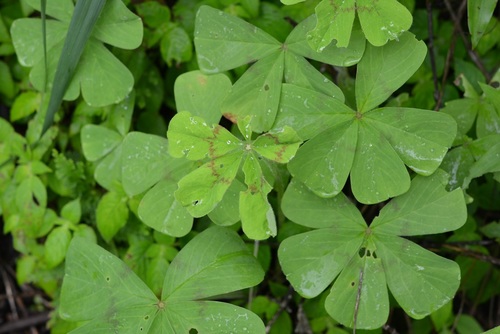
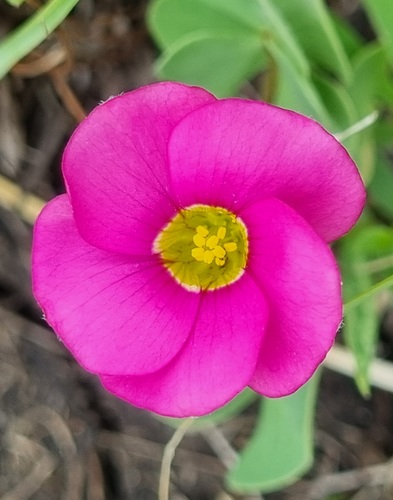
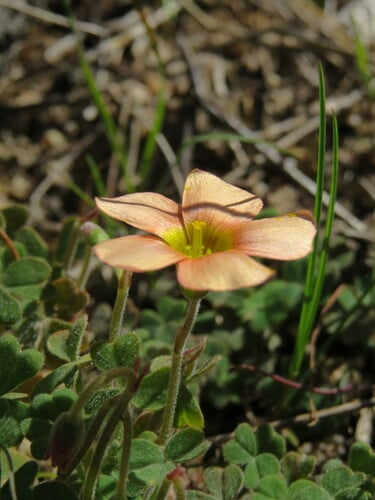
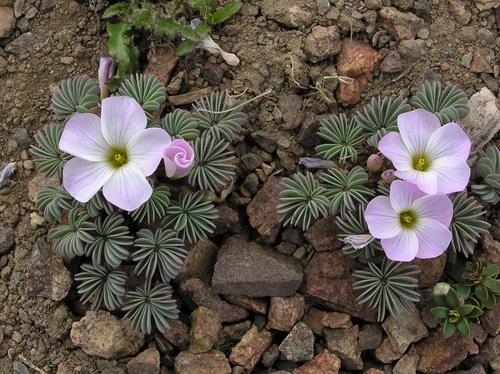
A herb that keeps growing from year to year. It has rhizomes or underground stems. These are 15 cm long. The bulbs are 1-2 cm long. They usually occur singly at the base of the rhizome. The leaves have 3 leaflets. The leaflets do not have stalks. The flowers are 15 mm long. They are bright pink or red. They are in groups or 3-12.
Edible Uses
The bulbs, leaves, and flowers are eaten raw.
Traditional Uses
The bulb is eaten raw. The leaves are eaten raw.
This uses section is brief — help expand it
Distribution
It is a tropical plant. It grows in forest woodland and grasslands. It can grow in arid places.
Where It Grows
Africa, Angola, Botswana, Central Africa, Congo DR, East Africa, Ethiopia, Kenya, Lesotho, Malawi, Mozambique, Namibia, South Africa, Southern Africa, Tanzania, Zambia, Zimbabwe,
Other Information
It is a significant occasional food in Mozambique.
Synonyms
Also Known As
Bolila, Chienga, Cingingo, Kantedza, Micha micho
References (14)
- Albano, et al 1998,
- Flora Zambesiaca. http://apps.kew.org/efloras
- Fowler, D. G., 2007, Zambian Plants: Their Vernacular Names and Uses. Kew. p 52
- Fox, F. W. & Young, M. E. N., 1982, Food from the Veld. Delta Books. p 286
- Grivetti, L. E., 1980, Agricultural development: present and potential role of edible wild plants. Part 2: Sub-Saharan Africa, Report to the Department of State Agency for International Development. p 65
Show all 14 references Hide references
- Molla, A., Ethiopian Plant Names. http://www.ethiopic.com/aplants.htm
- Matlhare, T., et al, Vegetables in Botswana. p 21 Bioversity website.
- Peters, C. R., O'Brien, E. M., and Drummond, R.B., 1992, Edible Wild plants of Sub-saharan Africa. Kew. p 158
- Royal Botanic Gardens, Kew (1999). Survey of Economic Plants for Arid and Semi-Arid Lands (SEPASAL) database. Published on the Internet; http://www.rbgkew.org.uk/ceb/sepasal/internet [Accessed 5th May 2011]
- Ruiters-Welcome, A. K., 2019, Food plants of southern Africa. Ph.D. thesis. Univ. of Johannesburg p 84
- van Wyk, Be., & Gericke, N., 2007, People's plants. A Guide to Useful Plants of Southern Africa. Briza. p 92
- Vinnicombe, 1976,
- Welcome, A. K. & Van Wyk, B.-E., 2019, An inventory and analysis of the food plants of southern Africa. South African Journal of Botany 122 (2019) 136–179
- World Checklist of Useful Plant Species 2020. Royal Botanic Gardens, Kew