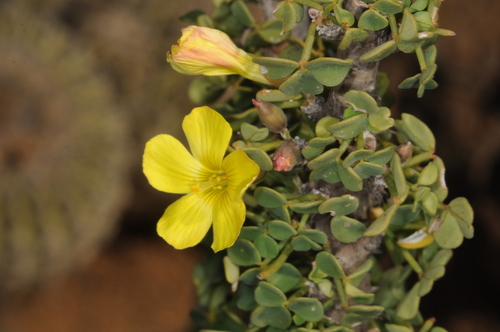
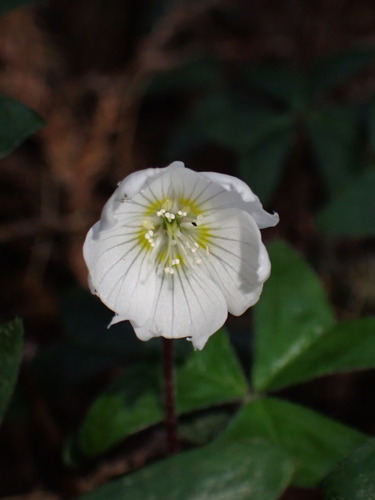
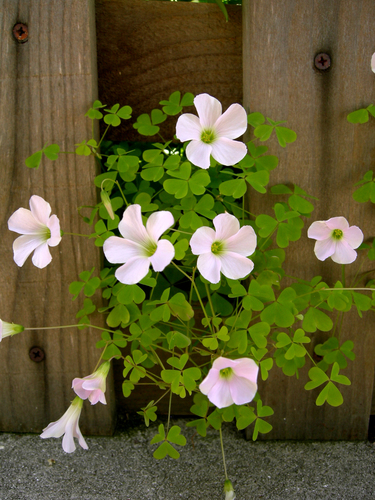
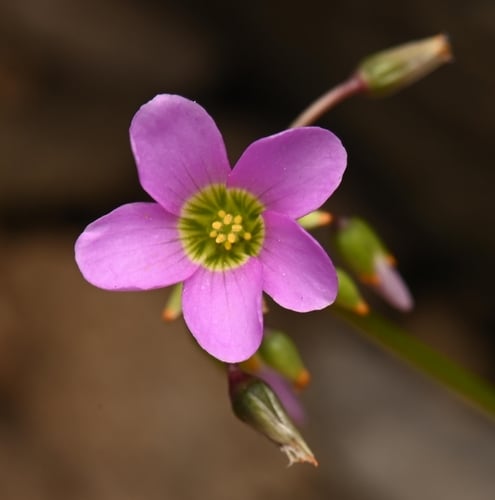
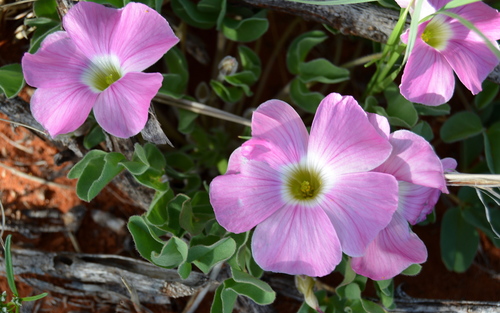
Oxalis corymbosa
DC.
Lilac Oxalis, Pink woodsorrel
gbif· cc-by-sa
GBIF
gbif· cc-by-sa
GBIF
gbif· cc-by-sa
GBIF
Description
Oxalis corymbosa is a PERENNIAL growing to 0.2 m (0ft 8in). See above for USDA hardiness. It is hardy to UK zone 8. It is in flower from July to September. The species is hermaphrodite (has both male and female organs) and is pollinated by Insects. Suitable for: light (sandy), medium (loamy) and heavy (clay) soils and prefers well-drained soil. Suitable pH: mildly acid, neutral and basic (mildly alkaline) soils. It cannot grow in the shade. It prefers dry or moist soil.
Edible Uses
Leaves and leafstalks - raw or cooked. Use in moderation, see notes at top of sheet. Flowers - raw. A pleasant acid flavour, they make an ornamental addition to a mixed salad. Root - raw. Sweet, crisp and succulent.
Known Hazards
The leaves contain oxalic acid, which gives them their sharp flavour. Perfectly all right in small quantities, the leaves should not be eaten in large amounts since oxalic acid can bind up the body's supply of calcium leading to nutritional deficiency. The quantity of oxalic acid will be reduced if the leaves are cooked. People with a tendency to rheumatism, arthritis, gout, kidney stones or hyperacidity should take especial caution if including this plant in their diet since it can aggravate their condition.
Distribution
S. America. Naturalized in Britain.
Where It Grows
SOUTHERN AMERICA: Trinidad and Tobago (Trinidad), French Guiana, Guyana, Venezuela, Brazil (Bahia, Ceará, Espírito Santo, Minas Gerais, Pará, Paraná, Pernambuco, Rio de Janeiro, Rio Grande do Sul, Santa Catarina, São Paulo), Bolivia, Ecuador, Peru, Argentina (Buenos Aires, Catamarca, Chaco, Corrientes, Entre Ríos, Misiones, Salta, San Juan, Santa Fe, Tucumán), Paraguay, Uruguay
Cultivation
Easily grown in a sandy soil in a warm dry position. Plants are not very hardy in Britain according to one report which lists this plant as succeeding in climatic zone 9 and thus only tolerating occasional light frosts. However, it is naturalized in parts of Britain, especially near London. It is growing well in our Cornwall site, where it has proved to be hardy since 1994.
Propagation
Seed - best sown as soon as ripe in a cold frame. Prick out the seedlings into individual pots when they are large enough to handle and plant them out in late spring or early summer. Division in spring. Larger divisions can be planted out direct into their permanent positions. We have found that it is better to pot up the smaller divisions and grow them on in light shade in a cold frame until they are well established before planting them out in late spring or early summer.