Vachellia luederitzii
(Engl.) Kyal. & Boatwr.
Kalahari-sand acacia
iNaturalist· cc-by-nc
(c) Linda Loffler, some rights reserved (CC BY-NC), uploaded by Linda Loffler
iNaturalist· cc-by-sa
(c) Tony Rebelo, some rights reserved (CC BY-SA)
iNaturalist· cc-by-sa
(c) Tony Rebelo, some rights reserved (CC BY-SA), uploaded by Tony Rebelo
Description
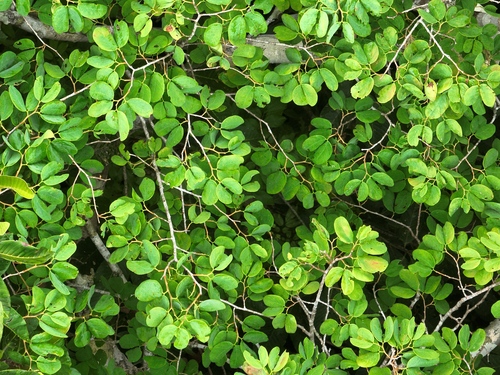
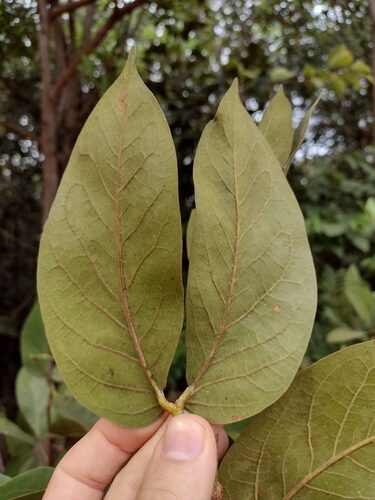
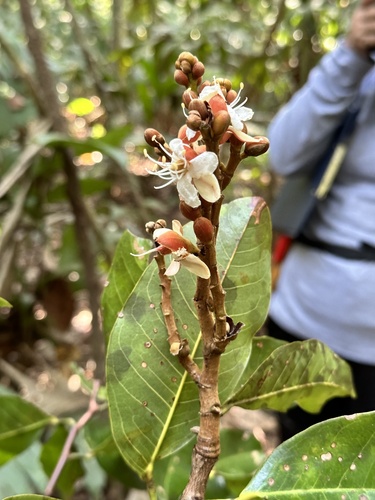
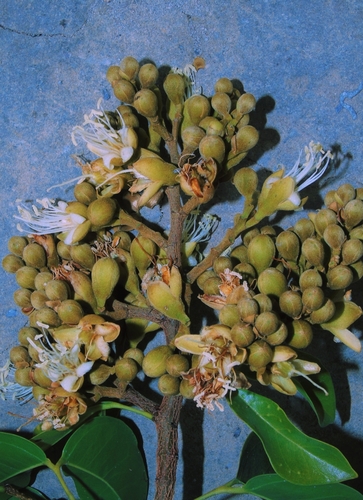
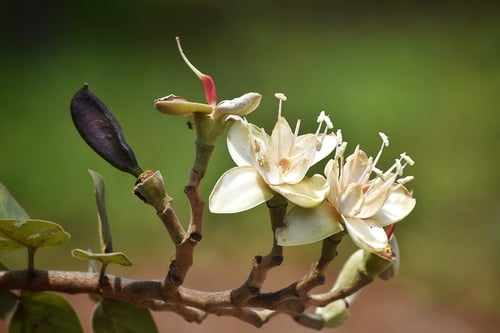
A shrub or small tree. It grows 2-15 m high. The roots have an unpleasant smell. The young branches are covered with pale grey hairs. The spines are usually in pairs and long and straight. The leaves are 6 cm long by 4 cm wide with 5-8 pairs of leaflet stalks with small fine, hairy leaflets. The flowers are in round heads. They are creamy white. The fruit is a pod 13 cm long by 2 cm wide. It is usually flat and straight. It is stiff but not woody. It has a thick rim.
Edible Uses
Seeds are eaten raw, fruits are eaten as a snack, and the gum is edible though rarely collected.
Traditional Uses
The seed are eaten raw. The fruit are eaten as a snack. The gum is edible but not often collected.
This uses section is brief — help expand it
Medicinal Uses
An infusion of the bark is used as an emetic to cleanse the body as part of the treatment of various diseases. The bark of all Acacia species contains greater or lesser quantities of tannins and are astringent. Astringents are often used medicinally - taken internally, for example. they are used in the treatment of diarrhoea and dysentery, and can also be helpful in cases of internal bleeding. Applied externally, often as a wash, they are used to treat wounds and other skin problems, haemorrhoids, perspiring feet, some eye problems, as a mouth wash etc. Many Acacia trees also yield greater or lesser quantities of a gum from the trunk and stems. This is sometimes taken internally in the treatment of diarrhoea and haemorrhoids.
Known Hazards
Especially in times of drought, many Acacia species can concentrate high levels of the toxin Hydrogen cyanide in their foliage, making them dangerous for herbivores to eat.
Distribution
It is a subtropical plant. It grows in hot arid areas. It can tolerate frost. It grows in areas with an annual rainfall between 300-600 mm. It grows in sands and clays and is often over limestone materials. It grows between 48-1,650 m above sea level.
Where It Grows
Africa, Botswana, East Africa, Egypt, Eswatini, Mozambique, Namibia, South Africa, Southern Africa, Swaziland, Zambia, Zimbabwe,
Cultivation
It can be cut back and will re-grow.
Propagation
The seed of most, if not all, members of this genus has a hard seedcoat and may benefit from scarification before sowing to speed up germination. This can usually be done by pouring a small amount of nearly boiling water on the seeds (being careful not to cook them!) and then soaking them for 12 - 24 hours in warm water. By this time they should have imbibed moisture and swollen - if they have not, then carefully make a nick in the seedcoat (being careful not to damage the embryo) and soak for a further 12 hours before sowing. Acacia seeds that have matured fully on the bush and have been properly dried have a hard seed coat and can be stored in closed containers without deterioration for 5 - 10 years or more in dry conditions at ambient temperatures. It is best to remove the aril, which attracts weevils and can lead to moulds forming. The arils are easilyremoved by placing the seeds in water and rubbing them between the hands, then drying the seeds and winnowing them.
Other Uses
A fibre is obtained from the inner bark. Fine cords can be made from it and are used for necklaces etc. Unprocessed, broad strips of the inner bark are used for attaching thatch on traditional huts. The root of this tree is traditionally used to make quivers for arrows. A piece of wood about 40 - 60cm long is placed in the spent ashes of a warm fire and left overnight. The next morning, a short section of the bark of the root is removed at one end; a circular groove is carved into the exposed core wood; a piece of wire is wound around the groove at one end whist the other end is attached to a tree; the bark (having already been loosened from the wood by the drying action of the warm ashes) is then simply pulled whole off the root. The core of wood remaining is then often used as a pestle. The brown wood is hard, heavy, tough and fire-resistant. It is easy to work and produces a fine, smooth finish. Very durable in water, it is used to line wells, and also makes good fencing posts.
Production
It grows at a moderate rate.
Notes
There are about 1,350 Acacia species. Over 1,000 occur in Australia. Also as Mimosaceae.
Synonyms
References (10)
- Fox, F. W. & Young, M. E. N., 1982, Food from the Veld. Delta Books. p 201 (As Acacia luederitzii)
- Grivetti, 1976, 1979, (As Acacia luederitzii)
- Hassan, R. A. & Hamdy, R. S., 2021, Synoptic Overview of Exotic Acacia, Senegalia and Vachellia (Caesalpinioideae, Mimosoid Clade, Fabaceae) in Egypt. Plants 2021, 10, 1344.
- Peters, C. R., O'Brien, E. M., and Drummond, R.B., 1992, Edible Wild plants of Sub-saharan Africa. Kew. p 127 (As Acacia luederitzii)
- Ruiters-Welcome, A. K., 2019, Food plants of southern Africa. Ph.D. thesis. Univ. of Johannesburg p 62
Show all 10 references Hide references
- Story, 1958, (As Acacia uncinata)
- Tanaka, 1980, (As Acacia luederitzii)
- van Wyk, Ben-Erik, 2019, The diversity and multiple uses of southern African legumes. Australian Systematic Botany, 2019, 32, 519–546
- Welcome, A. K. & Van Wyk, B.-E., 2019, An inventory and analysis of the food plants of southern Africa. South African Journal of Botany 122 (2019) 136–179
- World Checklist of Useful Plant Species 2020. Royal Botanic Gardens, Kew