Cephalocroton cordofanus
Hochst.
gbif· cc-by-sa
GBIF
Description
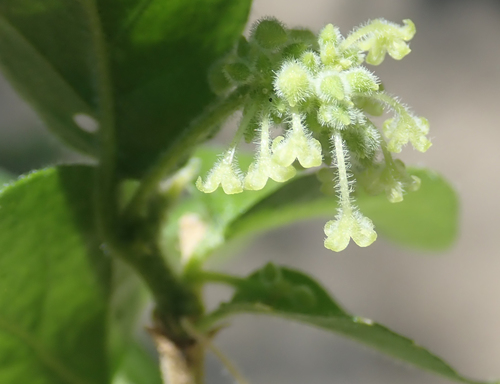
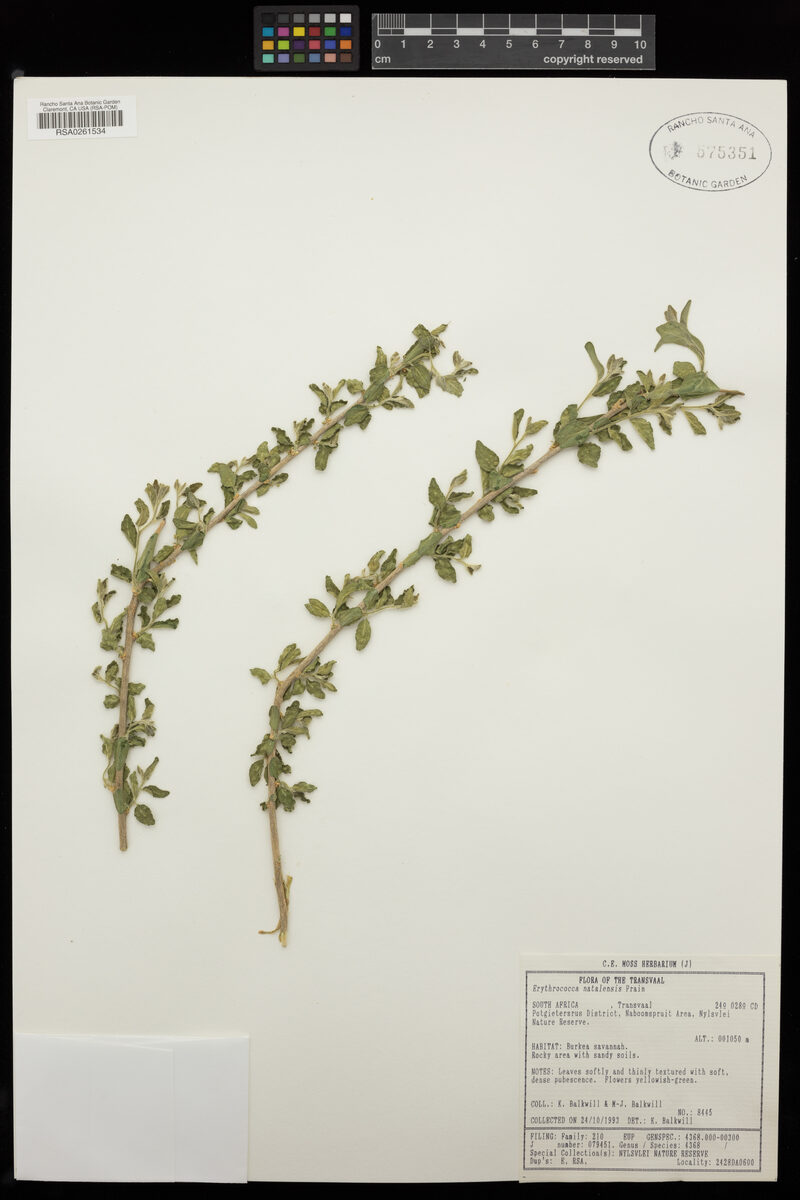
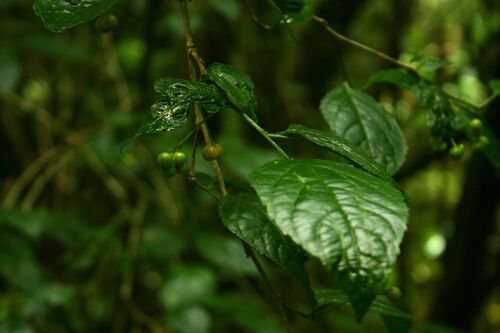
A shrub. It can be erect or sprawling and has many branches. It grows 30-300 cm tall. It has a stout taproot. The seeds are 8 mm long and 6 mm wide. They are smooth and grey. They are shiny and can be mottled.
Edible Uses
Seed. The ovoid to nearly globose seeds are around 7.5mm long and 6mm in diameter; they are smooth, evenly greyish or dark brown flecked and mottled, somewhat shiny. The seeds are rich in a highly unsaturated oil with a pleasant odour and taste. It is sometimes extracted and used for cooking. The oil consists chiefly of cis-12:13-epoxyoleic acid (62%) along with saturated acids (7%), oleic acid (10%), linoleic acid (17%) and 12:13-dihydroxyoleic acid (4%).
Distribution
It is a tropical plant. It grows in dried out river beds that are seasonally flooded. It is usually on sandy soils. It grows up to 1,200 m above sea level.
Where It Grows
Africa, East Africa, Eritrea, Ethiopia, Kenya, Nigeria, Somalia, Sudan, Tanzania, West Africa,
Cultivation
Plants are grown from seeds.
Other Uses
The seeds are rich in a highly unsaturated oil. The oil consists chiefly of cis-12:13-epoxyoleic acid (62%) along with saturated acids (7%), oleic acid (10%), linoleic acid (17%) and 12:13-dihydroxyoleic acid (4%). The presence of epoxy and hydroxy fatty acids in high concentrations make the oil an interesting raw material in chemistry.
Other Information
Plants are sometimes cultivated.
References (5)
- East African Herbarium records, 1981,
- Fern, K., 2012, Tropical Species Database http://theferns.info/tropical/
- GRIN
- Peters, C. R., O'Brien, E. M., and Drummond, R.B., 1992, Edible Wild plants of Sub-saharan Africa. Kew. p 109
- World Checklist of Useful Plant Species 2020. Royal Botanic Gardens, Kew