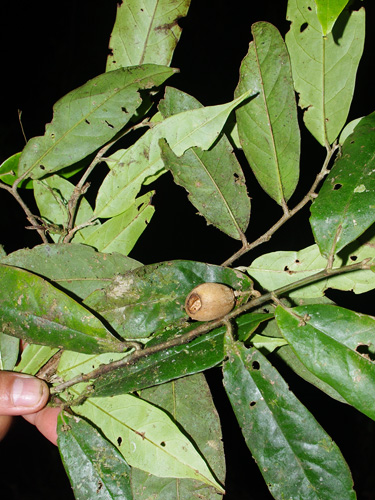
Dichapetalum rhodesicum
Sprague & Hutch.
iNaturalist· cc-by-nc
(c) setlhare, some rights reserved (CC BY-NC)
iNaturalist· cc-by-nc
(c) setlhare, some rights reserved (CC BY-NC)
Description
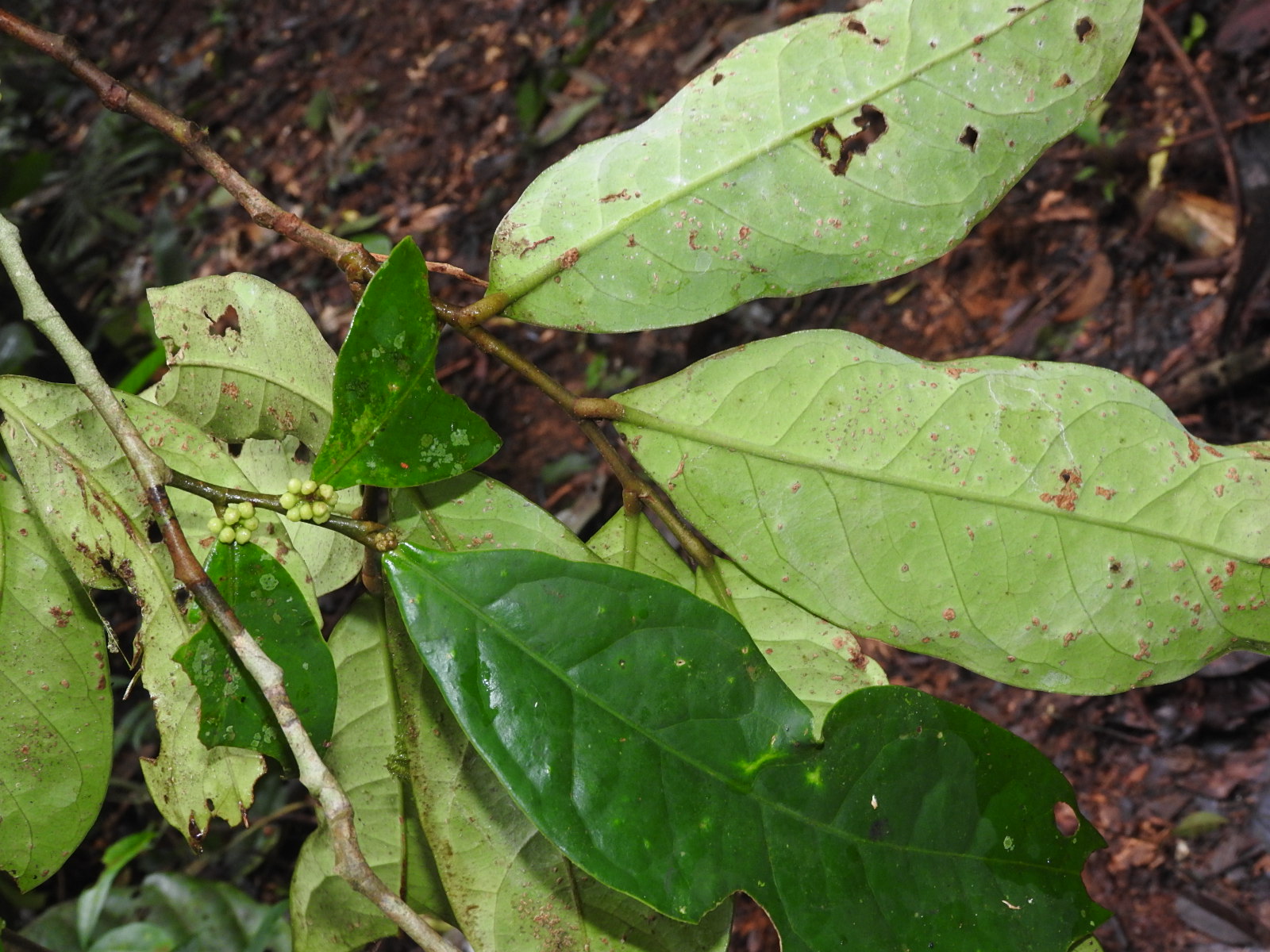
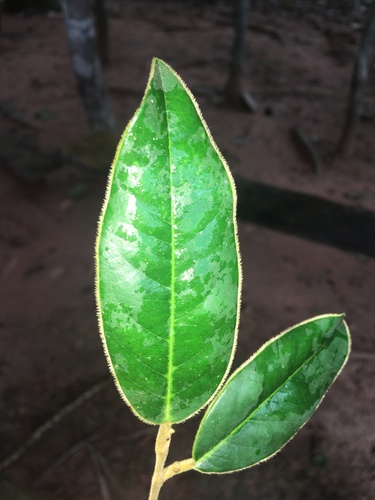
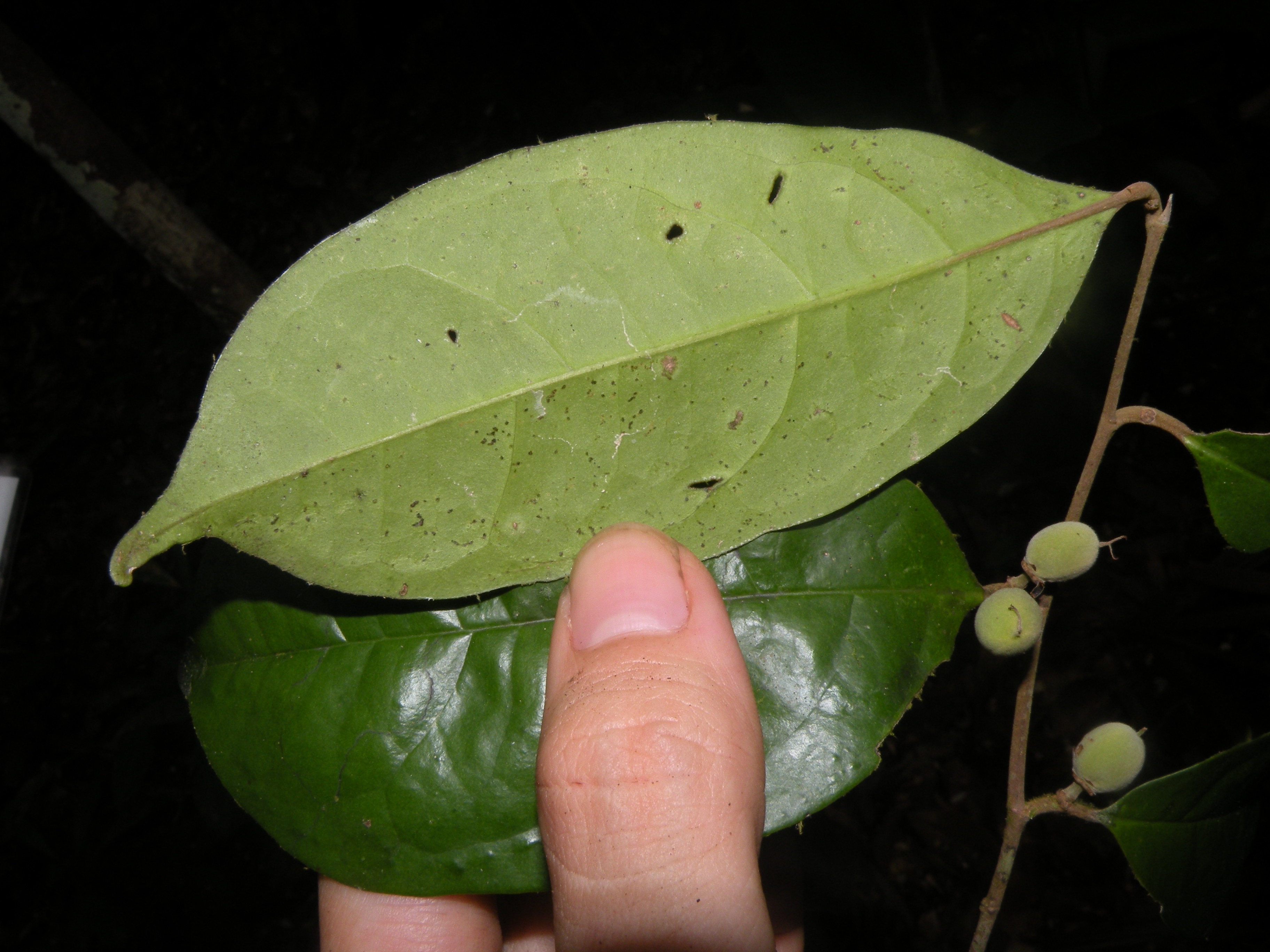
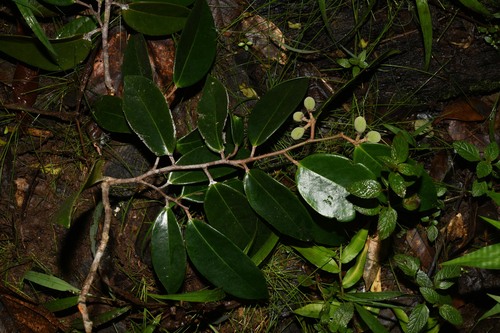
A small shrub. It grows 1.2 m high and keeps growing from year to year. It is succulent. The bark is light brown and hairy. The leaves are green and broadly oval. They are 8-10 cm long. They taper to the tip. The leaves have velvety hairs underneath. The flowers are 3 cm long. They occur as a few flowers in the axils of leaves. Flowers have a reddish covering outside. The flowers are white. The fruit are oval and have a grey covering.
Edible Uses
The fruit pulp is eaten raw.
Traditional Uses
The fruit pulp is eaten raw.
This uses section is brief — help expand it
Distribution
It is a subtropical plant. It grows in hot arid places. It can be in areas with a dry season of 6-11 months. It grows in well-drained sandy soils. It can grow in arid places.
Where It Grows
Africa, Botswana, East Africa, Namibia, Southern Africa, Zambia, Zimbabwe,
Also Known As
Jul'hoan, Munkuguru, Sivato
References (6)
- Maguire, 1978,
- Peters, C. R., O'Brien, E. M., and Drummond, R.B., 1992, Edible Wild plants of Sub-saharan Africa. Kew. p 104
- Royal Botanic Gardens, Kew (1999). Survey of Economic Plants for Arid and Semi-Arid Lands (SEPASAL) database. Published on the Internet; http://www.rbgkew.org.uk/ceb/sepasal/internet [Accessed 16th April 2011]
- Ruiters-Welcome, A. K., 2019, Food plants of southern Africa. Ph.D. thesis. Univ. of Johannesburg p 51
- Welcome, A. K. & Van Wyk, B.-E., 2019, An inventory and analysis of the food plants of southern Africa. South African Journal of Botany 122 (2019) 136–179
Show all 6 references Hide references
- World Checklist of Useful Plant Species 2020. Royal Botanic Gardens, Kew