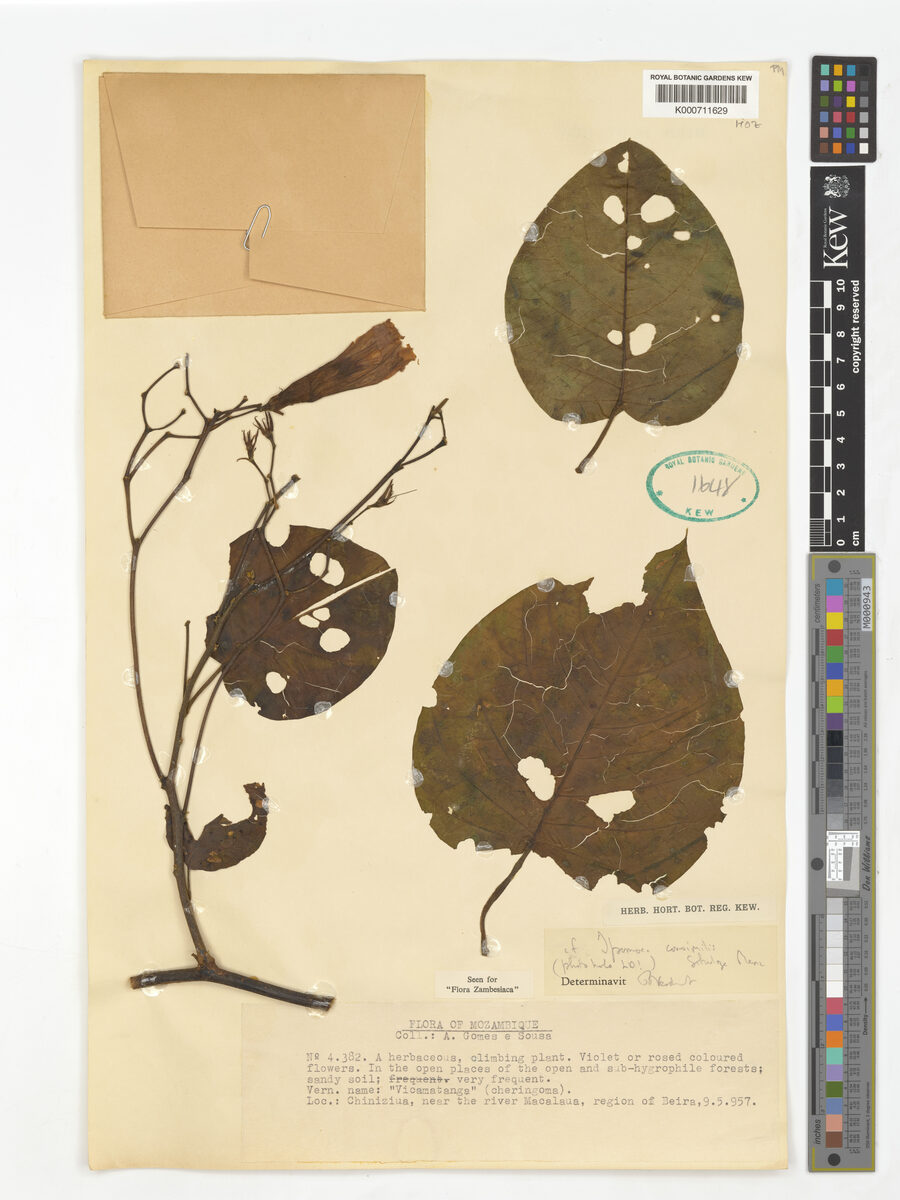
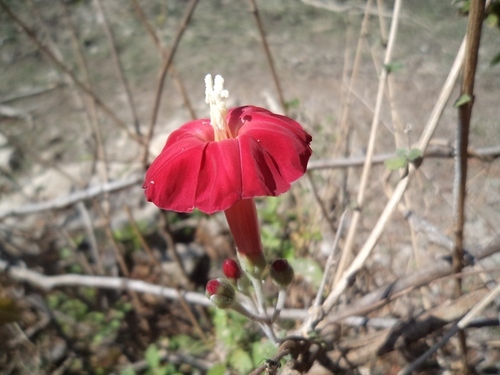
Ipomoea crassipes
Hook.
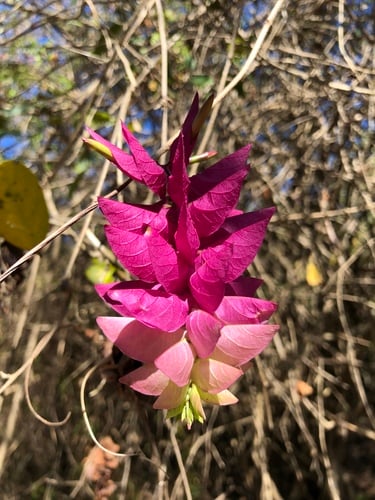
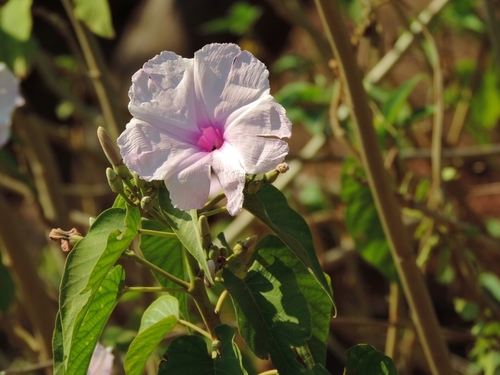
Leafy-flowered ipomoea
iNaturalist· cc-by-nc
(c) Richard Gill, some rights reserved (CC BY-NC), uploaded by Richard Gill
iNaturalist· cc-by-nc
(c) Richard Gill, some rights reserved (CC BY-NC)
Description
A herb. It has tubers. It puts up annual stems. These can be erect or trailing. The leaves vary but are usual oval or sword shaped. They are 2-8 cm long by 1-3 cm wide. They are hairy and are often purple around the edge. The leaf stalk is 1 cm long. The flowers occur singly. They are funnel shaped and mauve. They have leaf like bracts around them. The fruit is a capsule that splits open. It is 1 cm across.
Edible Uses
The root tuber is eaten raw.
Traditional Uses
The root tuber is eaten raw.
This uses section is brief — help expand it
Distribution
It is a subtropical plant. It grows in grassland. It grows between 120-1,400 m above sea level.
Where It Grows
Africa, Angola, Botswana, Central Africa, East Africa, Eswatini, Kenya, Lesotho, Malawi, Mozambique, South Africa, Southern Africa, Swaziland, Tanzania, Zambia, Zimbabwe,
Also Known As
Vimbukhalo
References (6)
- Fox, F. W. & Young, M. E. N., 1982, Food from the Veld. Delta Books. p 162
- Guillarmod, J., 1966, 1971,
- Peters, C. R., O'Brien, E. M., and Drummond, R.B., 1992, Edible Wild plants of Sub-saharan Africa. Kew. p 94
- Ruiters-Welcome, A. K., 2019, Food plants of southern Africa. Ph.D. thesis. Univ. of Johannesburg p 46
- van Wyk, Ba., 2000, A Photographic Guide to Wild Flowers of South Africa. Struik Nature. p 81
Show all 6 references Hide references
- Welcome, A. K. & Van Wyk, B.-E., 2019, An inventory and analysis of the food plants of southern Africa. South African Journal of Botany 122 (2019) 136–179